
Last updated November 14, 2026
 Whole-home duct cleaning
 Dryer vent cleaning
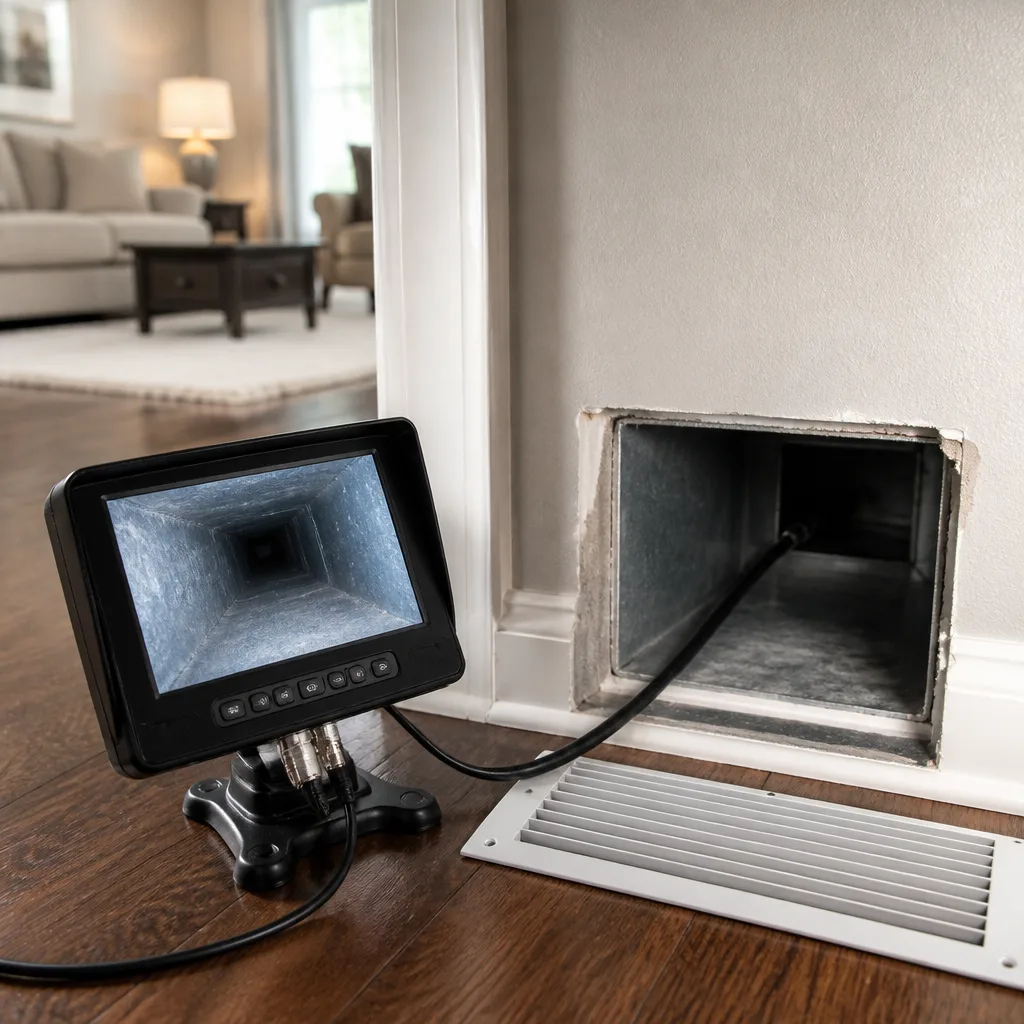 Camera inspection
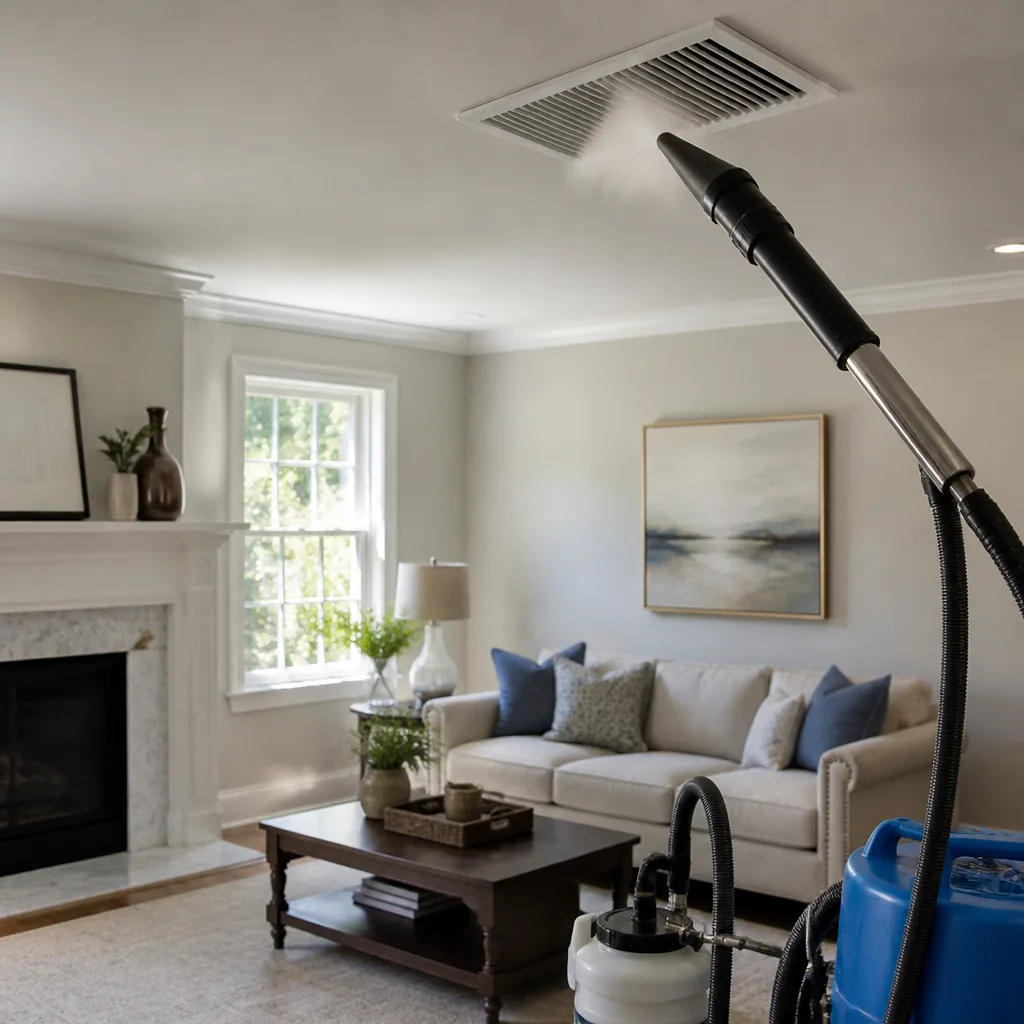 Sanitizing & deodorizing
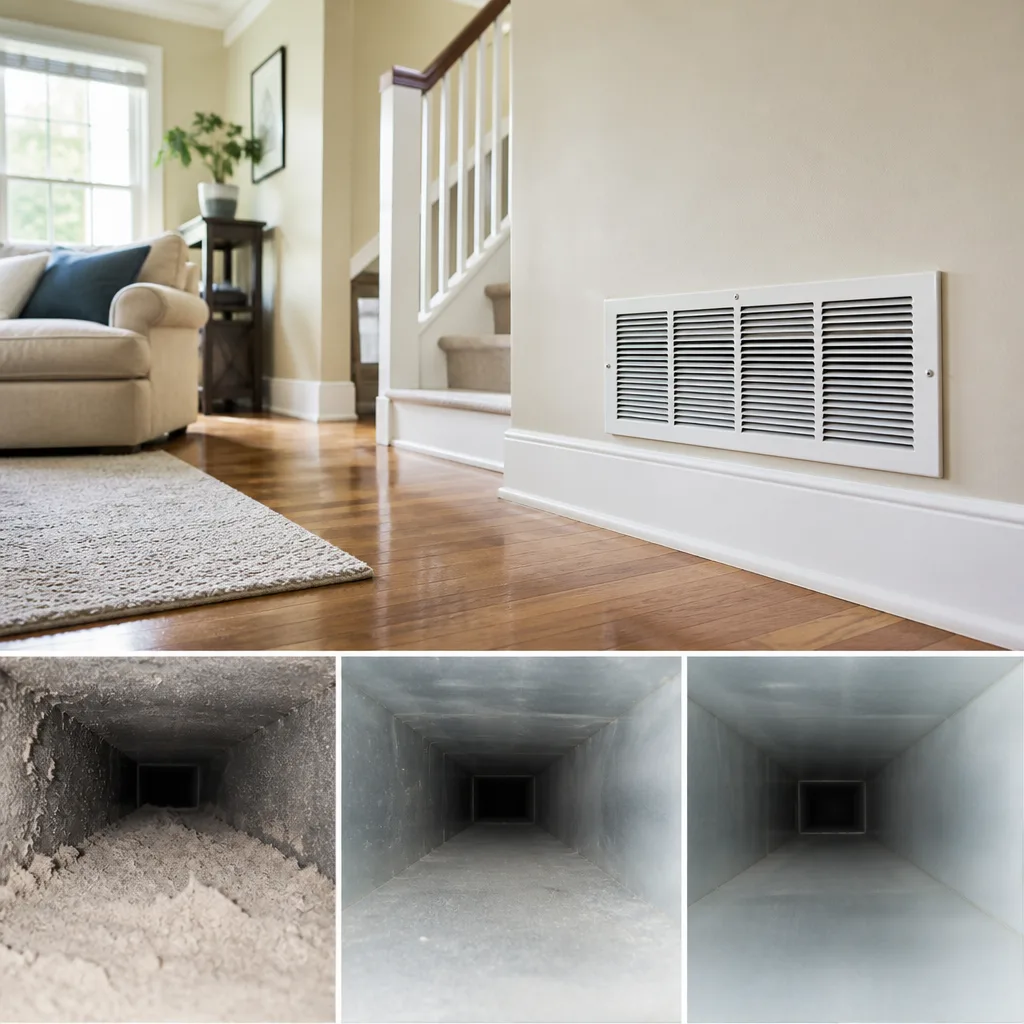
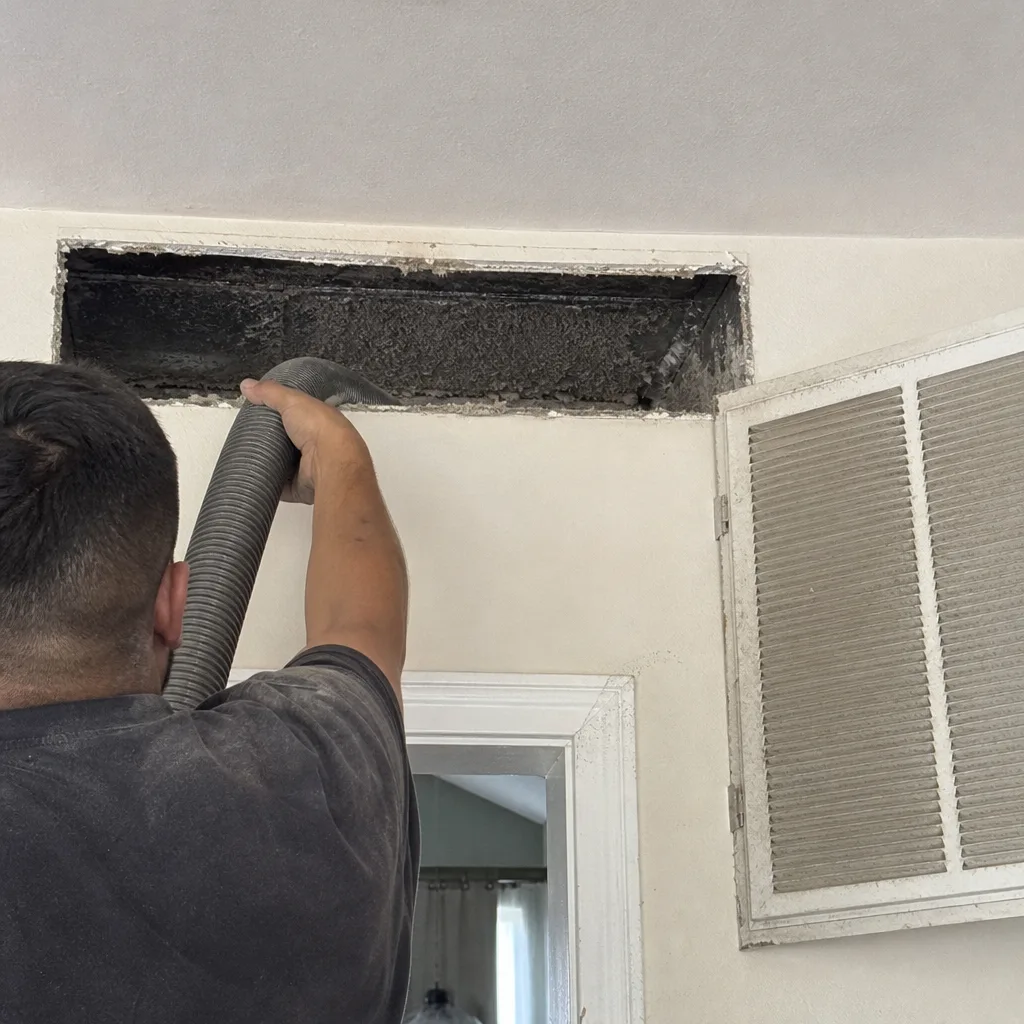
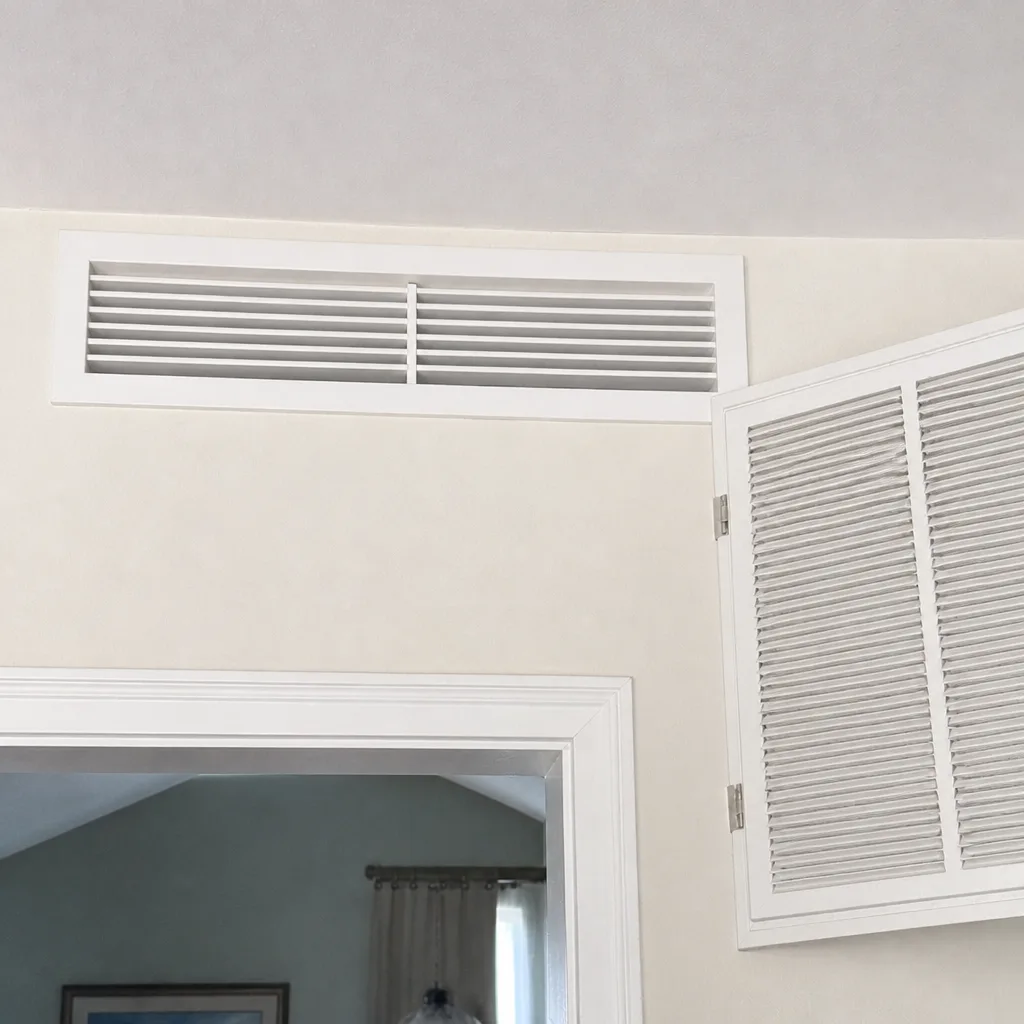
Whole-system duct and dryer vent check with before-and-after photos - you see exactly what came out of your vents
That "$99 whole-house special" is a bait ad - the real number appears once they are in your hallway, or the "clean" is a shop-vac at the register. We photograph the inside of your ducts before and after instead.
Air Duct Cleaning Troubleshooting in Carrollton: Common Problems and How to Fix Them
If you’ve replaced your filter twice in one month and still have rooms that won’t cool, the filter isn’t your problem. Something upstream is. Most duct complaints that get blamed on dust or a clogged filter trace back to a handful of specific failures: a joint that pulled apart, a damper stuck shut, a run of flex duct that collapsed under its own sag, or an evaporator coil that’s been wet long enough to grow something. Each of those needs a different fix. Cleaning the ducts won’t solve a disconnected joint any more than a new filter solves a collapsed run. This guide walks the chain of cause and effect we use in Carrollton homes, from the symptoms you notice to the diagnosis that actually matches them, so you stop treating the wrong thing.
Quick Answer
Most air duct problems in Carrollton fall into one of four categories: routine dust and debris buildup (solved by professional cleaning), a physical failure like a collapsed run or disconnected joint (solved by duct repair, sometimes before cleaning), a damper or balancing issue (solved by adjustment), or a moisture problem showing up as odor (solved by finding the water source first). The trick is telling them apart. Dust on the register points to buildup. A room that never gets air no matter what you set the thermostat to usually points to a failure or a closed damper. And a musty smell that lingers after cleaning almost always means water is getting in somewhere. Diagnose first, then decide whether you need cleaning, repair, or both.
Styles & brands we work with
- Whole-home duct cleaning
- Dryer vent cleaning
- Camera inspection
- Sanitizing & deodorizing
Table of Contents
- How to Tell Dirty Ducts From Broken Ducts
- What Static Pressure Readings Tell You
- Why Your Ducts Still Smell Musty After Cleaning
- Carrollton-Specific Signs of Systemic Duct Problems
- Decision Tree: DIY, Clean, or Repair First
- Dryer Vent Problems That Masquerade as Duct Problems
- Working With Honeywell and Aprilaire Systems
- Common Mistakes to Avoid
How to Tell Dirty Ducts From Broken Ducts
A dirty duct system and a broken one produce different symptoms, and the difference matters because you’ll spend money on the wrong fix if you guess. Dirty ducts are a distribution and air quality problem. Broken ducts are a delivery problem. One makes your air worse; the other stops it from arriving at all.
The clearest way to sort them is to watch where the air goes and how it looks. Here’s what we check first:
- Dust pattern at the register. A fine, even film of dust collecting around every supply register in the house suggests buildup throughout the system. One register that’s dirtier than the rest, or streaking that runs down the wall from a ceiling vent, often means the joint just behind that boot has separated and is blowing attic or crawlspace air into the room.
- Airflow at the register. Hold a tissue near the supply. Strong, steady flow at every register except one or two is a distribution issue, usually a damper or a collapsed run. Weak flow everywhere points to a bigger blockage, a failing blower, or a filter that’s starving the system.
- Room temperature spread. If the rooms nearest the air handler are cold and the far rooms never catch up, the balance is off. That’s a damper and duct-routing conversation, not a cleaning one.
- Visible damage. In a pier-and-beam crawlspace, you can often see it directly. Flex duct that’s kinked sharply, hanging loose from a strap, or crushed under a pipe is delivering a fraction of what it should.
The reason this distinction matters is simple: cleaning a system with a disconnected joint and no repair is wasted work. We clean it, and if it needs repair, we fix it on the same visit, because the two problems usually travel together. A run that’s leaking pulls dust-laden attic air in through the gap, so the system gets dirtier as it runs. Fix the gap and the cleaning lasts. Clean without fixing and you’ll be back where you started.
What Static Pressure Readings Tell You
Static pressure is the measurement that separates guesswork from diagnosis. It tells a technician how hard the blower is pushing against the resistance of the duct system, and where that resistance is coming from, before anyone puts a brush in a duct.
A technician uses a manometer, a small digital pressure gauge, at test ports on the supply and return sides of the air handler. The readings, measured in inches of water column, show total external static pressure. When that number climbs above what the equipment is rated for, the blower is working harder than it should to move the same volume of air. The question then becomes where the pressure is being lost. By taking readings at points along the trunk line and at individual branch takeoffs, the technician creates a pressure map of the system. A sharp drop between two points means the restriction sits between them, whether that’s a closed damper, a crushed section of flex duct, or a coil clogged with dust.
This is why a good diagnosis comes before cleaning. If a branch run is collapsed, cleaning it accomplishes nothing – the brush may not even reach the blockage. If a damper is closed, no amount of cleaning restores airflow. The manometer finds those conditions in minutes, and it keeps the work honest. You know what you’re paying for and why.
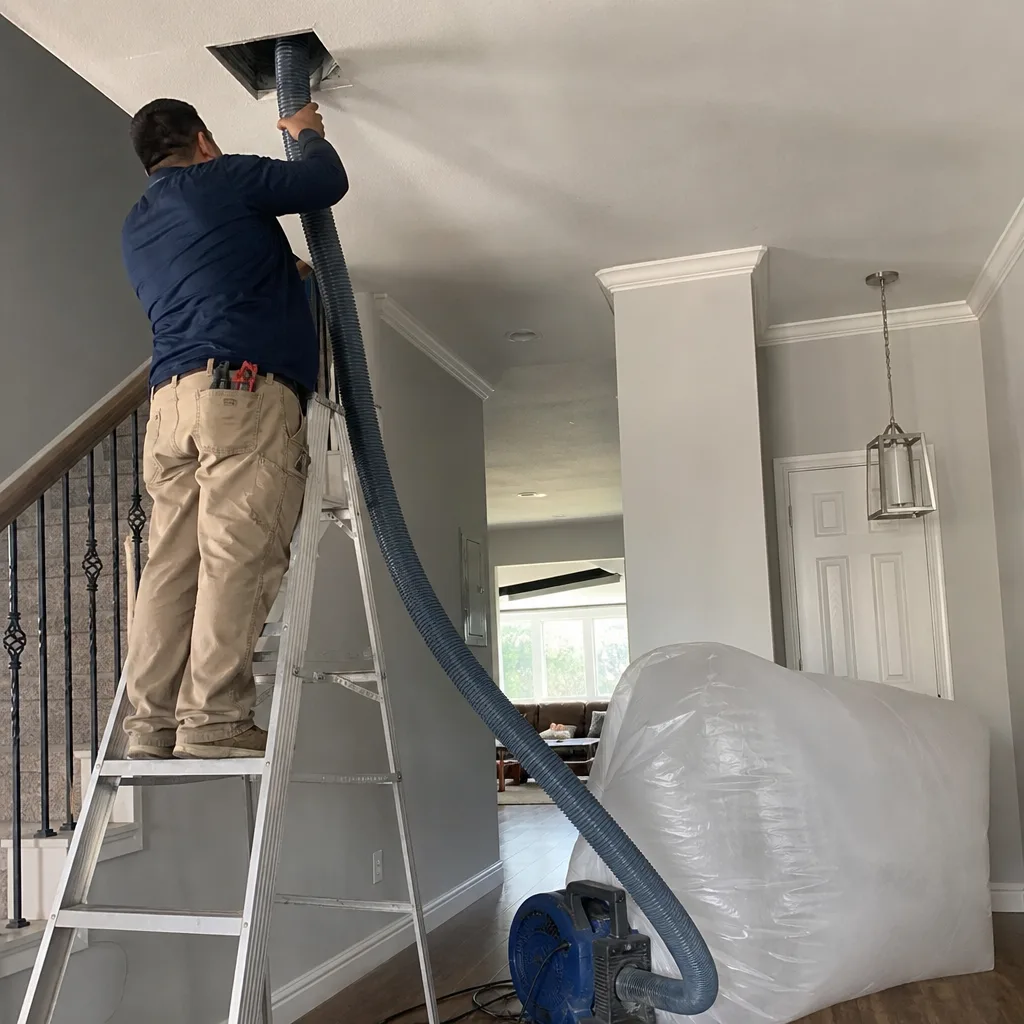
When pressure maps point to a genuine buildup problem, we set up with containment before anything gets disturbed. Abatement Technologies filtration equipment captures the dust that cleaning dislodges, so it’s pulled out of the airstream rather than pushed back into the living space. That’s the difference between cleaning a system and stirring one up.
Why Your Ducts Still Smell Musty After Cleaning
If a musty smell lingers after a proper cleaning, the cleaning wasn’t the problem. Moisture is. Duct interiors are dark, enclosed, and only as dry as the air moving through them. When water finds a way in, dust that’s settled on the interior surfaces becomes a food source for microbial growth, and that growth produces the smell. Cleaning removes the dust, but if the water source is still active, new dust settles on a still-wet surface and the smell returns within weeks.
Before you spend money on cleaning a second time, inspect for the source of the moisture. In our experience, it usually turns up in one of these places:
- A clogged condensate drain or overflowing drain pan. The evaporator coil sits in a pan that collects water. When the drain line clogs, the pan overflows and the moisture wicks into the ductwork around the coil. This is the most common cause of musty odor we find.
- An evaporator coil that isn’t draining properly. If the coil’s fins stay wet between cycles, that persistently damp surface grows things, and the blower carries that smell into every room.
- Attic ductwork with a tear or loose connection. A gap in a supply run in the attic lets hot, humid outdoor air into the duct, where it condenses on the cooler interior. The result is damp insulation and damp duct interior.
- Crawlspace moisture. In a pier-and-beam crawlspace, high humidity under the floor can wick into ductwork that runs through it or into the subfloor around boots and registers.
The fix in every case is to find and correct the water intrusion, then clean. Cleaning a musty system without addressing the moisture is a temporary fix at best. Once the source is corrected, the duct surfaces actually hold the clean result.
Carrollton-Specific Signs of Systemic Duct Problems
Carrollton homes have their own patterns, and knowing them helps you read your system with more confidence. The city’s housing stock includes a large number of pier-and-beam homes and older neighborhoods where flex duct was installed during a past retrofit and never rerouted. Both leave signatures that show up in predictable ways.
In pier-and-beam crawlspaces, ductwork often runs below the floor in a space that’s humid through the long cooling season. Flex duct there can sag between supports, and a sagging run loses cross-section, which reduces airflow. Insulation on older flex duct can also degrade over time, so the duct delivers both less air and a temperature that’s climbed a few degrees by the time it reaches the register. The symptom is a far room that runs warmer than the thermostat suggests it should. Running a Carrollton home’s cooling system through a long, humid season puts more strain on this than a drier climate would.
In the older flex duct runs found across Carrollton, we also see a lot of connector failures at the plenum and at branch takeoffs. The metal collar where the flex connects to the supply plenum is a common failure point; the tape lets go after years of cycling and warm attic air leaks in. Attic temperatures here climb high through the summer, and the pressure that builds in a hot attic finds any weak spot. That’s why attic ductwork in Carrollton is worth inspecting specifically when you notice a single room that’s hotter than the rest.
A few Carrollton-specific red flags we look for:
- One room noticeably warmer than the rest every cooling season, year after year – usually a collapsed or kinked run or a closed damper.
- Dust that returns within a month of cleaning – often a disconnected joint pulling outside air in.
- Musty odor concentrated near the air handler closet – a coil or drain issue more often than a duct issue.
- Crushed flex duct visible in a pier-and-beam crawlspace, or flex that’s hanging loose from its supports.
When the pattern points to a repair rather than routine buildup, the same crew can handle it. We offer air duct repair in Carrollton alongside cleaning for exactly this reason. The two go together more often than not.
Decision Tree: DIY, Clean, or Repair First
There’s a right order to fixing a duct problem, and it isn’t always cleaning first. This decision tree matches the one we walk through on the job. It’s built to avoid the two most common mistakes: paying for cleaning a system that needs repair, and skipping cleaning on a system that just needed repair first.
- Start with the filter and registers. Replace a filter that’s loaded, check that no supply or return register is blocked by furniture or a closed grille, and open every supply vent you find closed. If that restores airflow and the symptoms were simple, you’re done. This is the one genuinely DIY step worth trying first.
- Check your thermostat and settings. Confirm the system is set to cool, the fan is on auto or on per how you want it to run, and nothing has been switched into a hold or vacation mode. A surprising number of airflow complaints resolve here.
- Look for physical damage. In an accessible attic or crawlspace, look for kinked, crushed, or hanging flex duct, tape that’s failed at a connector, or a run that’s obviously pulled loose from a boot. Any of those is a repair before anything else. A collapsed run can’t be cleaned effectively because the blockage is the duct itself.
- If one room is the only problem and there’s no visible damage, suspect a damper. A balancing damper closed or partly closed on that branch is a common culprit. It’s a small adjustment, not a cleaning job.
- If the symptoms are dust, odor, or allergy flare-ups and there’s no obvious damage, cleaning is the right call. That’s routine buildup, and professional cleaning with containment removes it properly.
- If cleaning and repair are both needed, do both. Repair the failed run, then clean the system so the freshly repaired ductwork starts clean and stays that way. Doing it in one visit is the reason we keep repair and cleaning under one roof.
The short version: DIY the filter and register checks, repair any visible physical failure, clean the buildup, and never clean a system with a failure you haven’t fixed. Each step has a different cost and a different justification, and confusing them wastes both time and money.
Dryer Vent Problems That Masquerade as Duct Problems
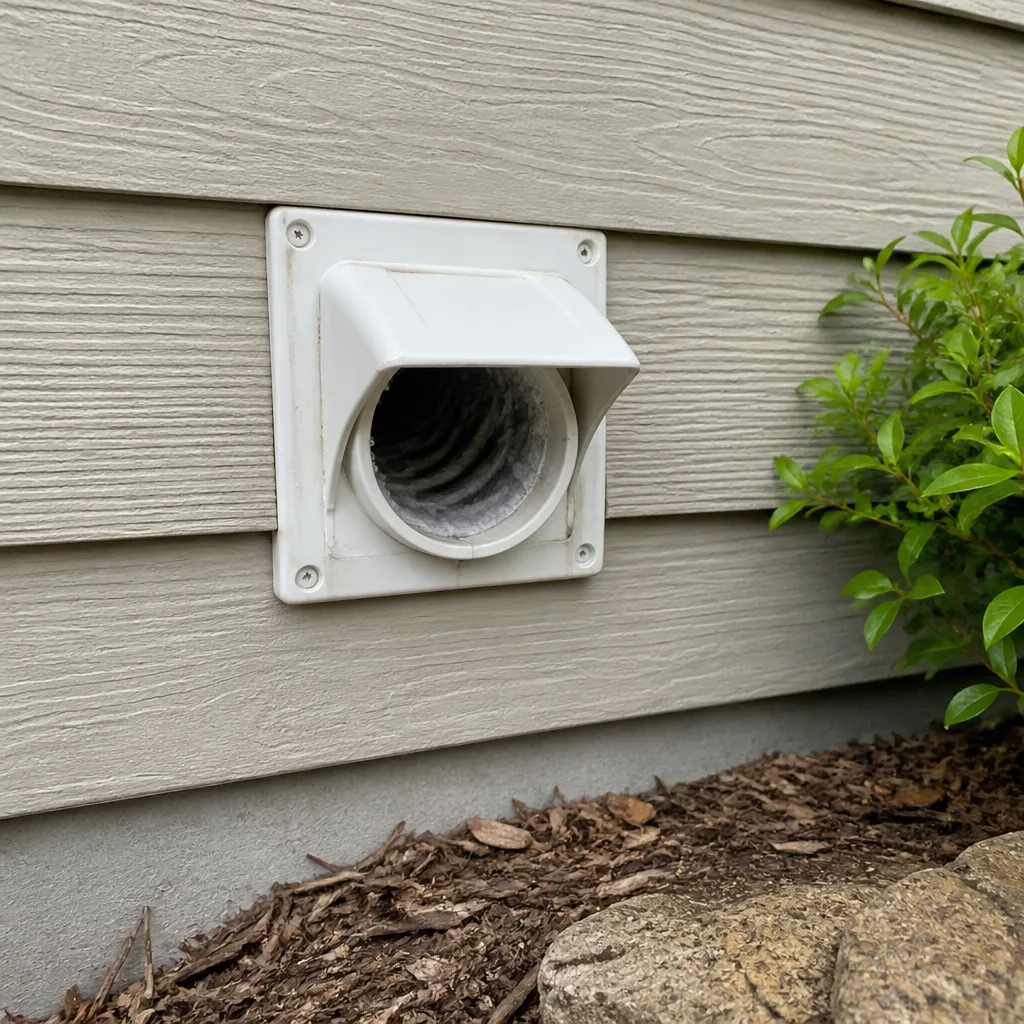
Not every airflow complaint is about HVAC ductwork. The dryer vent is a separate duct system with its own failure points, and lint buildup in it shows up in ways that look like an HVAC problem: a dryer that takes two cycles to dry a load, a laundry room that runs hot and humid, and a clothes-load that comes out feeling damp despite a long run time. Dryer vent cleaning is a dedicated service for us, not something we tack onto an HVAC call, because the risk profile is different.
A clogged dryer vent is a fire risk. Lint is highly combustible, and the vent is a direct path from the appliance to the outside of the home. When the vent is restricted, the dryer’s heat has nowhere to go, the appliance runs hotter, and the lint inside the vent gets hotter with it. This is a documented household fire risk and one worth taking seriously rather than filing under maintenance.
Signs your dryer vent needs attention:
- Clothes take longer than one cycle to dry, or feel damp when the cycle ends.
- The outside vent flap doesn’t open fully, or barely moves, when the dryer is running.
- The laundry room feels noticeably more humid and warm than the rest of the house during a dry cycle.
- The dryer itself feels hot to the touch on top or around the door.
- It’s been years since the vent was cleaned, and you can’t recall the last time.
We treat a dryer vent with the same systematic approach we use on air ducts: inspect the full run, clean it thoroughly with professional equipment, and confirm airflow is restored when we’re done. The equipment matters here since a consumer shop vac can’t clear a long, snaking vent run through a wall or roof. That’s one of the reasons we run dryer vent cleaning on the same professional-grade systems.
Working With Honeywell and Aprilaire Systems
A lot of Carrollton homes have whole-home air quality equipment tied into the HVAC system: a media filter cabinet, a humidifier, or an air cleaner from Honeywell or Aprilaire. When cleaning work is done without accounting for that equipment, you can leave the system in worse shape than you found it. The filter cabinet, for example, has its own gasket and seal that needs to hold after cleaning. A humidifier connected to the duct system has a water line and a pad that need to stay clean and dry-free when the cleaning is finished. A whole-home air cleaner has a housing that should be checked and reset properly.
We’re familiar with both Honeywell and Aprilaire systems and integrate the cleaning work around them. That means:
- Checking media filter cabinets and confirming the seal after cleaning.
- Making sure humidifier components connected to the duct aren’t disturbed, and flagging anything that looks like it needs service from the HVAC side.
- Confirming whole-home air cleaner housings are properly seated before we leave.
- Noting on the report any air quality component that’s pulling outside the normal scope of duct cleaning.
If your home has one of these systems and you’re not sure how it interacts with duct cleaning, mention it when you call. It changes how we set up and what we check before we leave.
How Much Does Air Duct Cleaning Cost in Carrollton?
Air duct cleaning in Carrollton is priced per system, not per vent, and the written estimate you get before any work starts is the final price. Typical whole-system cleaning ranges run from about $350 to $700 for a standard single-system home, with larger homes or homes with significant buildup at the higher end. Duct repair, when it’s needed, is quoted separately and only after the diagnosis shows what’s actually failed. We don’t quote a per-vent price or a teaser number, because the honest answer depends on the system.
Why some quotes come in so much lower: a per-vent price or a coupon figure usually covers a quick pass with a shop vac and no containment, no diagnosis, and no follow-up. That’s the bait-and-switch reputation this industry has earned. Our answer is one flat price per system agreed before we start, no per-vent pricing, and before-and-after photos of your own ducts so you can see exactly what was removed. Cleaning and repair are both quoted on the same written estimate, so you’re never surprised by a second number once the crew is in your home.
Call (866) 580-7041 for an exact quote. Estimates are free.
Common Mistakes to Avoid
- Cleaning before diagnosing. Cleaning a system with a disconnected joint or a collapsed run is wasted work. Have the system checked for physical failures first; if the diagnosis finds one, repair it before or alongside the cleaning.
- Assuming a new filter fixes airflow. A filter change helps a genuinely clogged filter, but if a room still won’t cool after a fresh filter, the problem is in the ductwork, not the filter. Replacing filters more often won’t solve it.
- Choosing a quote by price alone. The lowest quote per vent often means no containment and no diagnosis, which are the parts that matter most. Ask what equipment will be used before you compare numbers.
- Skipping the crawlspace inspection in a pier-and-beam home. In Carrollton’s pier-and-beam homes, the crawlspace is where the duct damage usually lives. A quote that doesn’t include looking there is a quote that might miss the actual problem.
- Treating a musty smell with another cleaning. If the odor returns after cleaning, moisture is the cause, not leftover dust. Find the water source before you pay for another cleaning pass.
- Letting the dryer vent go. It’s easy to file dryer vent cleaning under “someday.” The fire risk is documented and the fix is straightforward. Put it on the same maintenance schedule as your HVAC ductwork.
- Assuming air quality equipment is plug-and-play. Honeywell and Aprilaire systems need to be accounted for during cleaning. Ask the crew to confirm they work around those systems before they start.
See the difference
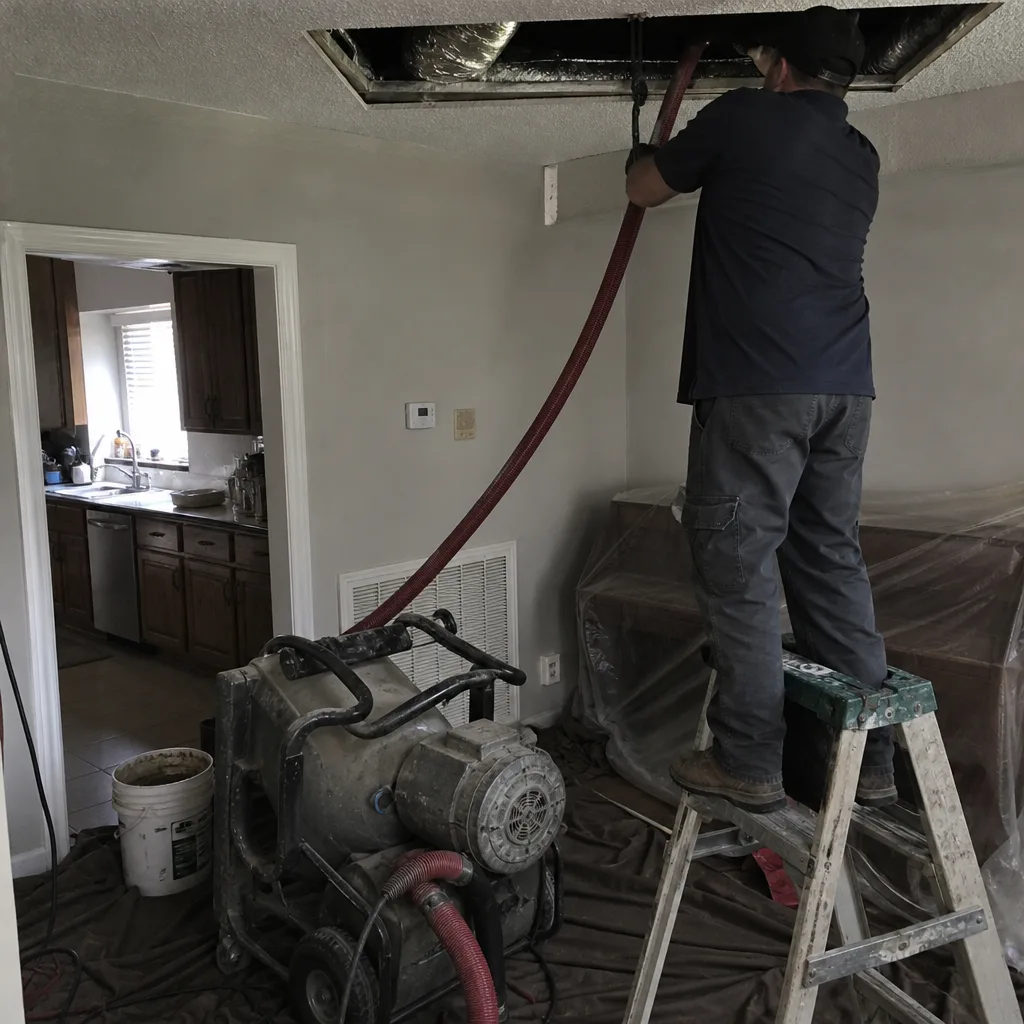 Before
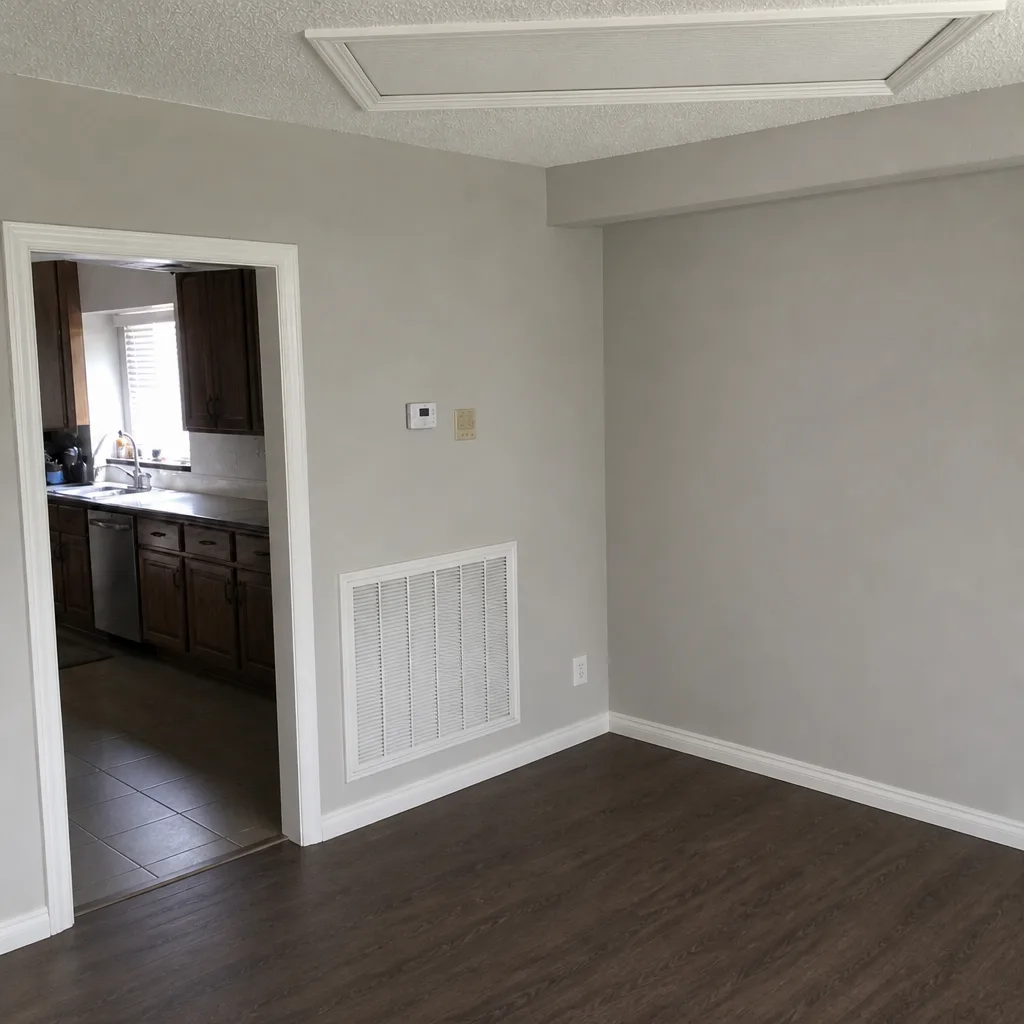 After
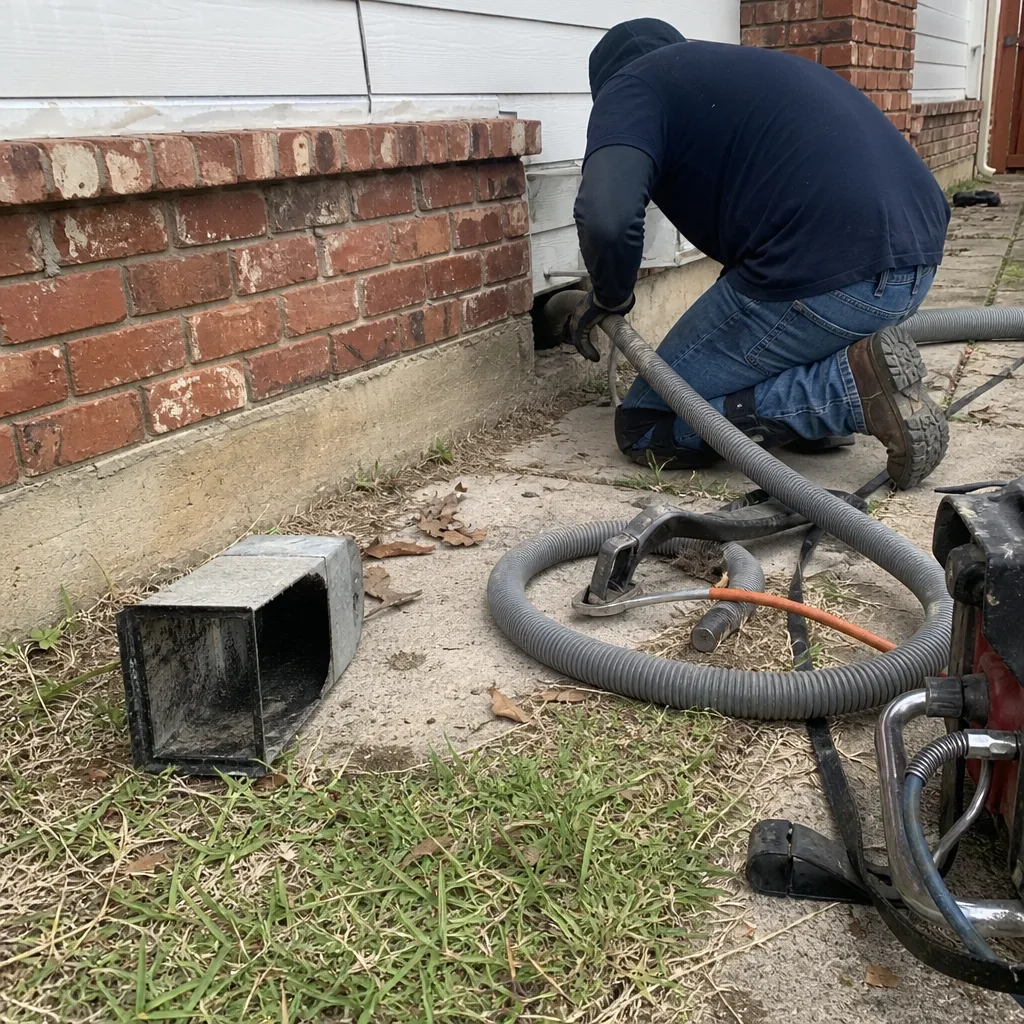 Before
 After
 Before
 After
When to Call a Professional
Some duct problems are worth a professional diagnosis even if you’re handy. If a room won’t cool despite a fresh filter and open registers, if dust returns within a month of cleaning, if a musty smell persists after cleaning, or if you can see crushed or disconnected flex duct in the attic or crawlspace, it’s time to have the system looked at properly. Static pressure readings and a visual inspection find the failure quickly, and the same visit can include the repair. For homes in Carrollton that haven’t had ductwork serviced in years, a cleaning and a repair inspection together is a sensible starting point.
Duct Cleaning Carrollton offers free estimates in Carrollton. Call (866) 580-7041. We answer 24/7. Fast dispatch from 7am to 7pm, Sunday through Friday. The estimate is written before any work begins, and the crew that cleans your system is equipped to repair it if the diagnosis turns up a failure.
When you’re ready to book, a good starting point is our duct cleaning in Carrollton page. The crew deploys Rotobrush and Nikro equipment, the same class of rotary brush and vacuum system used in commercial work, and Guardsman-level protective products are available to extend the life of a cleaned system.
Frequently Asked Questions
Dust, odor, and allergy symptoms point to cleaning; a room that won’t cool no matter what you set the thermostat to points to repair. That’s the short version. The reliable way to tell them apart is a static pressure reading and a visual inspection of the accessible ductwork in the attic and crawlspace. A pressure drop along a branch indicates a blockage or a collapsed run, which is a repair; even buildup with normal pressure is a cleaning. The two can happen at the same time, which is why we quote both on one written estimate. Call (866) 580-7041 for a free estimate.
Lingering musty odor after cleaning means moisture is still getting into the system, not that the cleaning was incomplete. The most common cause is a clogged condensate drain or an overflowing drain pan at the evaporator coil. Check that first, along with attic duct connections and crawlspace humidity. Once the water source is corrected, the duct surfaces hold the clean result. Cleaning without fixing the moisture is a temporary fix. Call (866) 580-7041 and we’ll help you trace the source.
Every few years is a reasonable working rule for most homes, and sooner if you notice dust returning quickly, allergy flare-ups, or a musty smell. Homes in Carrollton with pier-and-beam crawlspaces or older flex duct runs often benefit from a check more often, because the access makes it easy to catch small failures before they become big ones. There’s no universal rule; the honest answer is that the right interval depends on your system’s condition. Call (866) 580-7041 for a free estimate and we’ll tell you where you actually stand.
The cheapest quotes often skip containment, skip diagnosis, or price per vent to make the number look small. That’s the bait-and-switch reputation this industry earned. A quote that doesn’t include inspecting for physical damage or using containment equipment isn’t the same service. Ours is one flat price per system agreed before any work starts, no per-vent pricing, and before-and-after photos of your own ducts. Call (866) 580-7041 for an exact quote. Estimates are free.
A collapsed duct needs repair first. Cleaning can’t restore airflow through a run that’s crushed, kinked, or disconnected, and a brush may not even reach the blockage. The good news is that the same crew who cleans can repair a failed run on the same visit, which is why we keep both services under one company. The written estimate covers whichever work your system actually needs. Call (866) 580-7041 for a free estimate in Carrollton.
Yes, and in some ways it matters more because a clogged dryer vent is a documented household fire risk. We treat it as a dedicated service with the same systematic approach as air duct cleaning: inspect the full run, clean it with professional equipment, and confirm airflow is restored. Lint buildup happens quietly and the symptoms show up as longer dry times and a hot laundry room. If it’s been years, have it looked at. Call (866) 580-7041 for a free estimate.
The Bottom Line
Most duct problems people try to fix at the register level are symptoms of failures deeper in the system, and cleaning won’t fix them without a correct diagnosis first. A collapsed run, a disconnected joint, a closed damper, or a moisture issue each produces a different symptom and needs a different fix. The static pressure reading is what separates them and keeps the work honest. In Carrollton’s pier-and-beam homes and older flex duct runs, the crawlspace and attic inspection is where the answer usually lives. Diagnose first, repair anything physically broken, then clean, and do the two together when needed. That’s the order that lasts.
If you’re ready to have the system looked at properly, call Duct Cleaning Carrollton at (866) 580-7041 for a free estimate. We answer 24/7. Fast dispatch from 7am to 7pm, Sunday through Friday. We serve Carrollton from a base here, work with Carrollton homes and property managers alike, and back the work with the same professional-grade equipment and containment approach on every job.
Written by the team at Duct Cleaning Carrollton, serving Carrollton since 2012.