
Last updated November 14, 2026
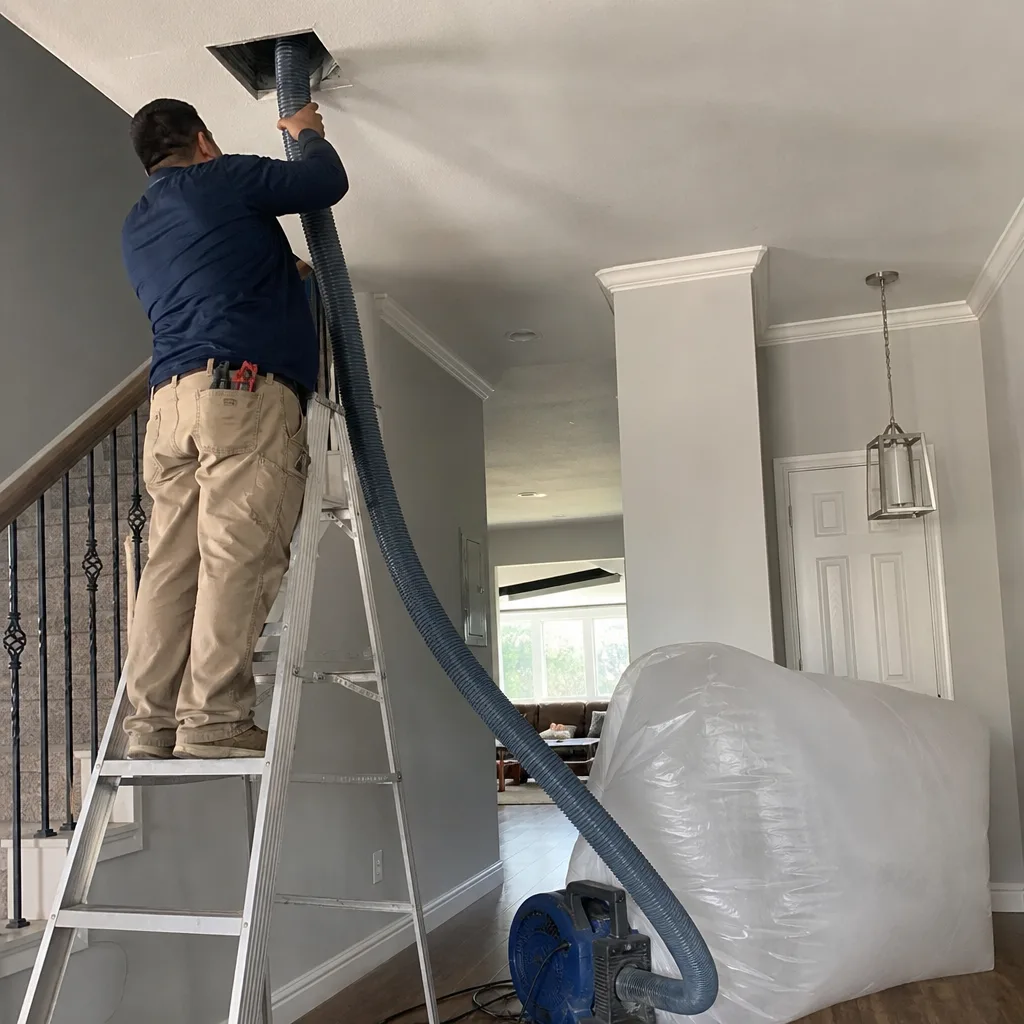
 Whole-home duct cleaning
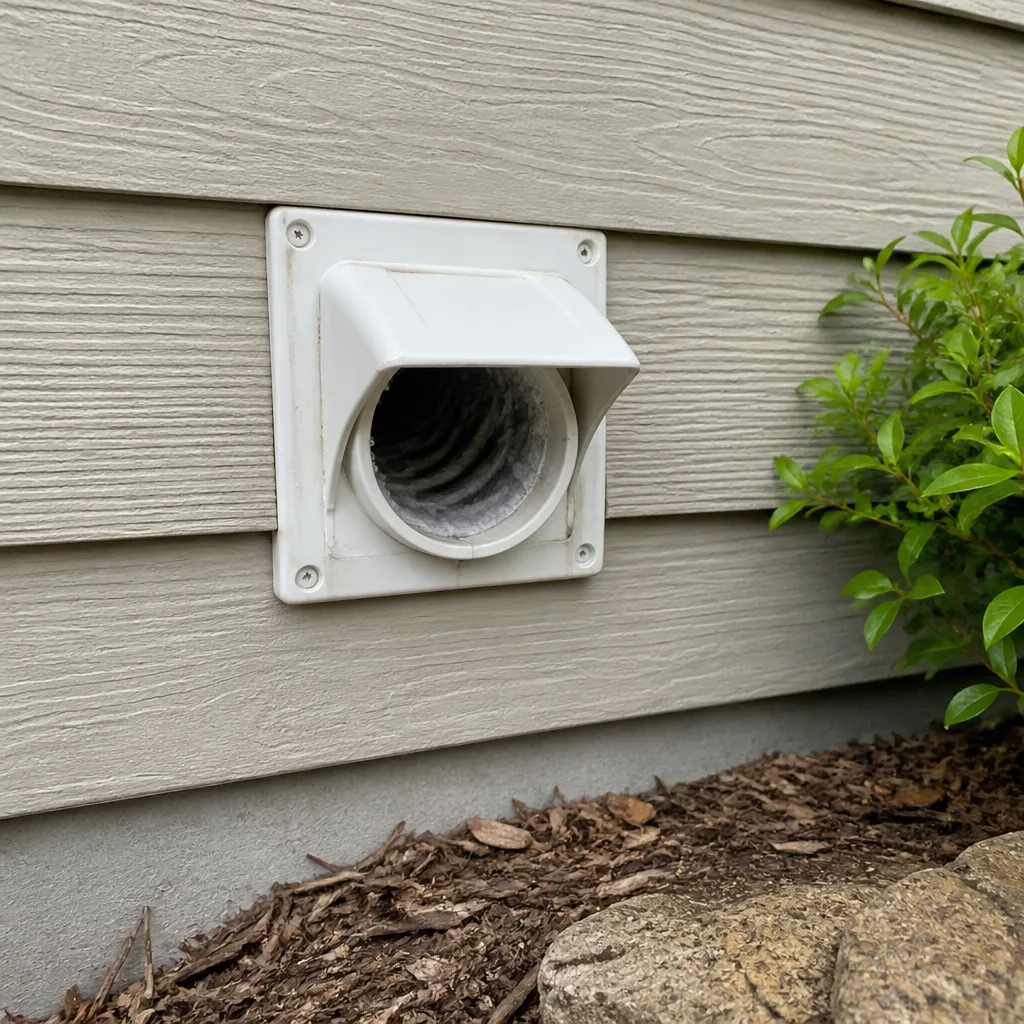 Dryer vent cleaning
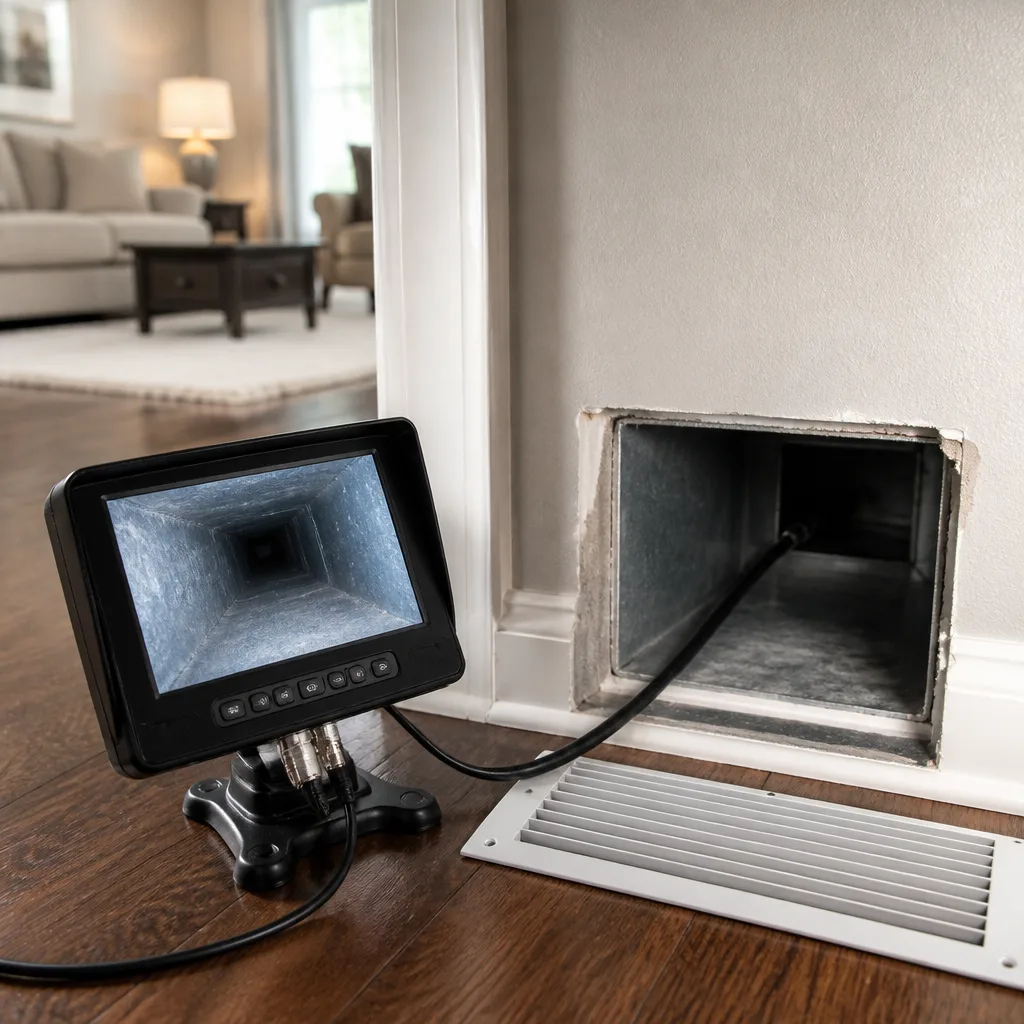 Camera inspection
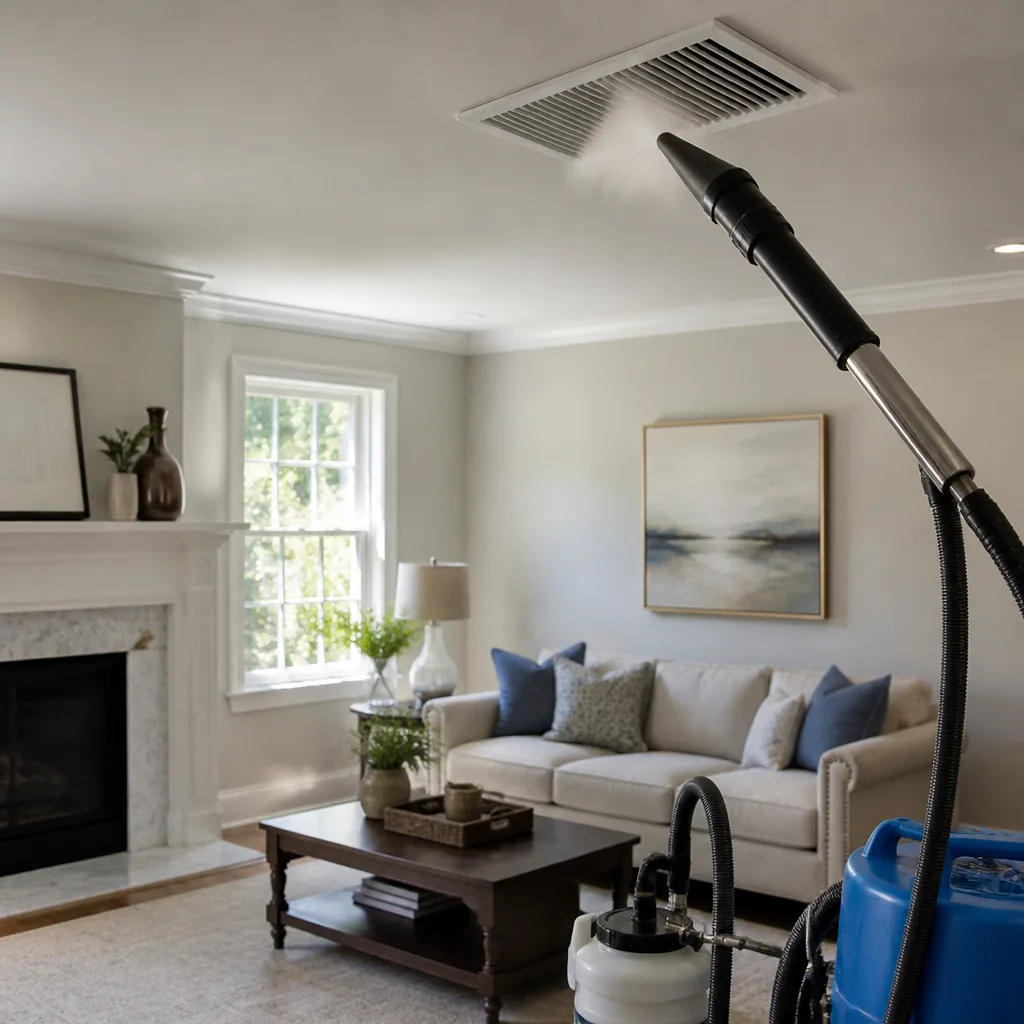 Sanitizing & deodorizing
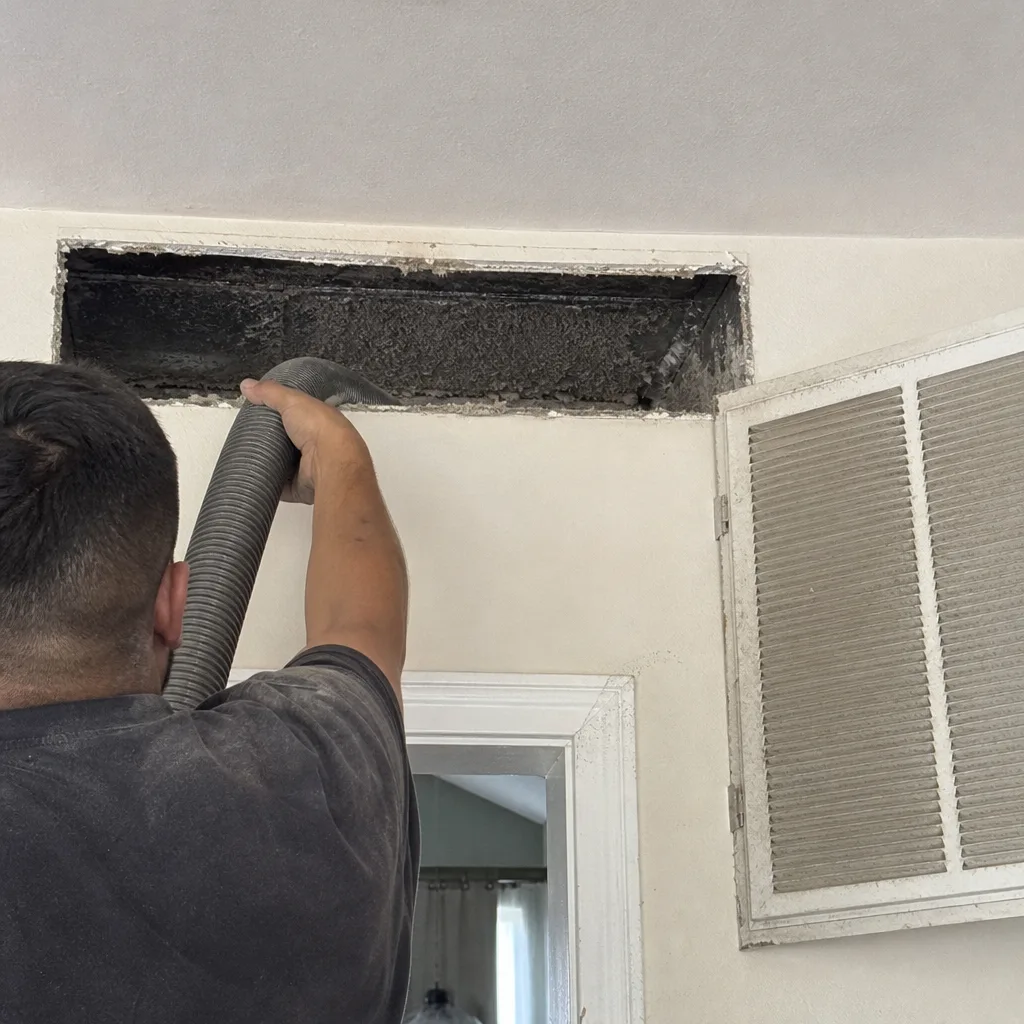
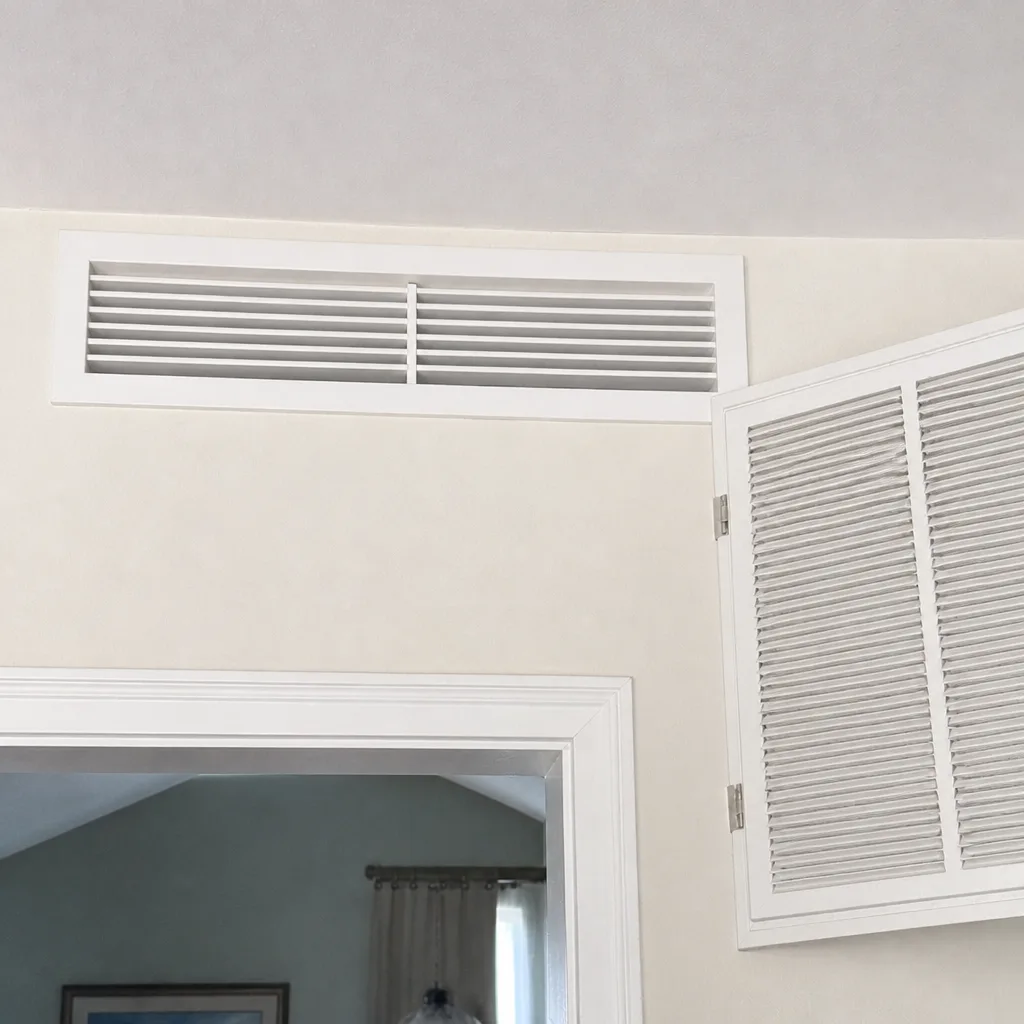
Whole-system duct and dryer vent check with before-and-after photos - you see exactly what came out of your vents
That "$99 whole-house special" is a bait ad - the real number appears once they are in your hallway, or the "clean" is a shop-vac at the register. We photograph the inside of your ducts before and after instead.
Air Duct Cleaning Maintenance Schedule: What to Do and When
The advice you’ll find on most HVAC sites says to clean your ducts every three to five years and call it done. That rule was written somewhere with four seasons and a furnace that runs a few months out of the year. A Carrollton home runs its system closer to ten months a year, pulling air through the same ductwork day after day, so it collects dust, pollen and debris at a pace that mild-climate average doesn’t describe. Treating one number as gospel means some homes go too long and some get cleaned more often than they need. What follows is a schedule built around the variables that actually drive contamination in a North Texas house: pets, people, renovation, filter rating and system age. You’ll finish with a plan you can put on a calendar.
Quick Answer
Most Carrollton homes should have their air ducts professionally cleaned every 3 to 5 years, but that range shifts based on how hard your system works. Homes with multiple pets, recent renovation dust, or a low-MERV filter often need cleaning closer to every 2 to 3 years, while a spotless house with a high-MERV filter and no pets can stretch toward 5. Between professional cleanings, change the filter every 1 to 3 months and inspect accessible registers yourself.
Styles & brands we work with
- Whole-home duct cleaning
- Dryer vent cleaning
- Camera inspection
- Sanitizing & deodorizing
Table of Contents
- Why the Standard 3-to-5-Year Rule Doesn’t Fit Carrollton
- Build Your Own Interval: The Load-Factor Matrix
- Monthly Tasks: The 10-Minute Check
- Annual Tasks: What to Do Once a Year
- Every 3 to 5 Years: The Professional Cleaning
- How Carrollton’s Pollen Windows Change Your Timing
- The Post-Renovation Reset
- How to Inspect Your Own Ducts With a Flashlight and Your Phone
Why the Standard 3-to-5-Year Rule Doesn’t Fit Carrollton
The three-to-five-year number assumes a system that gets a real break. In much of the country the air handler sits idle for months at a time, and that downtime lets settled dust stay settled. Around Carrollton, the cooling season is long and the shoulder seasons are short, so your blower is moving air most of the year. More run time means more air cycled through the same ducts, and more airborne material gets a chance to fall out of the airstream and collect on duct walls, at joints, and behind registers.
That’s the load question in plain terms: how many hours a year does your system move air, and how dirty is that air to begin with? Carrollton mixes two things that raise the answer. Spring and fall bring heavy tree and grass pollen, and a fast-growing metro area keeps a steady supply of construction and road dust in the air. Those particles don’t stay outdoors. They ride in through return grilles and get pushed through the supply side.
System age matters too. Older ductwork in Carrollton homes often has looser joints, which pull in attic or crawl dust that a tight system never sees. Filter rating cuts the other way: a properly fitting filter of the right MERV rating catches more at the grille, so less reaches the ducts. Which is really the point. Your cleaning interval is a function of your house, not a national average, and the matrix below is how you put a number on it.
Build Your Own Interval: The Load-Factor Matrix
Instead of memorizing a number, score your home. Add up the points below, then match your total to the cleaning interval. This is how we think about it when we quote an air duct cleaning job in Carrollton: the load factors tell you whether you’re a two-year home or a five-year home.
- Pets: no pets, 0 points. One pet, 1 point. Two or more pets, or a heavy-shedding breed, 2 points.
- People: one or two occupants, 0 points. Three or four, 1 point. Five or more, 2 points.
- Recent renovation: none in the past two years, 0 points. Minor work (a bathroom, new flooring), 1 point. Major work (drywall, insulation, kitchen gut), 2 points.
- Filter MERV rating: MERV 11 or higher, 0 points. MERV 8, 1 point. MERV 4 or a cheap fiberglass panel, 2 points.
- System age: under 10 years, 0 points. 10 to 20 years, 1 point. Over 20 years, 2 points.
- Allergies or asthma in the household: none, 0 points. One affected person, 1 point. Multiple, 2 points.
Now read your total against the schedule:
- 0 to 3 points: clean every 4 to 5 years. Your house loads slowly and your filtration is doing its job.
- 4 to 6 points: clean every 3 to 4 years. This is the typical Carrollton home.
- 7 to 9 points: clean every 2 to 3 years. Your system accumulates debris faster than average.
- 10 points or more: plan on cleaning every 2 years, and inspect annually. You’re carrying a heavy load and should stay ahead of it.
One caution: this matrix answers “when,” not “whether.” If you have visible mold, pest activity, or a duct that’s collapsed or disconnected, those get addressed regardless of score. That’s when cleaning turns into air duct repair, and the same crew that cleans can seal or restore the ductwork on the same visit. The matrix is also a snapshot. A renovation or a new puppy moves your number, so rescore after big changes.
Monthly Tasks: The 10-Minute Check
Monthly work is about catching problems early, not doing the cleaning yourself. Ten minutes a month keeps you from being surprised by a bill you didn’t plan for. Here’s the routine we’d suggest for any Carrollton home:
- Look at the filter. Hold it up to light. If you can’t see through it, it’s done. Replace or clean it per the manufacturer’s recommendation, and in Carrollton’s dusty months check it more often than the box says.
- Feel the airflow at two or three registers. Hold your hand up to a supply vent. A noticeable drop from last month, or weak flow at one vent while others are strong, points to a blockage, a closed damper, or a duct problem.
- Check the return grille for dust buildup. A grille matted with lint is a sign material is getting past your filter and into the system.
- Listen at the air handler. A rattle, whistle or hiss can mean a loose duct joint. Catching it early keeps dust from being pulled in.
- Wipe a register cover. A quick pass with a dry cloth tells you how fast dust is settling on the grille faces.
If any of these checks turns up a consistent problem two months running, that’s your signal to book an inspection rather than wait for your scheduled interval. Small findings caught monthly rarely turn into big ones.
Annual Tasks: What to Do Once a Year
Once a year, set aside a block of time to look deeper. The right season to do this in Carrollton is late winter, before the spring pollen load hits. Here’s the annual list:
- Do a full visual pass of every accessible register with a flashlight and your phone camera (the how-to is further down).
- Inspect the return ducts and the air handler closet for dust film, moisture, or pests. Streaks of dirt near a joint suggest a leak pulling in unfiltered air.
- Check your filter’s MERV rating against your equipment. If you’ve upgraded recently, make sure the filter isn’t so restrictive it strains the blower; if you’re on the cheapest panel, consider moving up.
- Look at the dryer vent while you’re at it. It’s a separate system from your air ducts, but it’s a documented fire risk and deserves the same annual attention.
- Note your system’s age and update your matrix score if anything changed.
- Book a professional duct cleaning if your score says this is your year.
If your home uses a whole-home air quality system such as a Honeywell or Aprilaire setup, the annual visit is also the time to confirm it’s working with your ducts rather than against them. Proper integration is part of getting the cleaning right, and it’s the kind of thing we check as part of a duct cleaning in Carrollton visit.
Every 3 to 5 Years: The Professional Cleaning
This is the task you can’t do yourself, and it’s the one most homeowners put off. A proper professional cleaning uses equipment that reaches every branch of the system, not just the ducts you can see. Here’s what a real cleaning involves:
- Containment is set up first. Abatement Technologies filtration and containment gear captures the dislodged material instead of letting it recirculate through the house. If you want proof of professionalism before letting anyone in, ask how they contain dust.
- The blower is protected and the system is put under negative pressure. A Nikro vacuum system pulls debris toward the collection point, the same equipment class used in commercial and restoration work.
- Every reachable duct is brushed and vacuumed. A Rotobrush rotary brush system loosens material from duct walls, so cleaning is mechanical rather than just airflow.
- Registers, grilles and the plenum get attention. These are where dust settles most heavily and where a shop vac can’t reach.
- Any damage is repaired. Loose joints, torn flex duct or disconnected runs get sealed or patched while the crew is already in the system.
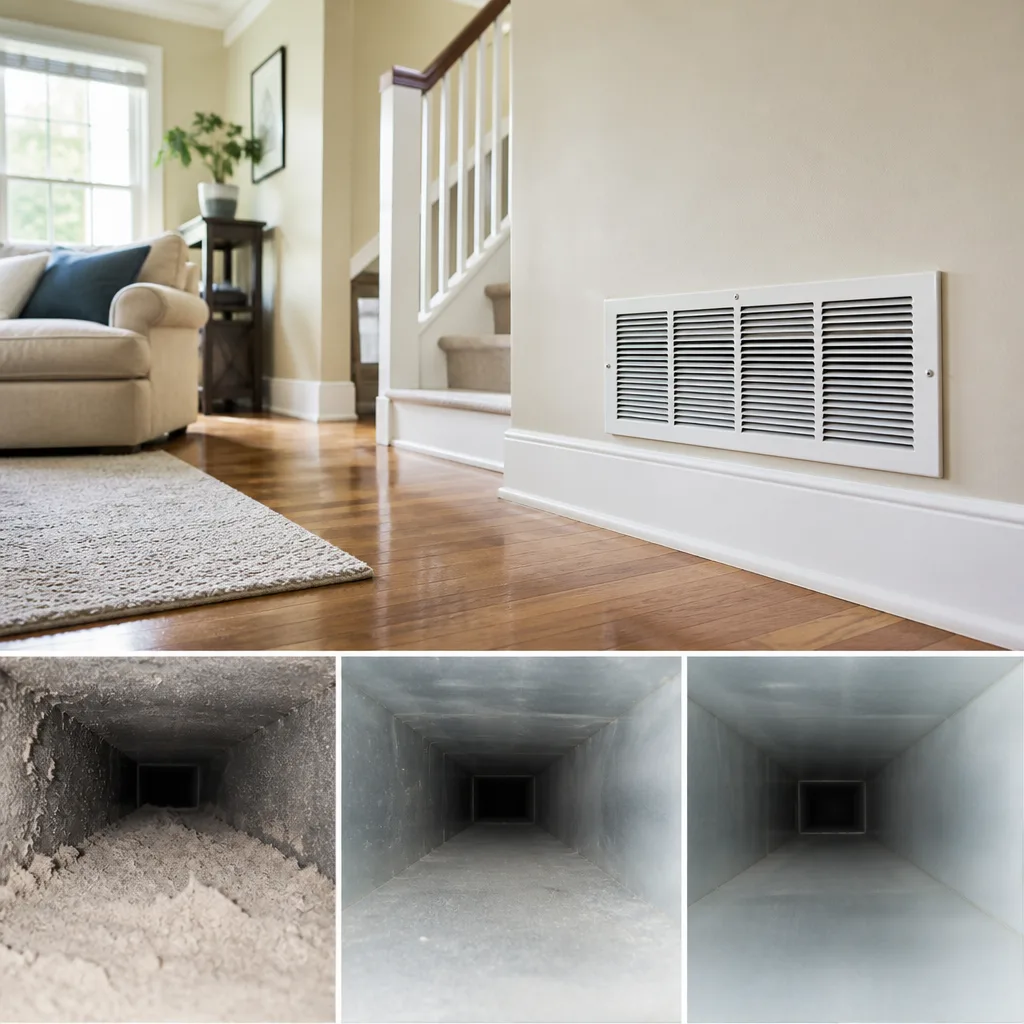
- Before-and-after photos are taken. You should see the ducts as they were and as they are, from your own home, not a stock photo.
The equipment is the reason to hire this out. A shop vac and a ladder don’t move the volume of air and debris that a rotary brush and a commercial-grade vacuum do, and they don’t contain what they loosen. That commercial-grade equipment in a residential home is the difference between cleaning and stirring up. If your ducts have been cleaned before, Guardsman protective products are available to extend the life of the system afterward. A written estimate sets the final price before any work begins, and cleaning plus any needed repair happens on the same visit.
How Carrollton’s Pollen Windows Change Your Timing
Carrollton gets a heavy spring pollen season and a lighter but real fall one. Both matter for your schedule, though in different ways.
Spring pollen arrives from trees and grasses and coats every outdoor surface. Your HVAC draws in outdoor air through the return and runs hard as temperatures climb, so filters load fast and airborne pollen finds its way into the ductwork. This is the season to change filters on the short end of the recommended interval, sometimes monthly during the peak weeks. It’s also why we suggest a late-winter inspection: you want to know your ducts’ condition before the load arrives, not after you’re already noticing dust on the furniture.
Fall pollen from weeds and grasses is lighter, but the cooling season is still running and the windows are still mostly closed, so the system keeps circulating whatever gets indoors. The fall window is a good time for a mid-cycle inspection and a filter change.
What this means for timing in practice: if you’re due for a professional cleaning, schedule it in late winter or early spring, ahead of the heavy pollen. That way the clean system starts the season clean. If you clean in fall, you’ve spent the spring load all summer and are cleaning out the accumulated pollen right when the fall load is starting. Either works, but the pre-spring slot gets more out of the money. Whatever the season, a filter rated for the pollen load and changed on schedule is your first line of defense.
The Post-Renovation Reset
If you’ve done any renovation, your maintenance schedule resets. This is the rule most homeowners miss, and it’s the one that catches people. Drywall dust, insulation fibers and sawdust are fine enough to drift through a house and get pulled straight into return ducts. They settle deep in the system and stay there. Waiting three years because you cleaned two years ago means living with construction dust in your ducts for another three.
Here’s how to handle it:
- Contain the work area if you can by closing doors and sealing gaps with plastic sheeting before demo starts. It’ll cut down on what reaches the system.
- Change your filter immediately after the work wraps, and again a few weeks later once the dust has settled.
- Do not run the system during heavy sanding or drywall work if you can avoid it. Every hour it runs pulls more dust in.
- Book a professional cleaning once the dust has cleared. This counts as a full reset, whatever your matrix score said before.
- Rescore your house afterward, because the renovation added points to your load.
The bigger the job, the more this matters. A bathroom refresh adds some dust; a kitchen gut or an insulation upgrade adds a lot. When it’s the latter, cleaning is worth doing soon after rather than waiting.
How to Inspect Your Own Ducts With a Flashlight and Your Phone
You don’t need special tools to get a read on your ductwork, just a flashlight and the camera on your phone. Here’s how to check:
- Pop off a supply register (they usually lift out or are held by a couple of screws). Shine the flashlight down the boot and toward the branch duct.
- Take a photo straight down the duct with your phone’s flash on. A clear shot of the innermost visible surface tells you more than your eye can at an angle.
- Check for a dust film. A light haze is normal. A thick, textured layer of dust, lint or debris stuck to the walls means you’re overdue.
- Look for streaks or staining near joints, which suggest air leaking in or moisture.
- Do the same at two or three registers around the house, plus the main return. Compare the photos over time.
- Note anything that looks like mold (dark spots, musty smell) or pest activity, and stop there. Those need a professional assessment, not a DIY attempt.
Save the photos with dates. A year from now you’ll have a record of whether your ducts are getting dirtier, which is the most reliable way to know if your interval needs to shrink. If you’re behind schedule, that’s the signal to book. If you’re unsure what you’re looking at, a free estimate from a professional will tell you. We’re a Carrollton company, and this self-check is what we do for homeowners in Carrollton who want a straight answer before they commit to anything.
Common Mistakes to Avoid
- Treating three to five years as a fixed rule. A busy Carrollton household with pets and a cheap filter isn’t on the same schedule as a quiet one with good filtration. Score your house, don’t guess.
- Buying the cheapest filter and calling it a day. A low-MERV panel catches little, so more dust reaches the ducts and your interval gets shorter. Match the filter to your system and check it monthly during pollen season.
- Cleaning right after a renovation and then forgetting to rescore. The dust resets the clock, and the renovation added load points. Rebook on the new schedule.
- Waiting for a visible problem. By the time dust is caked on the registers, the ducts have been overdue for a while. The flashlight check catches it earlier.
- Hiring on a coupon price without asking about equipment. A low teaser price often means a shop vac and a helper. Ask what they use for containment and vacuuming; a professional will tell you plainly.
- Ignoring the dryer vent. It’s a separate system from the air ducts, and it’s a real fire risk. Put it on the same annual calendar with dryer vent cleaning.
- Skipping the before-and-after photos. If a company can’t show you your own ducts before and after, you have no way to know what was actually done.
See the difference
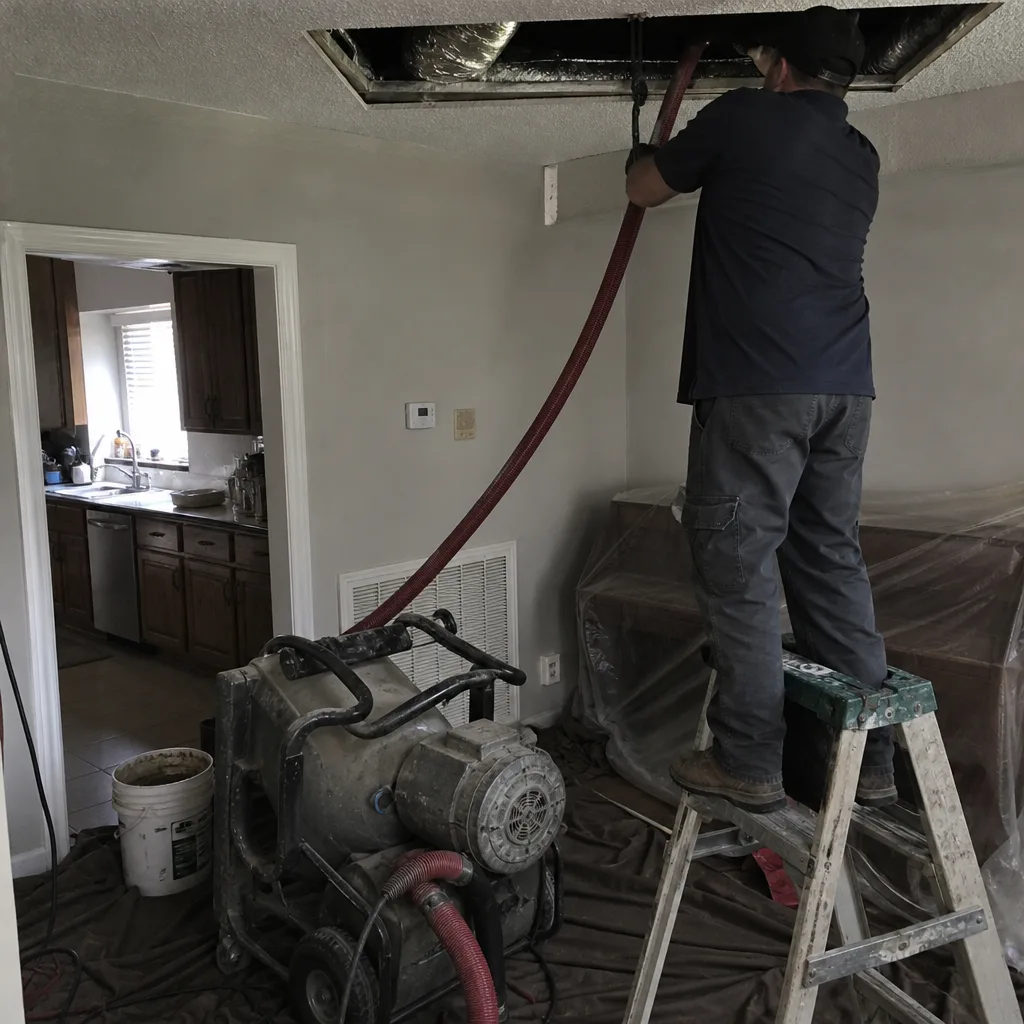 Before
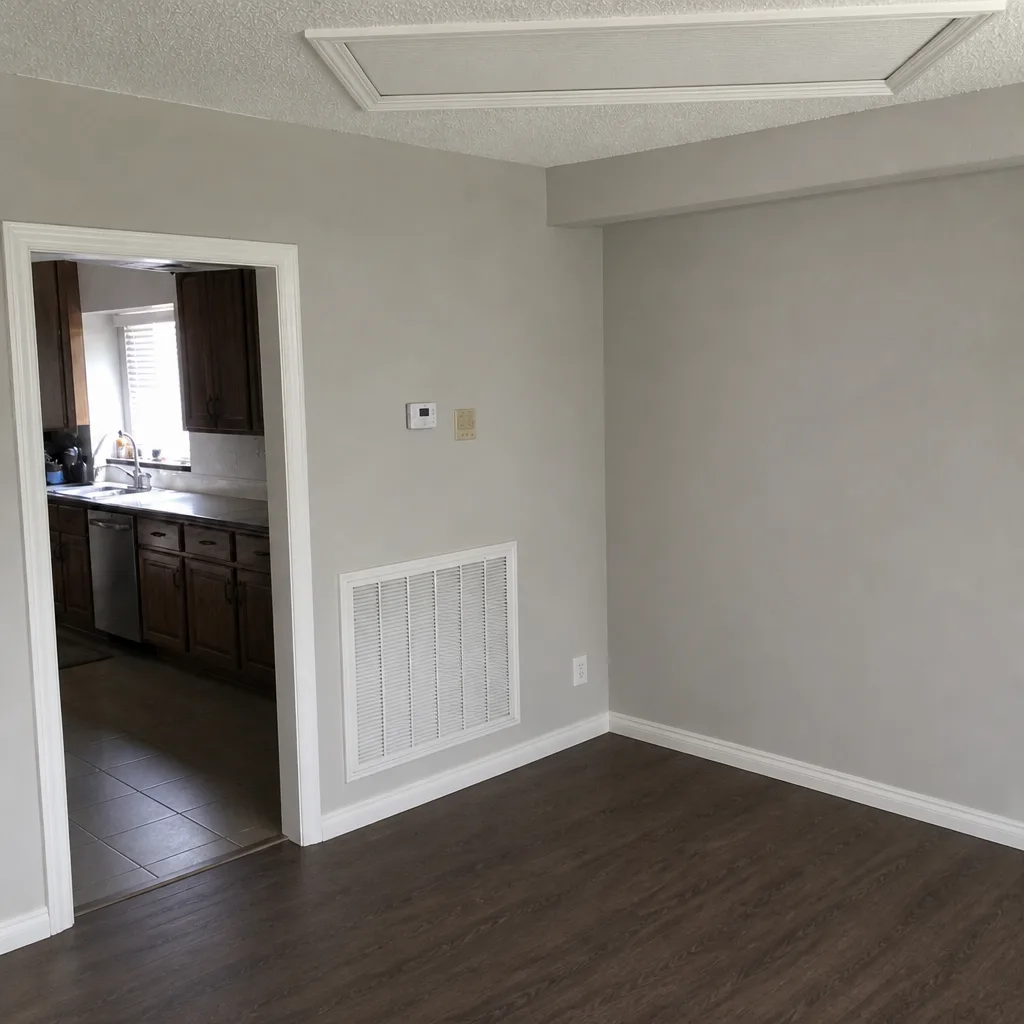 After
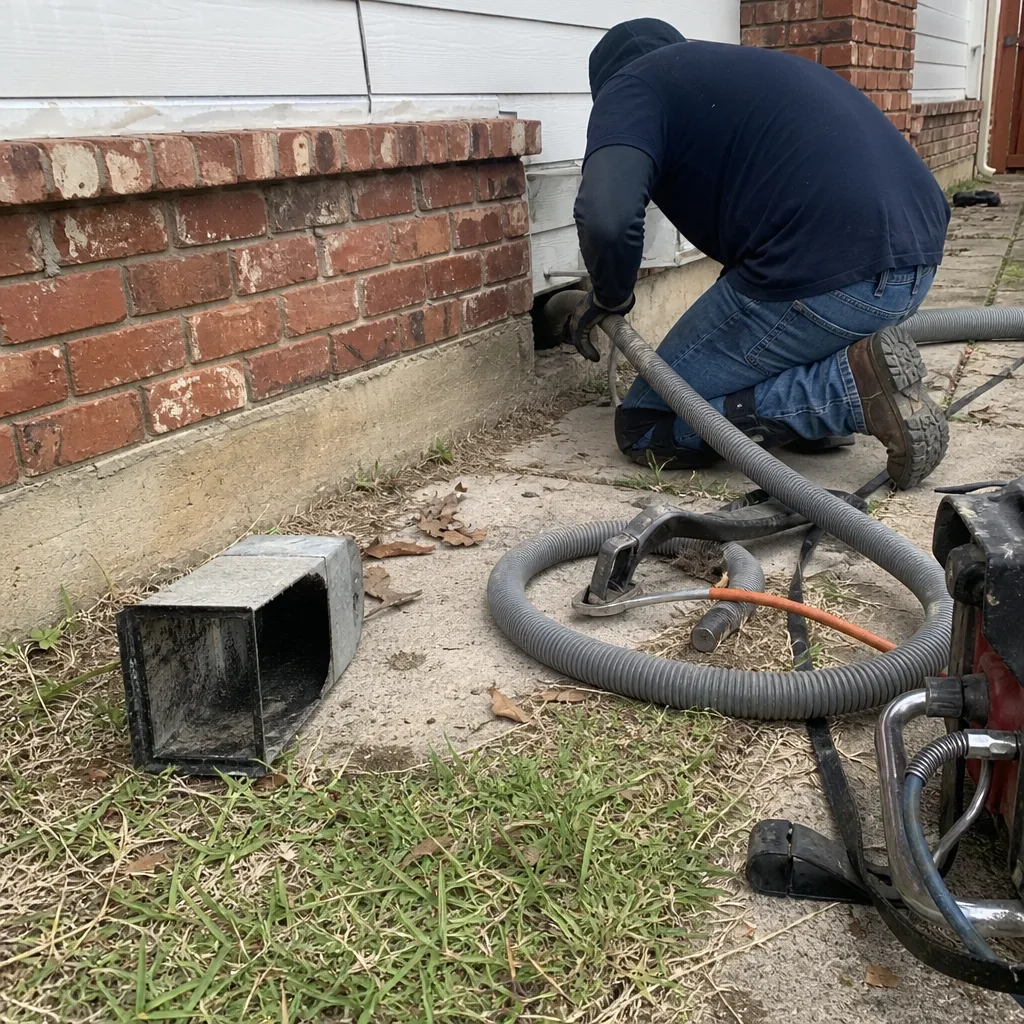 Before
 After
 Before
 After
When to Call a Professional
Some things are worth a phone call rather than a calendar reminder. Call a professional if you’ve had a major renovation, if a flashlight check shows heavy dust or staining, or if anyone in the house has noticed more allergy flare-ups than usual. Call if a register has weak airflow while others are strong, or if you hear a rattle or hiss at the air handler that suggests a loose joint. Call if you smell something musty when the system kicks on, or if you spot mold or pest activity in the ducts. And call if it’s simply been five years or more since the last cleaning. Duct Cleaning Carrollton offers free estimates in Carrollton: call (866) 580-7041. The estimate is free, the written price comes first, and cleaning plus repair happens in one visit.
Frequently Asked Questions
Most Carrollton homes should be cleaned every 3 to 5 years, with homes carrying heavy load factors (pets, recent renovation, low-MERV filters, older systems) leaning toward 2 to 3 years. Because the cooling season here runs long, your system moves more air than the national average assumes, so use the load-factor matrix rather than a fixed number. Call (866) 580-7041 for a free estimate.
Five years is at the upper edge of normal, and only for a home with good filtration, no pets, and no recent renovation. If any of those apply, five years is too long. A quick flashlight-and-phone check at an accessible register will tell you whether you’re ahead or behind. Call (866) 580-7041 for a free estimate.
Yes, mainly through your filter. Spring tree and grass pollen loads the filter fast, and a loaded filter passes more material into the ducts. Change it monthly during the peak spring weeks and inspect your ducts in late winter, before the load arrives, so you’re cleaning the system ahead of the season rather than after it. Call (866) 580-7041 for a free estimate.
Ask for before-and-after photos of your own ducts and confirm what equipment the crew uses: a professional cleaning uses a rotary brush system like Rotobrush and a commercial vacuum like Nikro, plus containment to capture what’s dislodged. If those photos and that equipment are part of the estimate, you have proof. Call (866) 580-7041 for a free estimate.
A very low quote usually skips containment, uses consumer-grade equipment, or prices per vent and lets the total creep up once the crew is on site. We quote one flat price per system, agreed before work starts, so the number doesn’t move. That’s the honest way to compare quotes. Call (866) 580-7041 for a free estimate.
Change the filter immediately and again a few weeks later, and book a professional cleaning once the dust has settled; any renovation resets your schedule. If the job involved drywall or insulation, that reset is mandatory regardless of when you last cleaned. Call (866) 580-7041 for a free estimate.
The Bottom Line
Air duct cleaning isn’t a once-a-decade chore you can take from a national website. The right interval depends on your pets, your household size, recent renovation, your filter’s MERV rating and your system’s age, and a quick matrix turns those into a real schedule. Change filters monthly during pollen season, inspect annually with a flashlight and your phone, and book a professional cleaning on your matrix number. Late winter is the smart slot in Carrollton, before the spring pollen load. And remember: if the ducts need repair, the same crew can clean and fix them in one visit, so you’re not stuck between two contractors.
Call (866) 580-7041 for a free estimate. We answer 24/7. Fast dispatch from 7am to 7pm, Sunday through Friday.
Written by the team at Duct Cleaning Carrollton, serving Carrollton since 2012.