
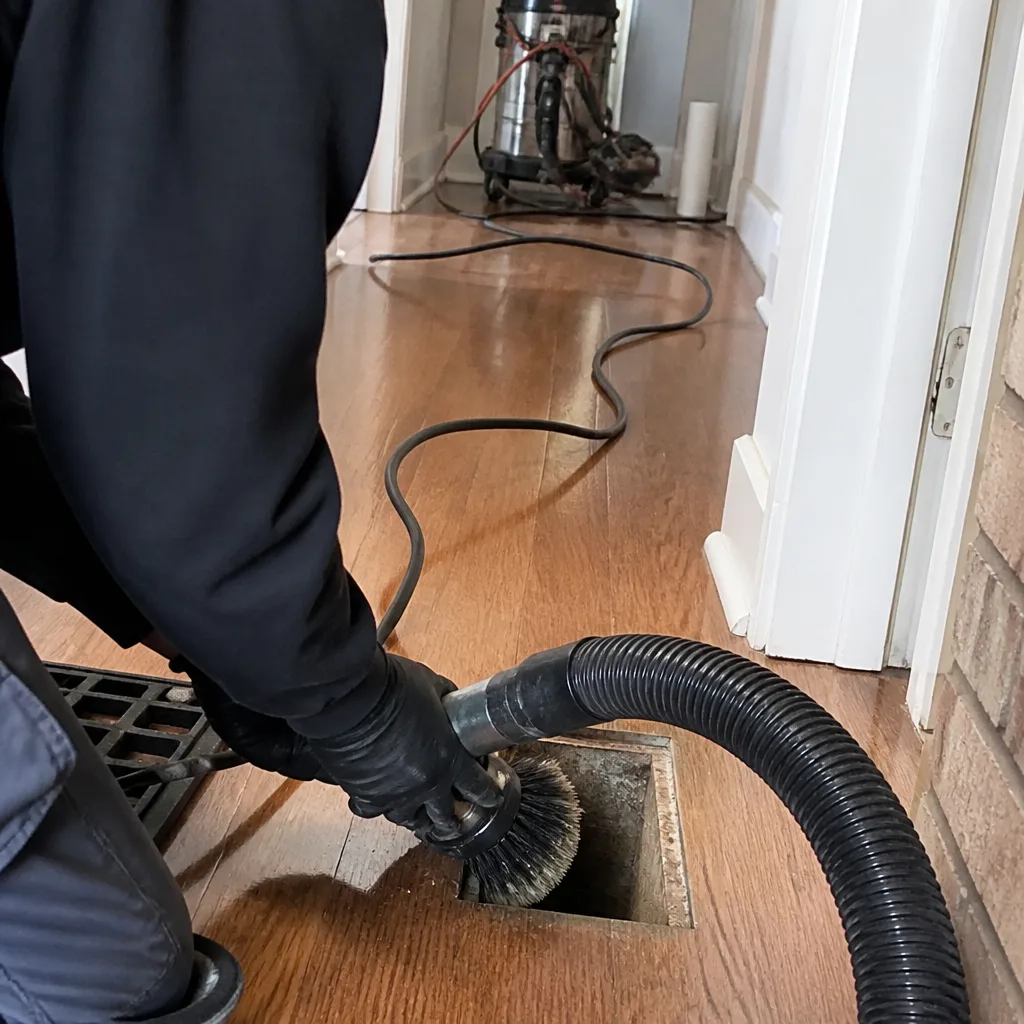
Last updated November 14, 2026
 Whole-home duct cleaning
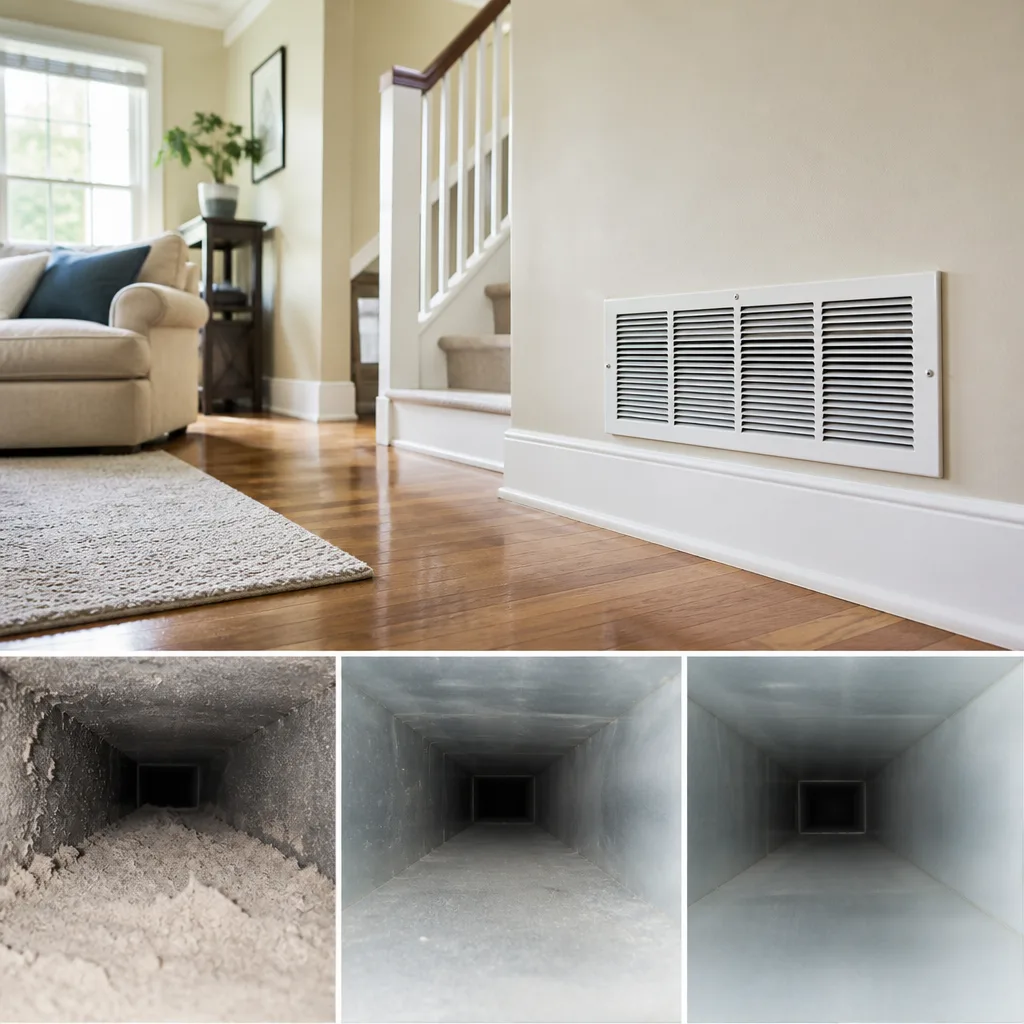
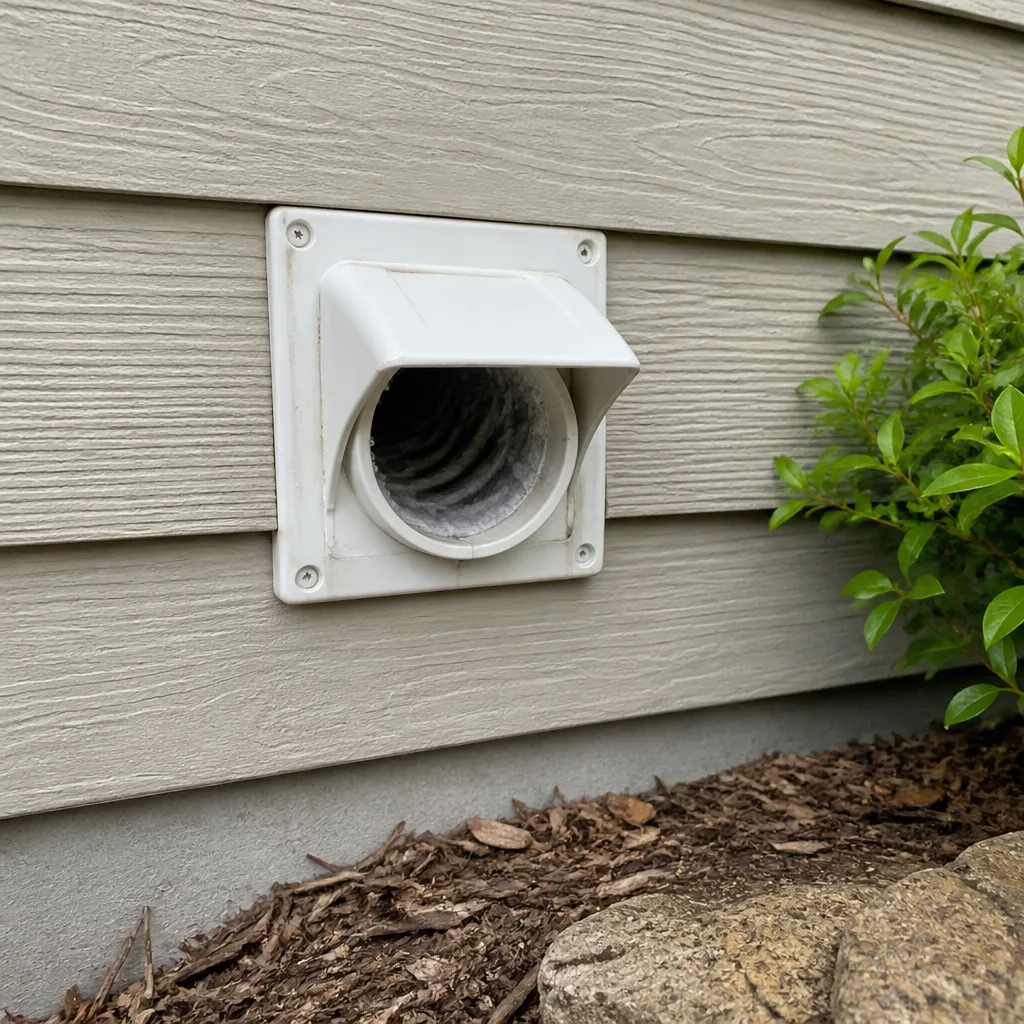 Dryer vent cleaning
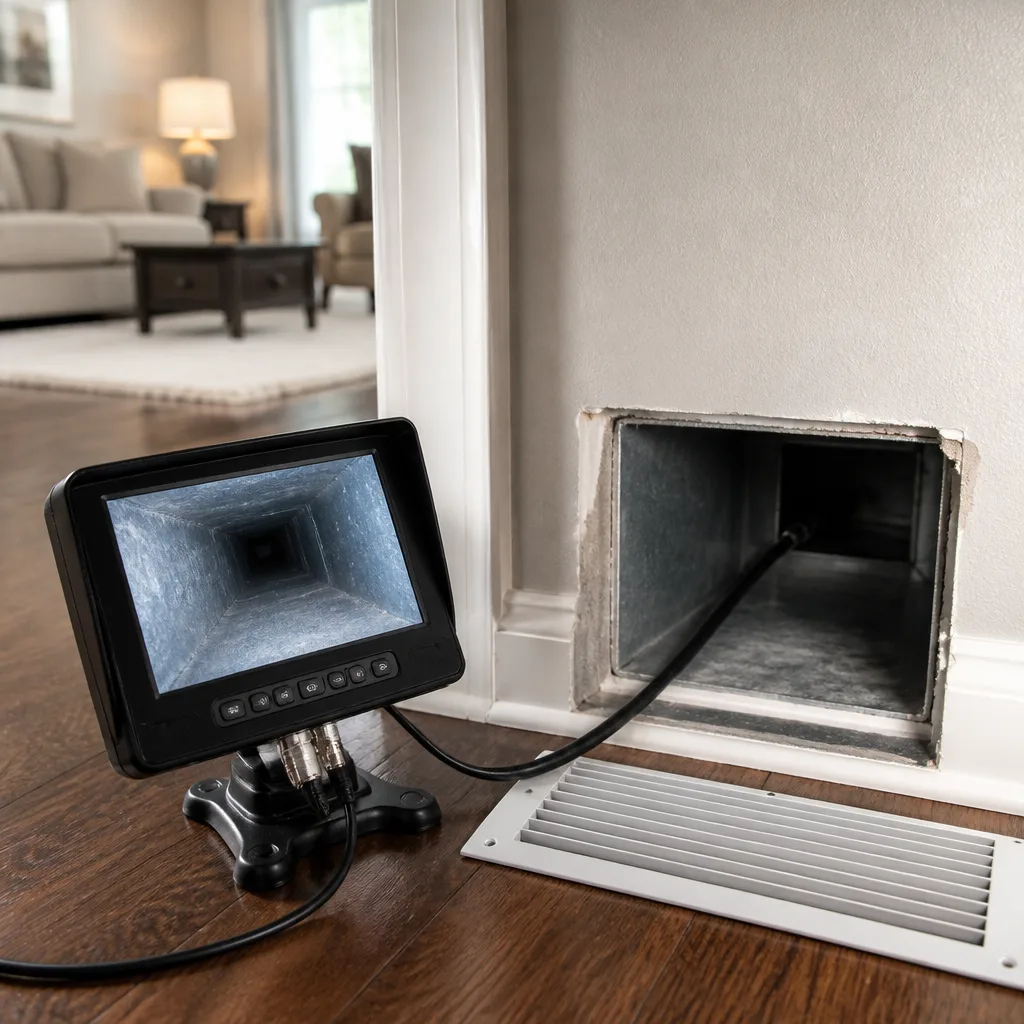 Camera inspection
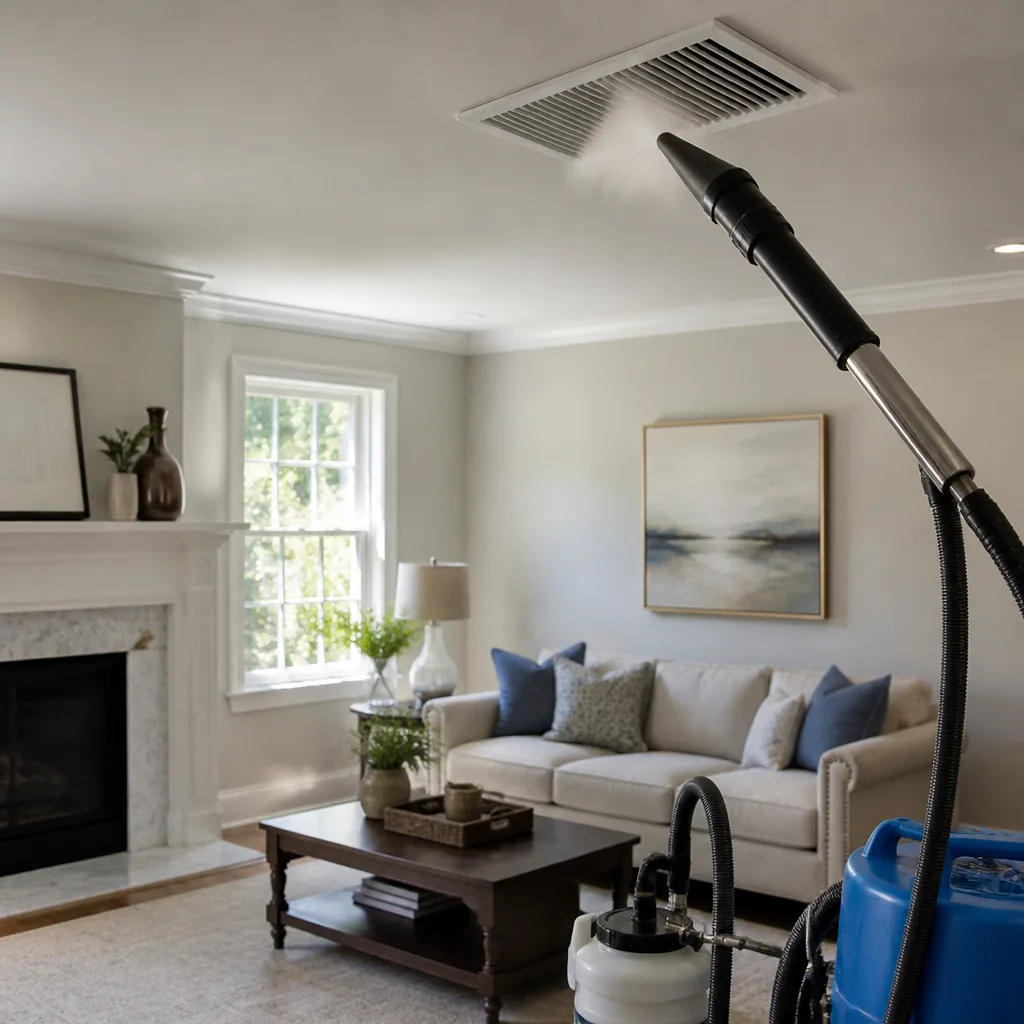 Sanitizing & deodorizing
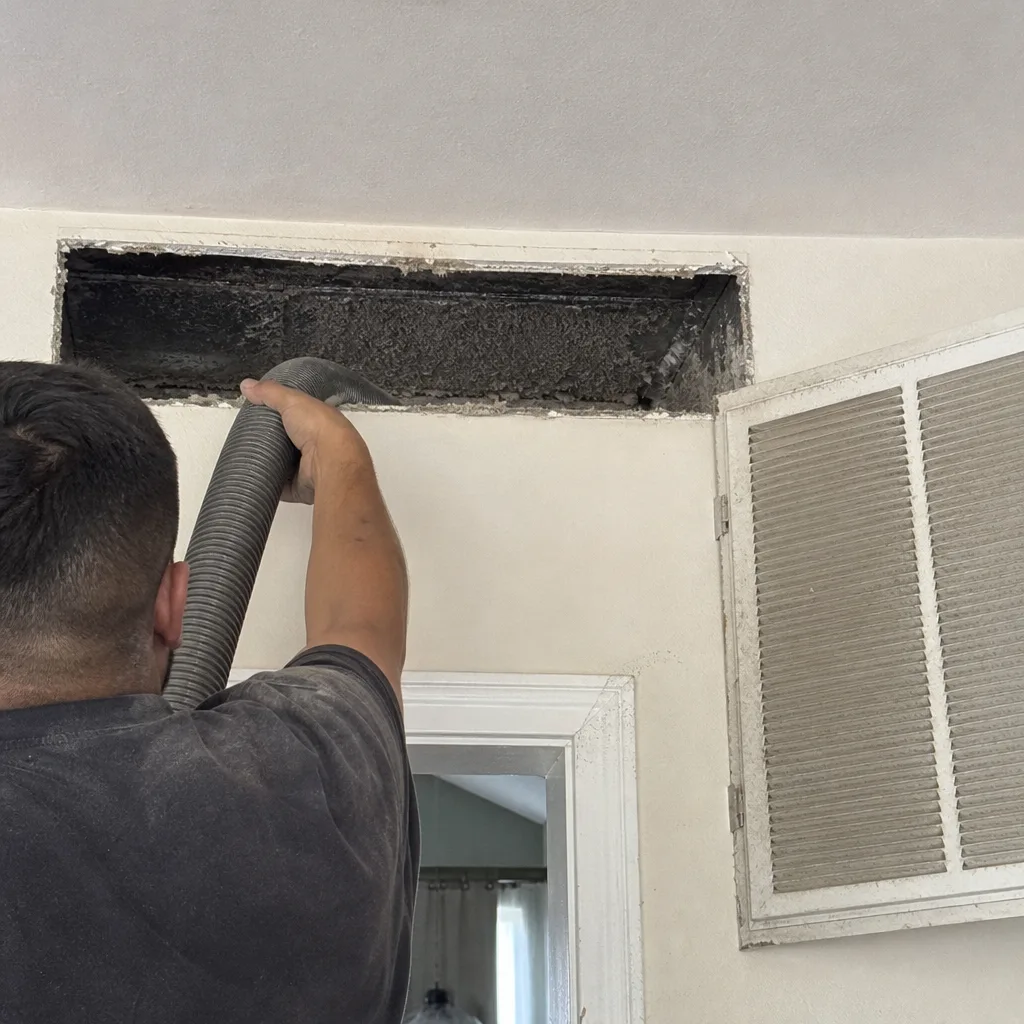
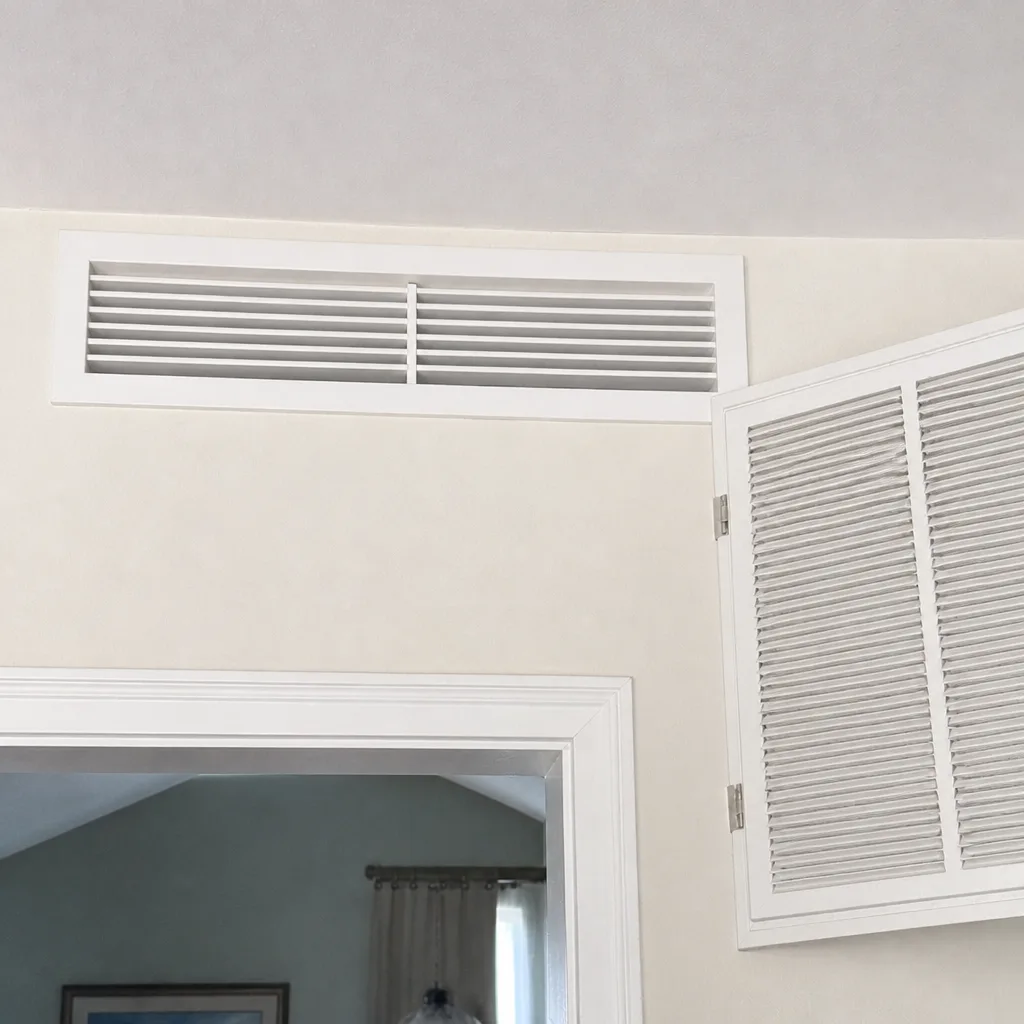
Whole-system duct and dryer vent check with before-and-after photos - you see exactly what came out of your vents
That "$99 whole-house special" is a bait ad - the real number appears once they are in your hallway, or the "clean" is a shop-vac at the register. We photograph the inside of your ducts before and after instead.
Air Duct Cleaning Permits, Codes & Inspections in Carrollton, TX: What You Need to Know
Here’s the part most homeowners get backwards: the cleaning itself is the easy half. Nobody at the City of Carrollton Building Inspection Department needs to sign off on a truck-mounted vacuum pulling years of dust out of your supply trunks. The moment the job turns into a repair, though, the rules change. A disconnected duct trunk found during cleaning, a new access panel cut into a plenum, a run reconnected with mastic and mechanical fasteners – that’s construction work, and Carrollton’s adopted mechanical code has something to say about it. This guide walks through what actually requires a permit, what counts as routine maintenance, and how to keep a cleaning visit from turning into an unpermitted repair that complicates a future sale.
Quick Answer
Air duct cleaning on its own almost never requires a permit in Carrollton, Texas – it’s classified as maintenance, not construction. But repairs and modifications discovered during cleaning, such as reconnecting a disconnected trunk, cutting a new access panel, or replacing a section of duct, generally fall under the International Mechanical Code as adopted locally and may require a mechanical permit. The line between the two is where most homeowners get surprised, and it’s the reason you want a contractor who tells you upfront which side of that line their work falls on.
Styles & brands we work with
- Whole-home duct cleaning
- Dryer vent cleaning
- Camera inspection
- Sanitizing & deodorizing
Table of Contents
- Does air duct cleaning require a permit in Carrollton?
- How Texas’s mechanical code adoption affects duct repair
- Cleaning vs. modification: how the city sees the difference
- What happens when cleaning uncovers a repair
- Unpermitted duct work and the Carrollton home sale inspection
- Documentation that protects you when scope crosses into permits
- What to ask before you book the job
- What a duct-related inspection actually checks
Does air duct cleaning require a permit in Carrollton?
No. Routine air duct cleaning in Carrollton is maintenance, and the City of Carrollton Building Inspection Department doesn’t issue permits for maintenance. You’re removing accumulated dust, debris, and biological growth from an existing system – nothing about that changes the structure of the home or the mechanical configuration of the HVAC system. No inspection is triggered, no plan review, no final sign-off.
What that means in practice is straightforward. When we run a Rotobrush rotary brush through a supply run and pull the loosened material back with a Nikro vacuum system, we’re working inside the existing assembly. We’re not adding to it or taking away from it. The mechanical code governs installation and alteration; cleaning is neither.
The same logic applies to dryer vent cleaning, which is a maintenance task on an existing exhaust path. Removing lint from a duct you already have isn’t construction.
Where homeowners get confused is the discovery phase. A cleaning visit is often the first time anyone has actually looked inside the duct system in years, sometimes decades. When we get eyes on a trunk line, we sometimes find things that were installed in a way that was never right, or that have failed since. That’s the moment the permit question becomes relevant, and it’s the subject of the rest of this guide.
- Cleaning: no permit, no inspection, maintenance category.
- Repairing a disconnected joint or sealing leaks: often permit-eligible depending on scope and local interpretation.
- Cutting new access into a plenum or trunk: construction, almost always permit territory.
- Replacing a duct run or resizing it: construction, permit territory.
How Texas’s mechanical code adoption affects duct repair standards
Texas doesn’t write its own mechanical code from scratch. The state adopts the International Mechanical Code, and cities like Carrollton then adopt that code locally, sometimes with amendments. What this means for you is that duct repair work in a Carrollton home is measured against a national standard that the local building department enforces – not against whatever the last contractor felt like doing.
The International Mechanical Code covers duct construction, sealing, support, and materials. It sets expectations for things like:
- How ducts are joined and sealed, including the use of approved tapes, mastics, and mechanical fasteners rather than a wrap of consumer-grade tape.
- Support spacing and how duct runs are hung or strapped so they don’t sag or separate over time.
- Access requirements so that the system can be inspected and maintained.
- Minimum clearances and the treatment of ductwork passing through certain spaces.
Why does this matter if you’re only booking a cleaning? Because the code is the yardstick an inspector uses later, and it’s the yardstick a buyer’s inspector uses during a sale. A Carrollton home with ducts reconnected in a way that doesn’t meet the adopted code is a home with a documented problem, even if the airflow seems fine. We’ve walked into plenty of Carrollton attics where a prior “repair” was a length of silver tape and hope. That’s not code compliance, and it’s not going to survive scrutiny.
Understanding the code also matters for our own scope. When we do air duct repair, we’re working against the same standard that a permit inspector would hold us to – whether or not that specific job requires a permit.
Cleaning vs. modification: how the city sees the difference
The City of Carrollton Building Inspection Department draws a line between work that maintains a system and work that alters it. That’s the line that determines whether a mechanical permit applies. Here’s how to think about it.
Maintenance keeps the system in its current configuration. Cleaning, sealing existing joints with approved materials, replacing a filter – none of these change the mechanical system’s arrangement. No permit.
Alteration changes the system. Adding a run, removing a run, cutting new access, moving a trunk, or replacing a section of duct with a different size or layout. These are construction activities. Under the adopted mechanical code, they can require a permit, and the scope of what’s permitted depends on the specifics of the job.
A practical way to check yourself: if the work requires a cut, a new opening, or a change to the routing of the system, assume a permit may be required and ask. If the work is entirely inside the existing system with no new openings or changes to the routing, you’re almost certainly in maintenance territory.
- Identify whether the work changes the routing or configuration of the duct system.
- If yes, ask the contractor whether a mechanical permit is required for this specific scope in Carrollton.
- If yes, ask who pulls the permit – the homeowner or the contractor.
- Get the answer in writing on the written estimate before work starts.
- If a permit is pulled, get the permit number and keep it with your home records.
What happens when cleaning uncovers a repair
This is the scenario that catches people off guard. The cleaning visit is scheduled, the truck shows up, and partway through the job the technician finds a disconnected trunk in the attic, a crushed flex run behind a knee wall, or a plenum that was never sealed to the air handler to begin with. Suddenly there’s a repair in front of you, and the permit question is live.
How a good contractor handles that moment matters a lot. Here’s what should happen:
- Show you the finding. Photos of the actual issue, before any work is done on it. Not a verbal description – visual proof.
- Explain the scope. What specifically needs to happen, and whether that scope crosses into permit territory under Carrollton’s adopted code.
- Quote the repair separately. The cleaning is one line item; the repair is another. You should see the price of each before you agree to either.
- Tell you the permit status. If the repair requires a permit, that should be stated clearly, with the option to either have the contractor pull it or to handle the repair as a separate scope of work.
- Let you decide. It’s your home. No pressure to authorize the repair on the spot.
What should never happen is the discovery turning into an upsell with no documentation. If a technician finds a “problem” and wants to fix it right now for a price they quote on the spot, ask to see it. Ask what the code requires. Ask for a written scope. A repair we can do same-visit with our own crew is one thing – we do plenty of sealing and reconnecting with Rotobrush and Nikro equipment on site – but the scope should be clear and the permit question answered honestly.
Unpermitted duct work and the Carrollton home sale inspection
Selling a home in Carrollton brings a level of scrutiny that catches some owners by surprise. A buyer’s home inspector looks at the HVAC system, and a good inspector will note unpermitted or non-compliant duct work in the report. That note doesn’t kill a sale by itself, but it opens a negotiation, and it can delay closing while the seller produces documentation or brings the work up to code.
The specific problems we see surface during sale inspections:
- Duct runs reconnected without the permits that the local building department would have required for that scope.
- Flex duct installed in a way that doesn’t meet the mechanical code’s support and sealing requirements.
- Access panels cut without permits and without adequate sealing.
- Mastic or tape used in a way that isn’t code-compliant, which an inspector will flag even if the airflow is fine.
Here’s the part that matters most: an unpermitted repair creates a liability that follows the house. The buyer inherits it. The seller owns the problem until it’s resolved. If the work is caught during the sale process, the seller is often the one paying to have it corrected on a compressed timeline, usually at a worse price than if they’d handled it properly the first time.
What we tell Carrollton homeowners is this: keep records. If a duct repair happens in your home, get the scope in writing. If a permit was required and pulled, keep the permit number and the final inspection documentation with your closing documents. That file is what saves you a negotiation two or five years later.
Documentation that protects you when scope crosses into permits
The single most useful thing you can ask a duct contractor for in Carrollton is a written scope that clearly separates cleaning from repair. Get it before the work starts. Here’s what should be on it.
- Cleaning scope: number of supply and return runs being cleaned, the equipment being used, and any containment measures (we use Abatement Technologies filtration and containment so dislodged material is captured, not blown back into the house).
- Repair scope, if any: a line-by-line list of what’s being repaired, with photos of the before condition if available.
- Permit statement: whether the repair scope requires a mechanical permit in Carrollton, and if so, who is pulling it.
- Pricing: cleaning and repair quoted as separate line items, with the written estimate setting the final price.
- Before-and-after photos of the actual ducts being cleaned – yours, not stock photos.
Ask also whether the company carries state licensure and insurance and bonding. That’s the baseline for anyone working inside your HVAC system. A contractor who can’t produce that paperwork on request is not a contractor you want cutting into your ductwork.
If your home has a whole-home air quality system – a Honeywell or Aprilaire filtration or humidification setup, for example – ask how the cleaning and any repair will integrate with it. Duct work that’s been sealed and repaired properly should work alongside the existing filtration systems, not against them. Guardsman-level protective treatments can extend the life of a cleaned system, and if that’s part of the scope it should appear on the written estimate, not get added verbally after the fact.
What to ask before you book the job
Before you book a duct cleaning or repair in Carrollton, get answers to these questions. If a contractor stumbles on more than one or two, that’s your signal to call someone else.
- Is cleaning included as a flat price per system, or priced per vent? A flat price per system with the written estimate setting the final number is the honest structure. Per-vent pricing invites a bait-and-switch.
- What equipment do you use? Rotobrush and Nikro systems are professional-grade cleaning equipment. A shop vac and a promise are not.
- How do you contain dust during the job? If the answer doesn’t include a containment and filtration setup, ask why not.
- If you find a repair, what’s the process? You want to hear: photos, written scope, separate price, permit answer, your decision.
- Do you handle duct repair yourself, or subcontract it? A company that cleans and repairs with the same crew can answer code questions coherently. A company that hands off to a subcontractor usually can’t.
- Will you provide before-and-after photos of my actual ducts? This is the single best verification that the work happened.
- Are you licensed, insured, and bonded? Ask to see it.
One question we like to add, because it’s the one that separates specialists from generalists: what do you do about dryer vent cleaning and duct repair alongside the duct cleaning? A company that does all three as dedicated services can give you a coherent answer for the whole system. A company that treats duct repair as an afterthought cannot.
What a duct-related inspection actually checks
If a mechanical permit was pulled for duct work in Carrollton, a final inspection follows. Understanding what the inspector looks at helps you know what to expect, and helps you spot when a contractor’s work is unlikely to pass.
The inspector is verifying that the work meets the adopted International Mechanical Code. That means checking:
- Duct connections are mechanically fastened and sealed with approved materials.
- Duct runs are properly supported and routed without crushing or sharp bends.
- Access panels, if any were added, are sealed and sized correctly.
- Clearances to combustibles and other code requirements for the specific installation are met.
- The system as a whole is safe and functional after the alteration.
What it doesn’t check is whether the ducts are clean. Cleaning is a separate category, and if a cleaning was included in the same visit, the inspector isn’t there to review that part of the work. This is part of why the paperwork matters: the permit and inspection document the construction; the cleaning invoice and before-and-after photos document the maintenance.
If a permit was required and never pulled, the inspection never happens, and there’s no record the work was done properly. That’s the liability. It sits with the homeowner until it’s resolved, and it surfaces at the worst moment – usually when the house is on the market.
Common Mistakes to Avoid
- Assuming all duct work is permit-free. Cleaning is maintenance; repairs and modifications are construction. The assumption that “duct work never needs a permit” is where most homeowners get caught during a Carrollton sale inspection.
- Letting a contractor skip the permit question. If a repair crosses into permit territory and nobody mentions it, the liability ends up with you. Ask directly, get the answer in writing.
- Booking on a per-vent price. The per-vent structure is where bait-and-switch pricing lives. A flat price per system, agreed on the written estimate before work starts, is the honest format.
- Skipping the before-and-after photos. Without them, you have no proof the cleaning actually happened. A contractor unwilling to show you the actual ducts being cleaned is a red flag.
- Not keeping the paperwork. Permit numbers, inspection documentation, written scope, and photos should go into your home file. They’re what answers a buyer’s inspector in five years.
- Using a generalist for a duct repair. A company that does HVAC installs but treats duct repair as an add-on often lacks the specific code fluency that duct work demands. A duct specialist does this work every day.
- Ignoring a whole-home air quality system during the work. If you have a Honeywell or Aprilaire system in place, the cleaning and any repair should integrate with it. Ask beforehand.
See the difference
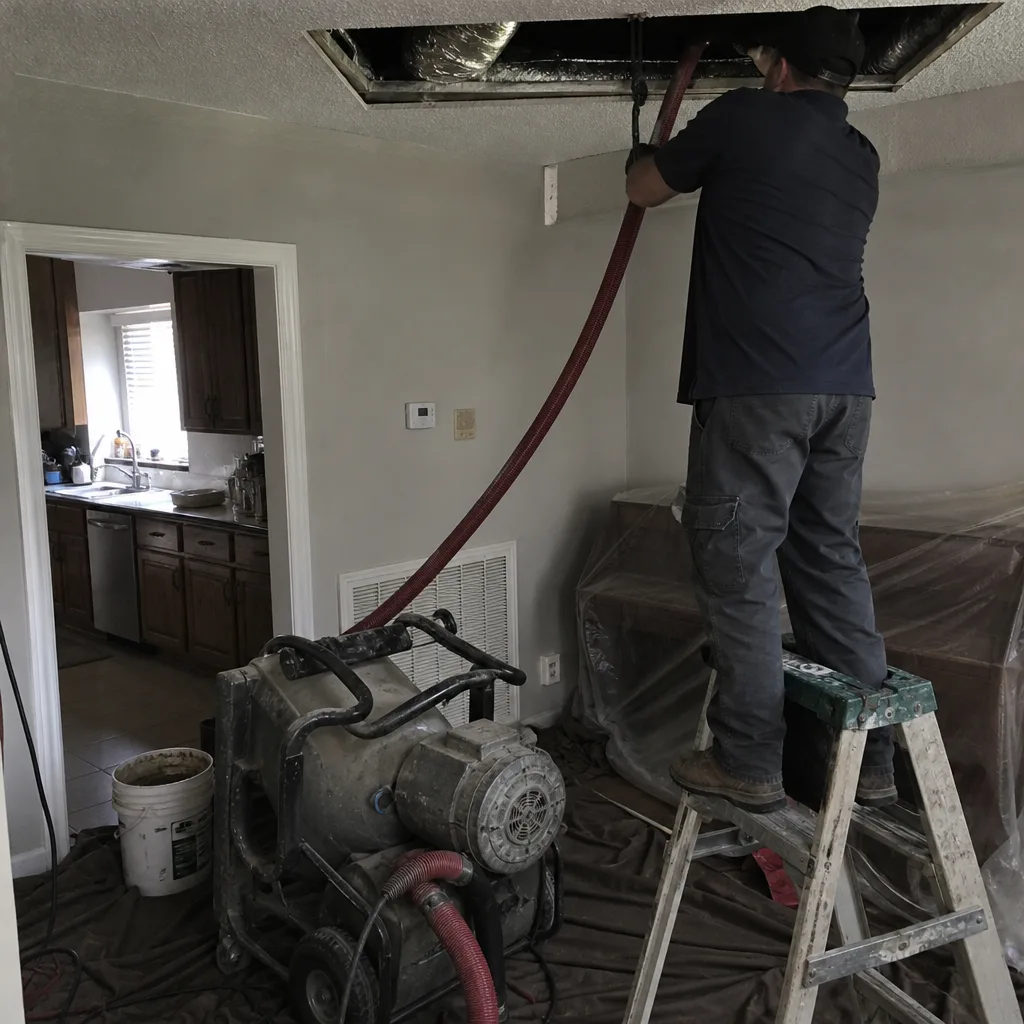 Before
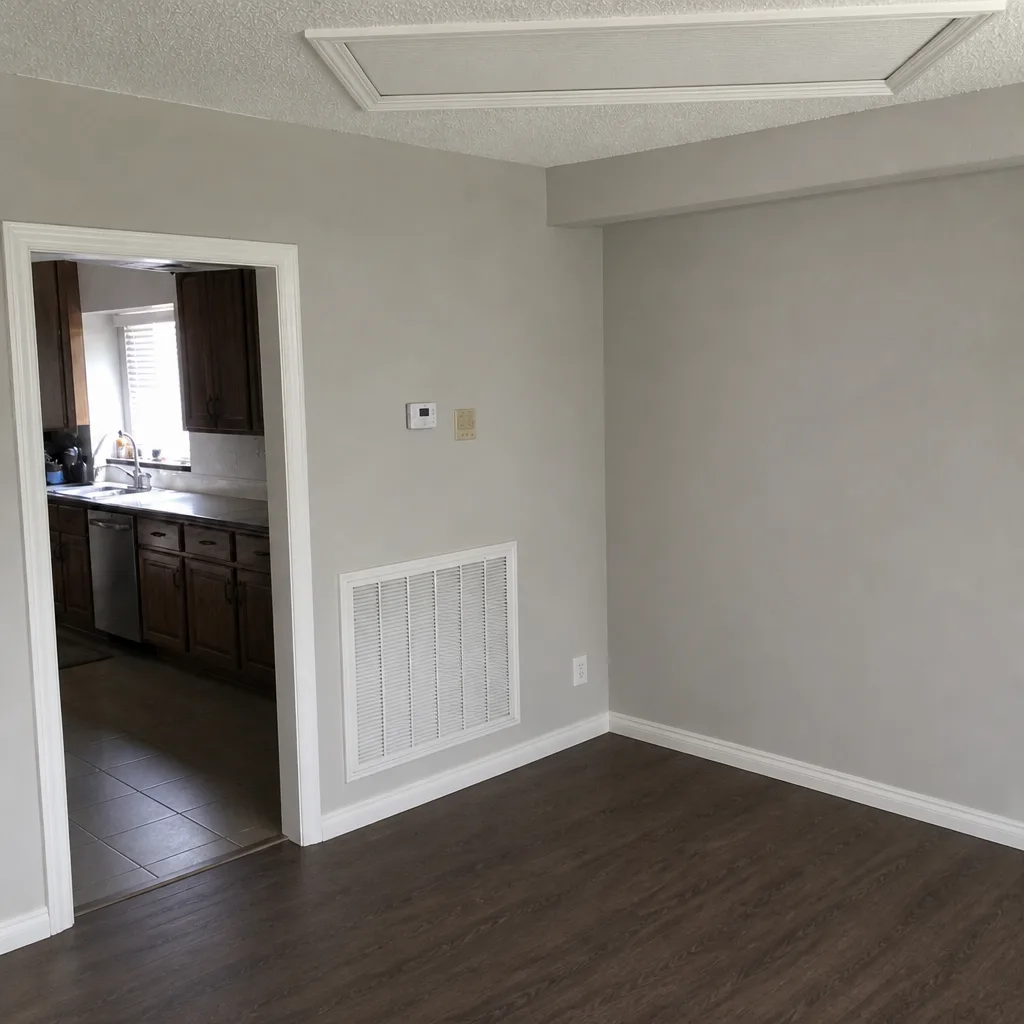 After
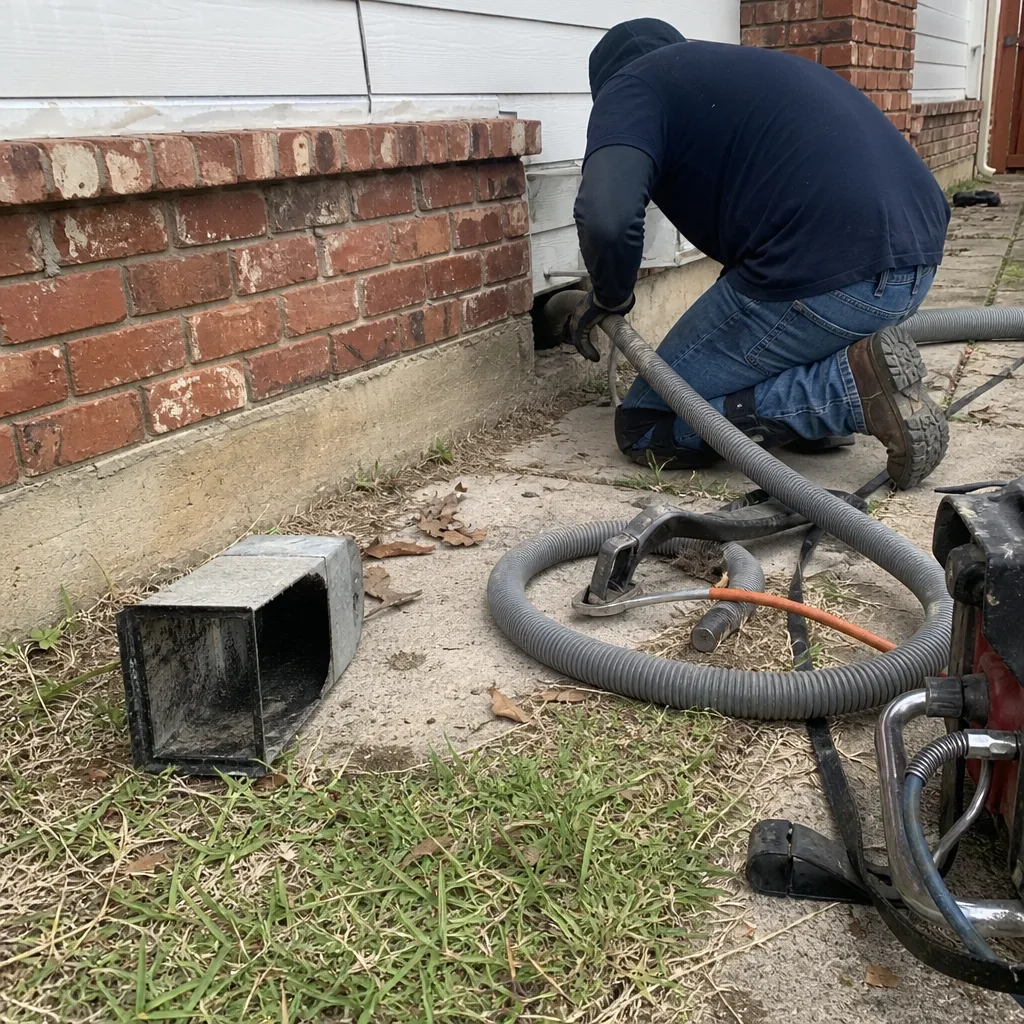 Before
 After
 Before
 After
When to Call a Professional
Not every duct problem needs a permit, but it does need a professional. Call when you notice reduced airflow in one part of the house and not others, when dust levels climb soon after cleaning, when you can see a crushed or disconnected run through an attic access, or when a room that used to heat and cool fine has stopped keeping up. Call before a home sale, especially if you can’t produce documentation for the last duct repair done in the house. And call if you’re a property manager whose building has never had the duct system looked at – the code and inspection questions only get harder with time. Duct Cleaning Carrollton offers free estimates in Carrollton – call (866) 580-7041. We answer 24/7, with fast dispatch from 7am to 7pm, Sunday through Friday.
Frequently Asked Questions
No. Air duct cleaning in Carrollton is classified as maintenance, not construction, and does not require a mechanical permit or an inspection from the City of Carrollton Building Inspection Department. If the cleaning uncovers a repair that changes the configuration of the duct system, that separate scope may require a permit depending on what it involves. Call (866) 580-7041 to discuss the scope of your job – estimates are free.
Any duct work that alters the system’s configuration – cutting a new access panel, replacing or resizing a duct run, moving a trunk line, or reconnecting a section in a way that changes the routing – can fall under Carrollton’s adopted mechanical code and require a permit. Sealing existing joints and reconnecting an existing joint in place is usually maintenance. The specific scope determines the answer, and it’s worth asking your contractor in writing before work starts.
Ask for the permit number and the final inspection documentation. In Carrollton, mechanical permits are issued and inspected by the City of Carrollton Building Inspection Department, and the permit record should be retrievable through the department. If the seller or the contractor can’t produce documentation, that’s a question worth resolving before closing.
Yes, and it’s one of the more common items a buyer’s home inspector flags. The inspector notes it in the report, the buyer’s agent uses it in negotiation, and the seller ends up correcting it on a deadline. Keeping the permit number, the inspection paperwork, and photos of the work is what saves you from that scenario.
Cleaning removes material from inside the existing duct system without changing it. Modification changes the duct system’s configuration – adding a run, removing one, cutting a new opening, or rerouting a section. Cleaning is maintenance; modification is construction. Under Carrollton’s adopted code, the permit question turns on which one the job actually is.
Pricing for duct cleaning is set per job by a written estimate after we see the system, because every home’s duct layout and condition are different. If a repair turns up during cleaning, it’s quoted as a separate line item with a clear scope, so you can see what each portion of the work costs. The permit question, if it applies to a repair, is answered in writing before that work starts. Call (866) 580-7041 for an exact quote – estimates are free.
Usually because they’re priced per vent as an entry point rather than priced per system as a real number. The low per-vent figure draws you in, and the invoice grows once the equipment is in the driveway. One flat price per system, set by the written estimate, is the structure that avoids that whole pattern. Call (866) 580-7041 to get a real number for your specific system.
The Bottom Line
Air duct cleaning in Carrollton is maintenance. It doesn’t need a permit, and no inspection follows. But cleaning is often the first time anyone has actually looked inside your duct system, and the repairs or modifications it uncovers can sit in a different category under the adopted International Mechanical Code – permit territory that plays out during inspections, home sales, and buyer negotiations. The protection is simple: a written scope that separates cleaning from repair, an honest permit statement when a repair crosses the line, before-and-after photos, and a signed estimate that sets the final price. Keep the paperwork, and the liability stays where it belongs – with the work, not with you.
Whatever the job turns out to be, whether you need a straightforward cleaning or you’ve already spotted something else, we’re happy to take a look and give you a written estimate. Our team is familiar with the code questions that come up around duct repair in Carrollton, and if the repair needs a permit we’ll tell you. Cleaner air starts with the system behind your walls. Call (866) 580-7041. We answer 24/7. Fast dispatch from 7am to 7pm, Sunday through Friday. Closed Saturday.
Written by the team at Duct Cleaning Carrollton, serving Carrollton since 2012.