
Last updated November 14, 2026
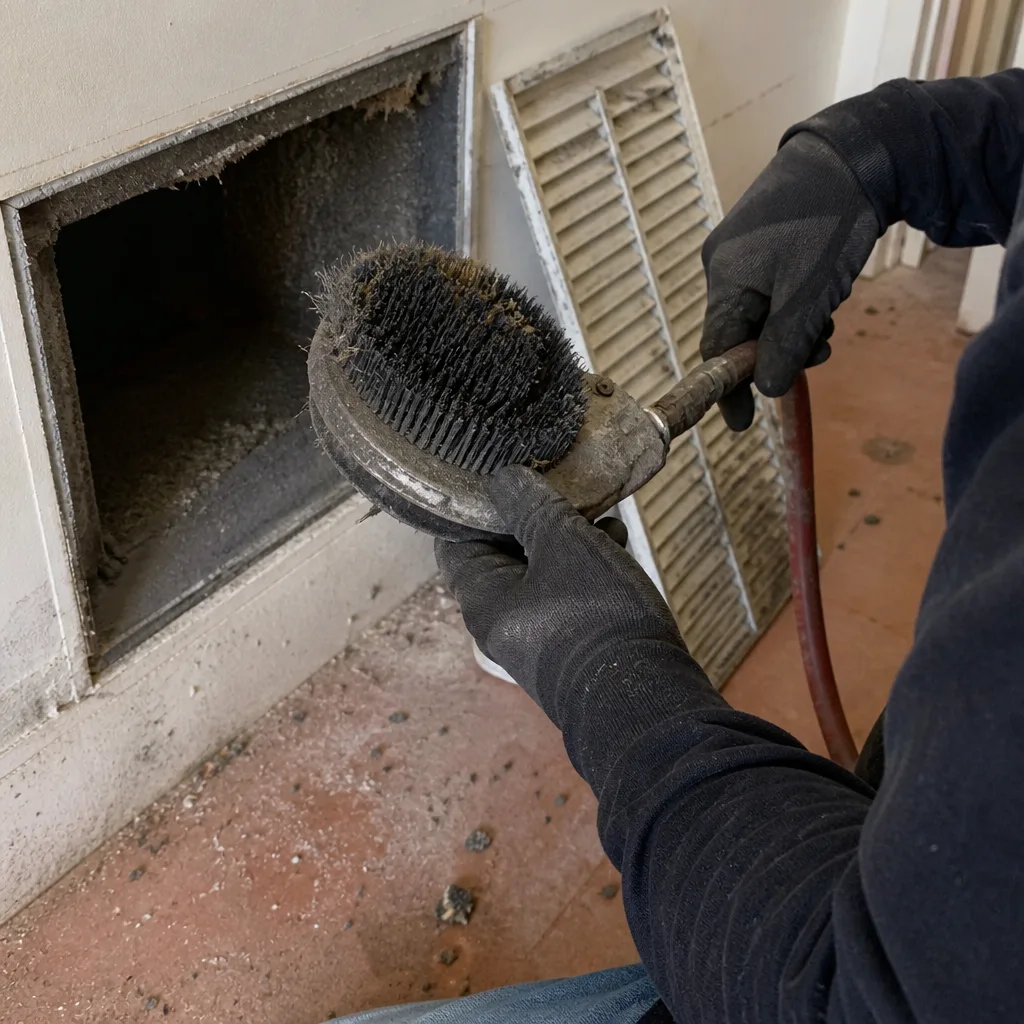
 Whole-home duct cleaning
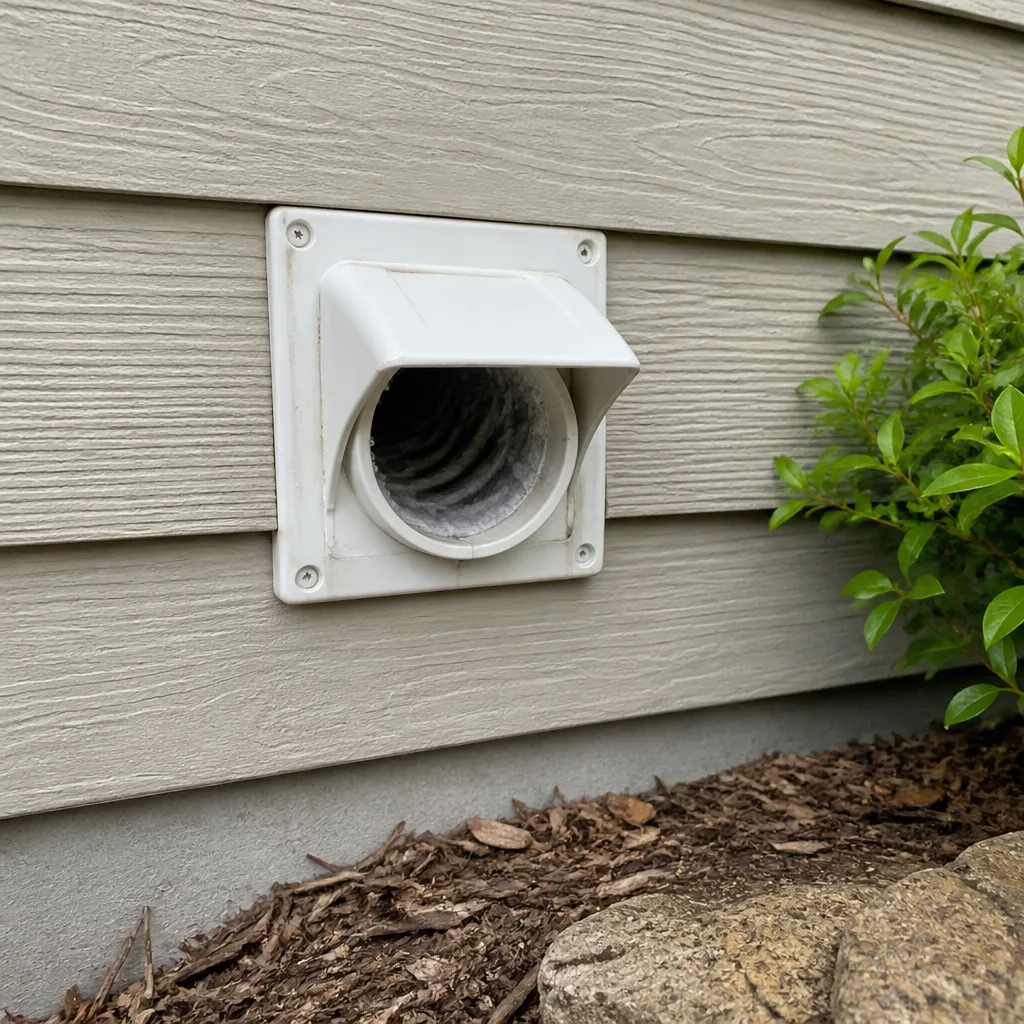 Dryer vent cleaning
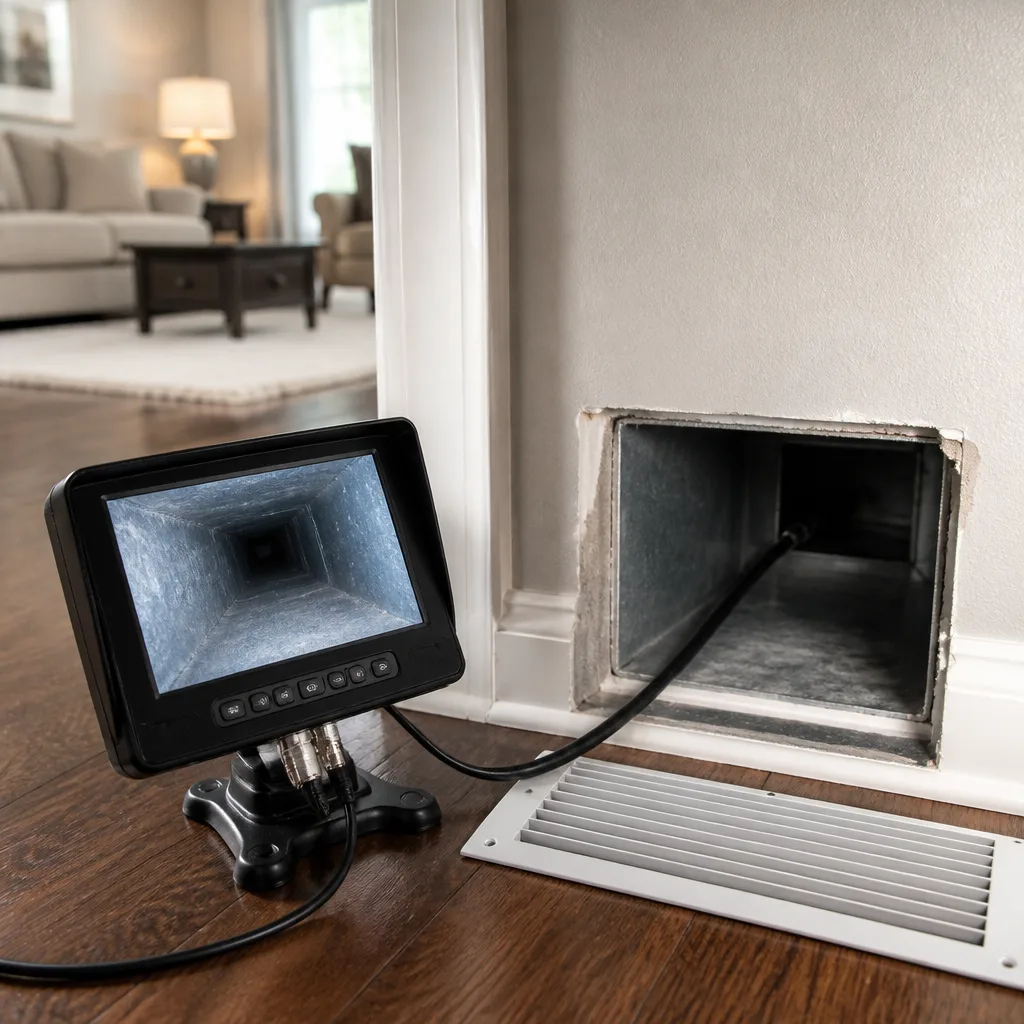 Camera inspection
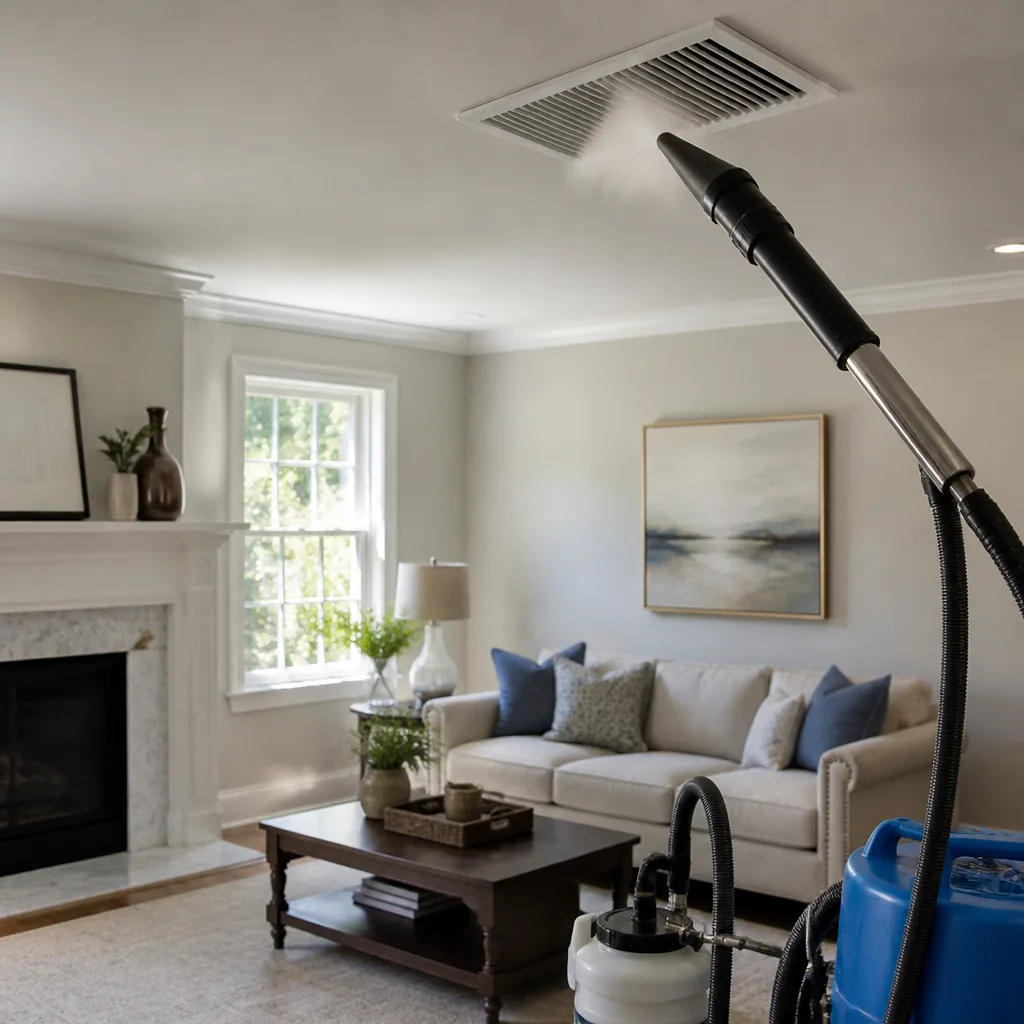 Sanitizing & deodorizing
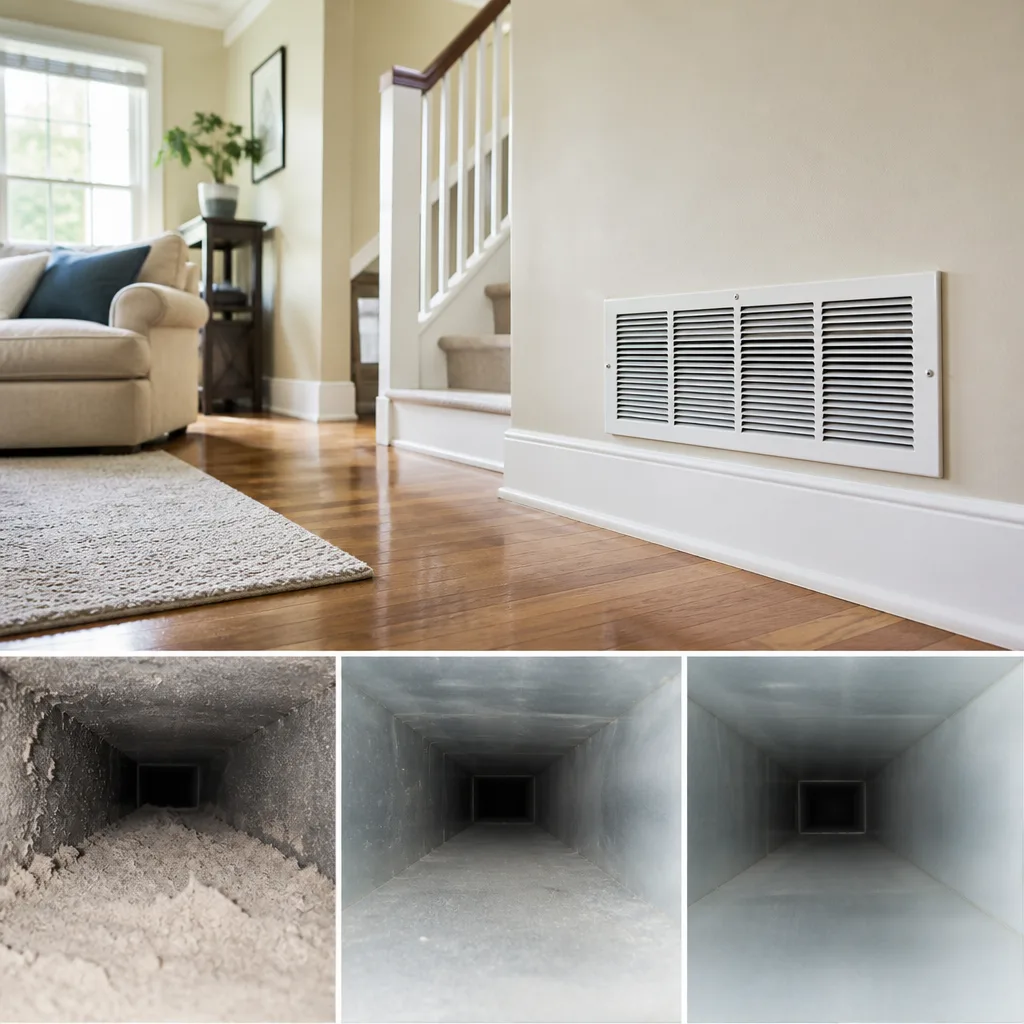
Whole-system duct and dryer vent check with before-and-after photos - you see exactly what came out of your vents
That "$99 whole-house special" is a bait ad - the real number appears once they are in your hallway, or the "clean" is a shop-vac at the register. We photograph the inside of your ducts before and after instead.
Air Duct Cleaning Maintenance Checklist for Carrollton Homeowners
Most homeowners treat duct cleaning as a reset button. Book the crew, watch the before-and-after photos, and assume the system is handled for years. Here’s the part that gets skipped: ducts don’t stay clean because they were cleaned. They stay clean because everything feeding them and everything downstream of them is also in order. If your filter slot has an air gap around the frame, or your return grilles are pulling from an unconditioned attic space, a professional cleaning will buy you maybe six months before you’re back to square one. This guide is a working checklist for Carrollton homeowners who want the cleaning to actually last – upstream filtration, return-side integrity, seasonal timing tied to North Texas conditions, and the components that quietly undo a good cleaning if nobody checks them.
Quick Answer
A durable air duct maintenance routine in Carrollton runs on three tracks: a seasonal cleaning and inspection schedule timed to cedar fever in winter, mold season in spring, and peak HVAC load in summer; quarterly checks of filter fit, return grilles, and visible dust at the registers; and a one-time-per-year look at the components near the ducts – evaporator coil, drain pan, blower wheel – so clean ducts don’t sit next to a dirty coil. Full-system cleaning itself is typically needed every three to five years for most homes, sooner if you have pets, recent remodeling, or a filtration system with known bypass.
Styles & brands we work with
- Whole-home duct cleaning
- Dryer vent cleaning
- Camera inspection
- Sanitizing & deodorizing
Table of Contents
- Why a Cleaning Alone Doesn’t Last
- Month-by-Month Schedule for Carrollton’s Climate
- Filter Slot Integrity: The Bypass Test
- Return Grille Inspection Protocol
- Logging Static Pressure as an Early Warning
- Components That Must Be Checked With the Ducts
- What to Ask Before Anyone Opens Your System
- Common Mistakes to Avoid
Why a Cleaning Alone Doesn’t Last
A duct system is a loop, not a container. Air leaves the supply registers, picks up whatever’s airborne in the rooms, returns through the grilles, passes the filter, crosses the coil, and goes back out. Every point in that loop can reintroduce what the cleaning removed. We see this often in Carrollton homes built during the 1990s and 2000s boom, where flex duct runs through attics that reach well over 130°F in July. Loose joints, sagging runs, and unsealed plenum connections at the air handler all pull attic air into the stream. That attic air carries insulation fibers, dust, and whatever the wind brought in.
The practical consequence is that cleaning does two things at once. It removes accumulated debris from inside the ducts, and it reveals the condition of the system. A crew working with Rotobrush rotary equipment can see the inside of the trunk lines and branches clearly. What they find – torn flex, disconnected collars, dust trails marking leaks – tells you whether the cleaning will hold.
- Clean ducts plus a leaky return re-contaminate in months.
- Clean ducts plus a dirty coil keep recirculating biological growth that settles back into the supply.
- Clean ducts plus a filter bypass gap let unfiltered air straight past the filter, which is the single most common cause of fast re-soiling.
That’s why this checklist leads with the upstream and downstream items rather than the cleaning itself. If you want a full baseline on what air duct cleaning covers, that page details the process. The checklist below is what you do between visits.
Month-by-Month Schedule for Carrollton’s Climate
Carrollton’s seasons don’t map cleanly to a generic national checklist. The specific exposures here are cedar pollen in winter, a spring mold window when humidity climbs before the AC is running hard, and a long summer stretch when the system runs nearly continuously. Timing maintenance to those patterns matters more than picking an arbitrary month.
- January – February (cedar fever season). Mountain cedar pollen is heaviest in North Texas during these weeks. Change or upgrade the filter on a shorter interval than usual and check return grilles for visible pollen dust. If anyone in the house reacts badly this time of year, a whole-home filtration setup from a brand like Aprilaire can make a measurable difference – but only if it’s sized and installed correctly for your system’s airflow.
- March – April (spring mold window). Humidity rises before most people switch the AC on. Inspect the air handler closet or platform for moisture, check the drain pan, and look for any dark staining at the supply registers. This is when a compromised duct becomes a biological growth problem rather than a dust problem.
- May (pre-summer tune check). This is the right month to schedule an inspection or cleaning. Once the system is running continuously, a crew working inside the ducts creates less disruption, but getting ahead of the peak load season means the system starts July clean.
- June – August (peak load). Watch for reduced airflow, rooms that don’t cool evenly, and dust settling faster than usual. Any of those three is a signal to check the filter, then the return grilles, then call for an inspection. Also check the dryer vent this time of year; it’s the same venting logic applied to a different appliance, and a lint-clogged vent runs hotter in a hot garage or utility room.
- September – October (post-summer reset). The system has just run for months. Change the filter, vacuum the return grille faces, and note any new dust patterns for comparison against your photo record.
- November – December (pre-holiday). If guests are coming and the house hasn’t had a professional visit in years, this is a reasonable month to schedule a cleaning. It’s also the month to check the dryer vent before the appliance runs through the holiday laundry load.
If you rent out or manage property in Carrollton, the schedule tightens. A rental turnover is the best moment to document system condition with photos, because it establishes a baseline for the next tenant.
Filter Slot Integrity: The Bypass Test
Here’s the test. With the system fan running, hold a tissue or a strip of light paper near the edges of the filter frame – all four sides and the corners. If it flutters or gets pulled toward the gap, you have bypass. Air is going around the filter, not through it. That unfiltered air is what coats the inside of your ducts and the face of the evaporator coil.
Bypass is common in Carrollton homes for a simple reason: many filter slots were built as a rough opening in a sheet metal plenum, sized for a standard 1-inch filter with no gasket, no track, and no seal. The filter sits in the slot like a card in an envelope, and the corners are wide open.
What to look for:
- Visible gap between the filter edge and the frame, especially at the corners.
- Dust streaks on the sheet metal downstream of the filter – a clear map of where air is sneaking past.
- Filter that bows inward under suction, which means the frame is oversized for the filter.
- No filter track at all, or a track that’s been bent out of shape.
There are a few fixes. A correctly sized filter with a foam gasket around the perimeter closes small gaps. A filter grille with a proper track and latch seals better than a bare slot. For homes with a whole-home media cabinet – Honeywell and Aprilaire both make these – the cabinet itself should be checked for a gasket seal on the door and a properly fitting media pad. A media cabinet that isn’t sealed is just a bigger bypass.
We regularly find this during cleaning work. A homeowner with fast re-soiling usually has a bypass problem, not a cleaning problem. Fixing the seal first means the next cleaning lasts years instead of months. For a full picture of how the cleaning process handles the rest of the system, the Duct Cleaning Carrollton page walks through the equipment and containment steps.
Return Grille Inspection Protocol
Return grilles are the entry point for everything that ends up in your ducts, which makes them the most useful thing you can photograph. The protocol below takes about five minutes per grille and builds a record you can compare year over year.
- Photograph the grille face with your phone, straight on, in even light. Note the date.
- Remove the grille if it’s the hinged or screw-mounted type and photograph the filter behind it, plus the visible interior of the return boot. This is the shot that shows the most.
- Check for a gap around the boot where it meets drywall or framing. If the boot is set into an attic-side chase with no seal, the return is pulling from that space. In a Carrollton attic in August, that space is very hot and very dusty.
- Look for dust tracking – dark streaks along the edges of the grille frame or the boot. Streaking pattern tells you which side is leaking.
- Note the grille size and type and whether it has a filter behind it. Some homes have a filter grille in the wall or ceiling for each return, others have a single media cabinet at the air handler. Know which you have.
- Compare to last year’s photos. Faster dust buildup in one location versus another tells you where the leak is.
If a return grille is drawing from an unconditioned attic or garage space, that’s a repair issue, not a cleaning issue. Sealing the boot and the chase is the fix, and it’s work we handle as part of duct repair on the same visit as cleaning, so the system doesn’t get cleaned and then immediately re-contaminated through the same unsealed opening.
A note on what to check without doing: don’t cut into drywall or attempt to access the attic chase yourself if the boot connection isn’t visible. Photograph what you can reach, note the rest, and have it checked during a professional visit.
Logging Static Pressure as an Early Warning
Static pressure is the resistance the blower has to push against. Measured at the air handler, it’s the single best leading indicator of duct restriction buildup. A rising total external static pressure reading over months means the system is working harder to move the same air, and you’ll feel it as weak airflow at the far registers long before the ducts look visibly dirty.
This is a diagnostic reading, not a homeowner DIY measurement, so the practical version of this checklist item is to have the reading taken and logged. Ask for three numbers: return static, supply static, and total. Write them down with the date and the filter type and condition at the time of measurement. Keep that log with your system paperwork.
Why it matters for Carrollton specifically: a big share of local homes have long flex duct runs through a hot attic. Flex duct has more resistance per foot than rigid, and it can sag or get kinked against framing over time. A static pressure log catches that drift early, while it’s a reseal or a re-support job rather than a compressor problem.
- Rising total pressure with a clean filter points to duct restriction: kinked flex, collapsed sections, closed dampers, or debris accumulation.
- Rising pressure with a filter that loads fast points upstream: bypass, a return pulling from a dirty space, or a filter that’s too restrictive for the blower.
- Stable pressure across seasons means the system is behaving. Keep logging.
Airflow readings cost almost nothing to collect during a scheduled visit and they convert guesswork into a record. That’s the kind of maintenance discipline a duct specialist should bring. Rotobrush and Nikro equipment are the cleaning side of the work; static pressure readings and the filter and grille checks are the monitoring side. Both belong in the same routine.
Components That Must Be Checked With the Ducts
Clean ducts sitting next to a dirty evaporator coil is a job half done. The coil sits downstream of the filter and upstream of the supply plenum, which means every particle that gets past the filter lands on it. Once it’s coated, it becomes both a restriction and a place where moisture sits. The ducts get cleaned, the system runs, and the coil releases that material right back into the supply air.
The components to coordinate with cleaning:
- Evaporator coil. Visible dust, matting between the fins, or a musty smell when the fan starts are all signs it needs attention. Coil cleaning is typically handled by an HVAC contractor, not a duct cleaner; the point is to know its condition before the ducts are cleaned, not after.
- Drain pan and drain line. A pan with standing water, algae growth, or a sloped drain that doesn’t fully empty is a biological growth source. Check it every spring in Carrollton, when the humidity rises before the AC runs consistently.
- Blower wheel. Dust on the wheel blades unbalances it and reduces airflow. A visibly coated wheel means the intake side is passing more than it should.
- Plenum and air handler cabinet. The connection between the air handler and the duct system is a common leak point, and it’s often taped rather than properly sealed. Cleaning reveals it.
- Coil cabinet filter slot. Already covered above, but it belongs on this list too. Fixing the slot matters more than fixing the ducts.
Some houses have a humidifier tied into the system. A humidifier with a stale pad or a mineral-crusted canister can contribute to biological growth inside the duct run. If you have a Honeywell or Aprilaire humidifier, check the pad on the same schedule as the filter, and have the housing cleaned during the duct service.
What to Ask Before Anyone Opens Your System
You’re letting a crew into your HVAC system. The questions below cut through the sales pitch and reveal whether the company will contain the dust it dislodges or redistribute it through your home.
- What equipment are you using? A rotary brush system plus a high-powered vacuum, working together, loosens and captures debris. The names to recognize are Rotobrush and Nikro – the same equipment class used in commercial and restoration work. Consumer vacuums and shop vacs don’t move the air volume required to capture what a brush loosens.
- How is the dust contained? Abatement Technologies containment and filtration equipment captures dislodged particulate at the source. If the answer to this question is vague, the crew is likely relying on the vacuum alone.
- Do you seal gaps or repair ductwork? Cleaning without addressing torn flex, disconnected collars, or a leaky return boot means the ducts will get dirty again. A company that does Air Duct Repair can fix what the cleaning finds, on the same visit.
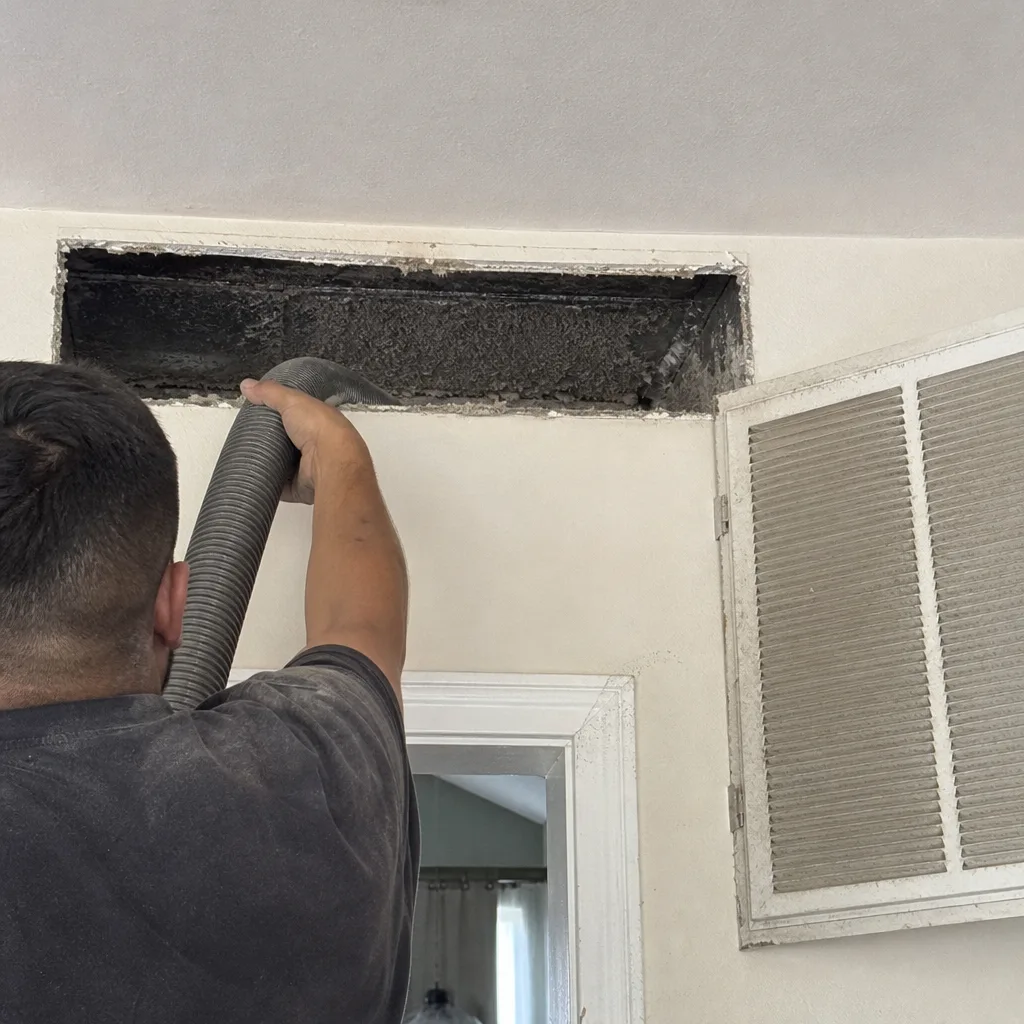
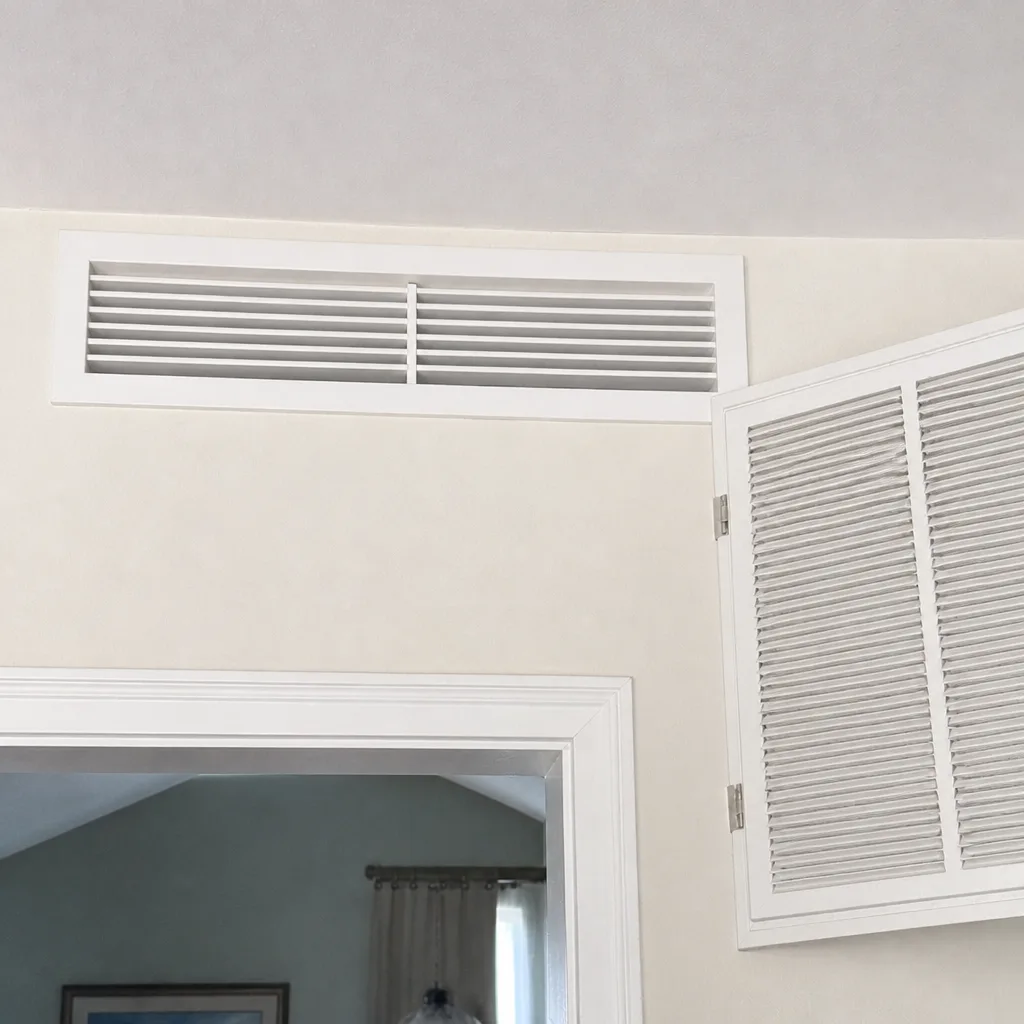
- Will you photograph inside the ducts before and after? Before-and-after photos of the actual duct interior are the only proof that matters. Ask to see them.
- Are you pricing per system or per vent? Per-vent pricing rewards a company for counting and punishes you for it. A flat price per system, agreed in writing before work starts, is the honest version.
- Who touches the components you don’t clean? Coil cleaning and blower work are typically a separate HVAC contractor’s scope, and a good duct company will tell you clearly which items are theirs and which need a licensed HVAC partner.
- Do you handle dryer vent cleaning? A dryer vent isn’t part of the HVAC system, but it’s the same ducting logic and it’s a fire risk, not a comfort issue. It’s worth handling during the same visit if you’re already booked.
If you want the local version of those questions answered in detail, the Carrollton service page is a useful reference for what a visit looks like in this area specifically.
Common Mistakes to Avoid
- Skipping the return side entirely. Homeowners clean the supply registers and never look at the returns. Returns are where the dirt enters. Photograph each one.
- Assuming the filter slot is sealed. Almost never is, unless someone fixed it. Run the bypass test this week.
- Using a filter that’s too restrictive for the blower. A thick high-MERV filter in a slot designed for a 1-inch filter can starve airflow and raise static pressure. The filter should match what the system was set up for.
- Ignoring the drain pan until there’s water on the closet floor. Check it in spring, before the cooling season. In Carrollton, that’s March or April.
- Scheduling cleaning but not checking the coil. Cleaning ducts without knowing the coil condition is cleaning one half of a two-part problem.
- Forgetting the dryer vent entirely. It’s the most overlooked duct in the house and the one with the most direct safety consequence. It deserves the same systematic attention as the HVAC ducts.
- Not keeping a record. Without dated photos and static pressure numbers, every visit is a fresh start. A folder on your phone with photos named by date makes the whole checklist work.
See the difference
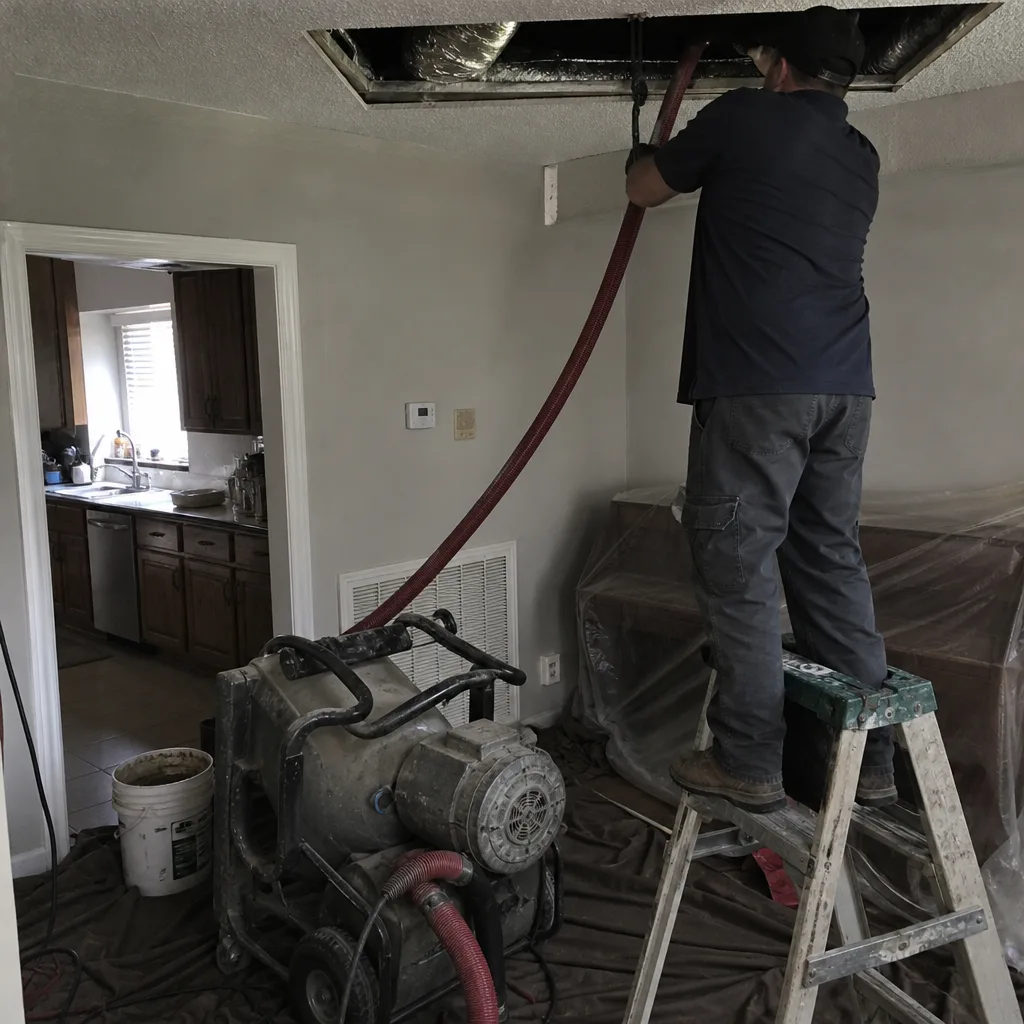 Before
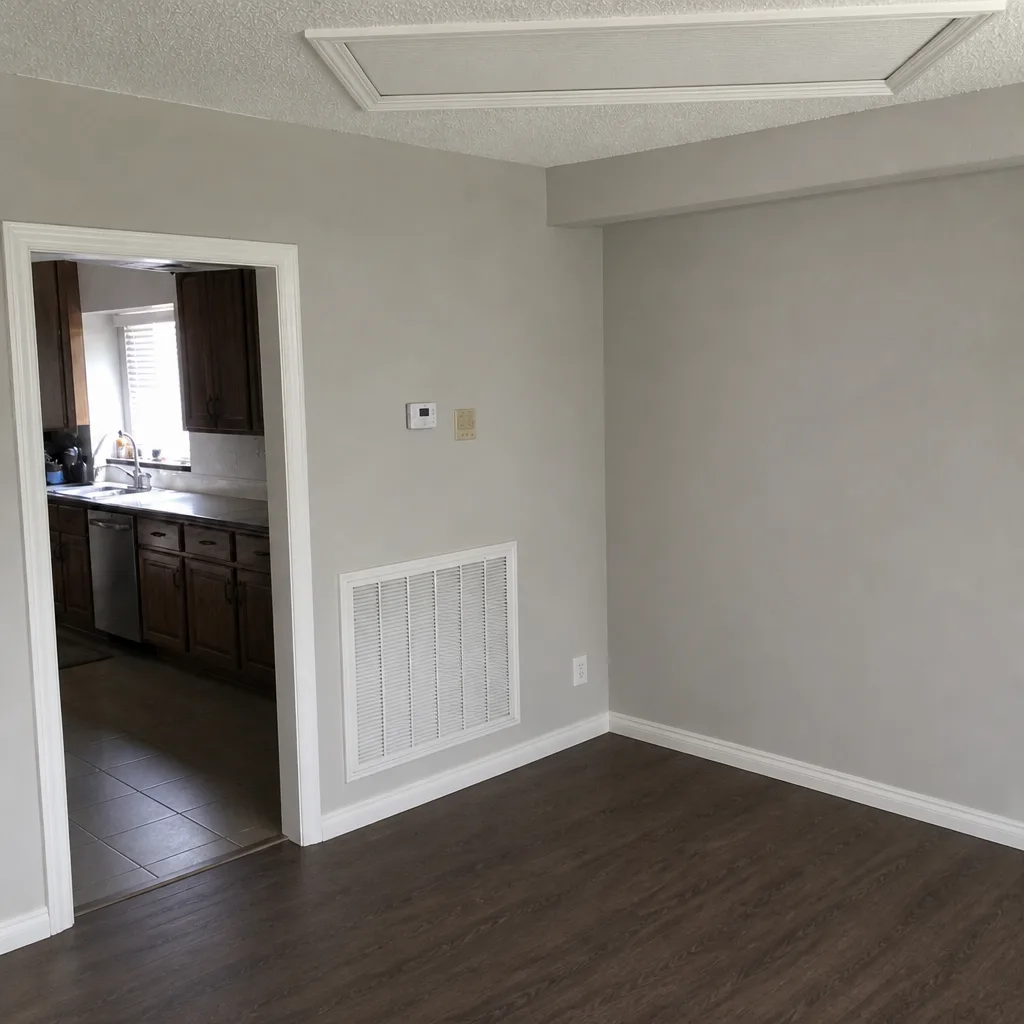 After
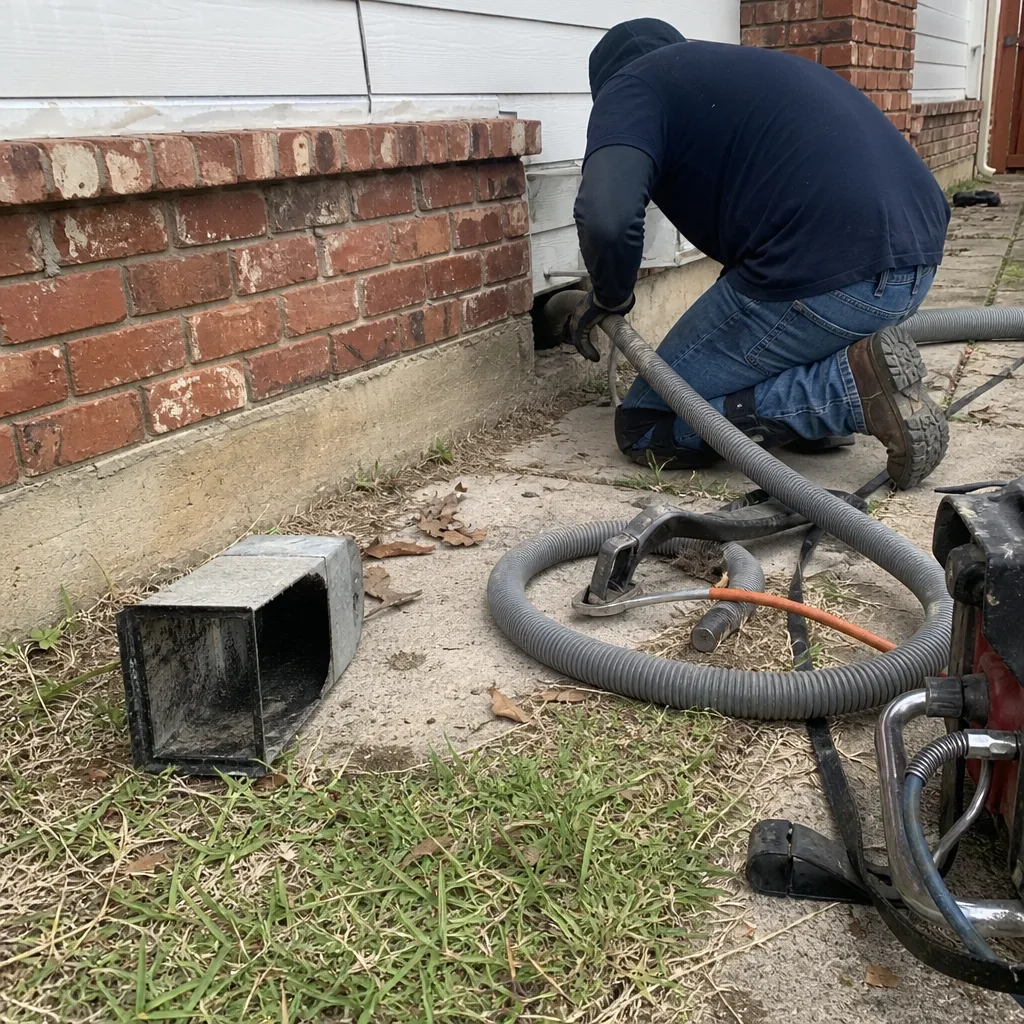 Before
 After
 Before
 After
When to Call a Professional
Some items on this checklist are homeowner tasks: the filter, the grille photos, the drain pan visual, the dryer lint screen. Others need professional equipment and training. Call when you can see dust blowing out of a supply register when the system starts. Call when the same register feels weak no matter what you do with the filter. Call if anyone in the house reacts after the system starts running, or if a return grille is drawing from an attic or garage space. Call if the dryer takes longer than it used to, or the lint screen comes out with less lint than expected – that means it’s staying in the vent. And call if the home hasn’t had a duct service in years and you don’t know the history. Duct Cleaning Carrollton offers free estimates in Carrollton – call (866) 580-7041. We answer 24/7. Fast dispatch from 7am to 7pm, Sunday through Friday.
Frequently Asked Questions
Most Carrollton homes are fine with a full cleaning every three to five years, and many go longer if the filter, return, and coil condition are all healthy. Homes with pets, recent remodeling, or a return leaking from an attic should be on a shorter cycle. If you can’t remember the last cleaning, schedule an inspection; the answer usually becomes obvious once the system is opened.
Low quotes usually reflect one of three shortcuts: no real vacuum capacity, no containment during cleaning, or a price set per vent that grows as the crew counts. A company using proper equipment has real costs built into the number. Ask what vacuum, what containment, and whether the price is flat per system. If the answers are vague, the price is too.
Ask for before-and-after photos of the duct interior taken during the visit. On a properly equipped job, the crew can photograph the inside of the trunk and branch lines because the equipment has a camera and light. Also ask for the static pressure reading taken at the start, which gives you a number to compare against next time. Between photos and the pressure log, the work is verifiable.
No. Reduced airflow often comes from a restriction the cleaning doesn’t address: a kinked or collapsed flex run, a closed damper, an over-restrictive filter, or a dirty coil. Cleaning removes debris from the duct surfaces. If airflow is the complaint, have the static pressure checked and the coil inspected at the same time so the actual cause gets fixed.
It’s necessary. A partially clogged dryer vent reduces drying efficiency and adds fire risk, and lint accumulates regardless of whether the airflow feels normal. For a look at what that service involves, see the dryer vent cleaning page. The same systematic approach used on HVAC ducts applies here; it’s just a different duct.
Late spring, before the AC runs continuously, is a good window. So is late fall. Winter works fine too, especially if cedar pollen is causing trouble and a filtration check would help. There’s no wrong month for an inspection. The one thing worth avoiding is waiting until the system is struggling in peak summer before you look at anything.
The Bottom Line
Cleaning your ducts is one step in a chain that includes filter fit, return-side integrity, static pressure monitoring, and the coil and drain pan sitting next to the ducts. Skip the chain and the cleaning is a temporary fix. The Carrollton-specific version of this routine follows cedar fever in winter, humidity in spring, and peak load in summer, with a photo record and a static pressure log as the evidence that it’s working. If the checklist has surfaced something you can’t fix yourself, a visit from a duct specialist can settle the whole system at once. Call (866) 580-7041 for a free estimate.
Written by the team at Duct Cleaning Carrollton, serving Carrollton since 2012.