
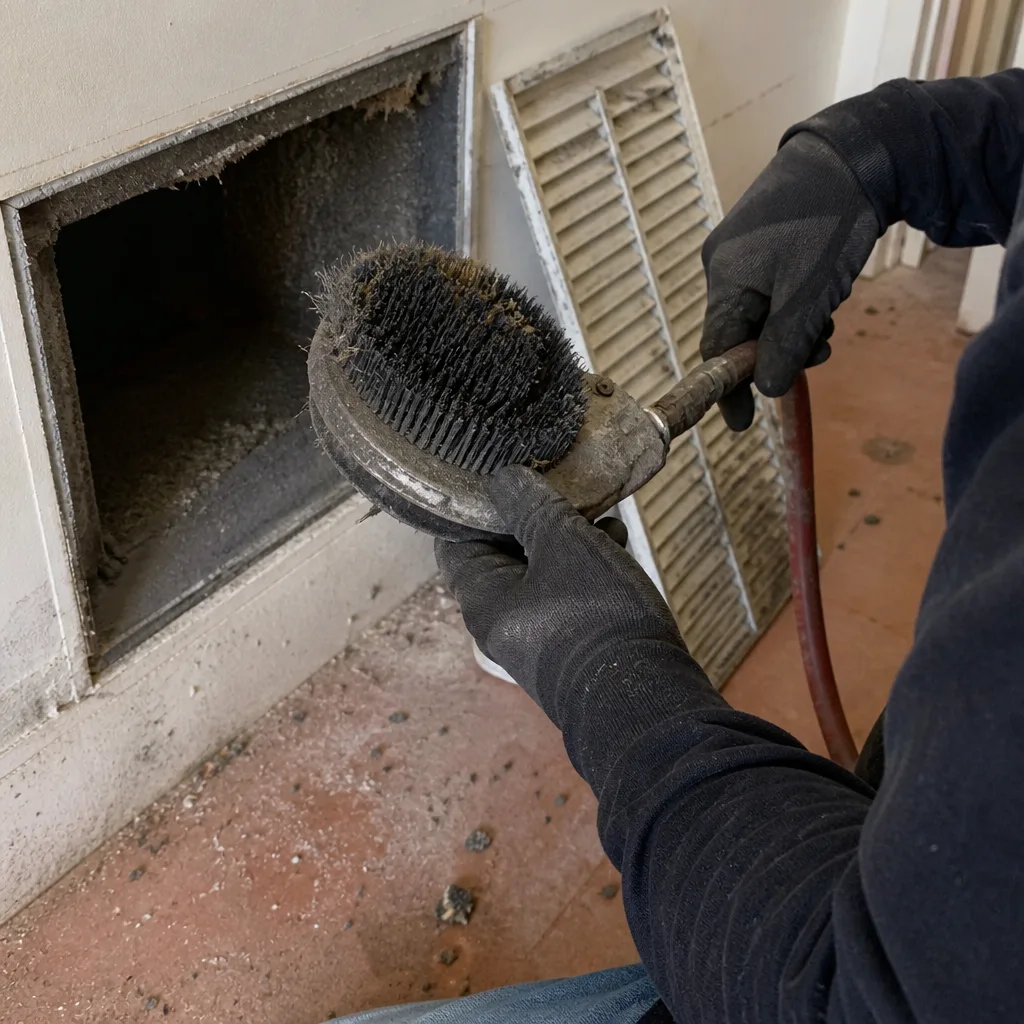
Last updated November 14, 2026
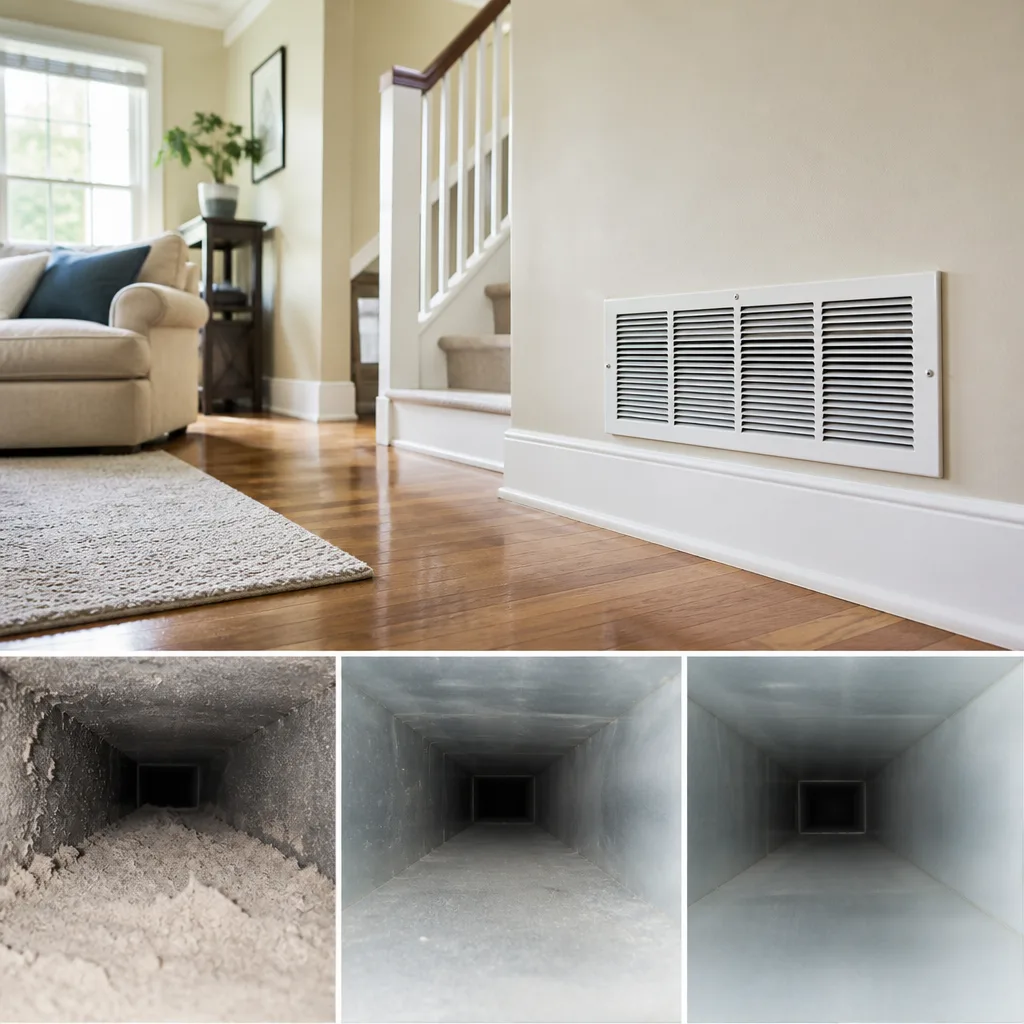 Whole-home duct cleaning
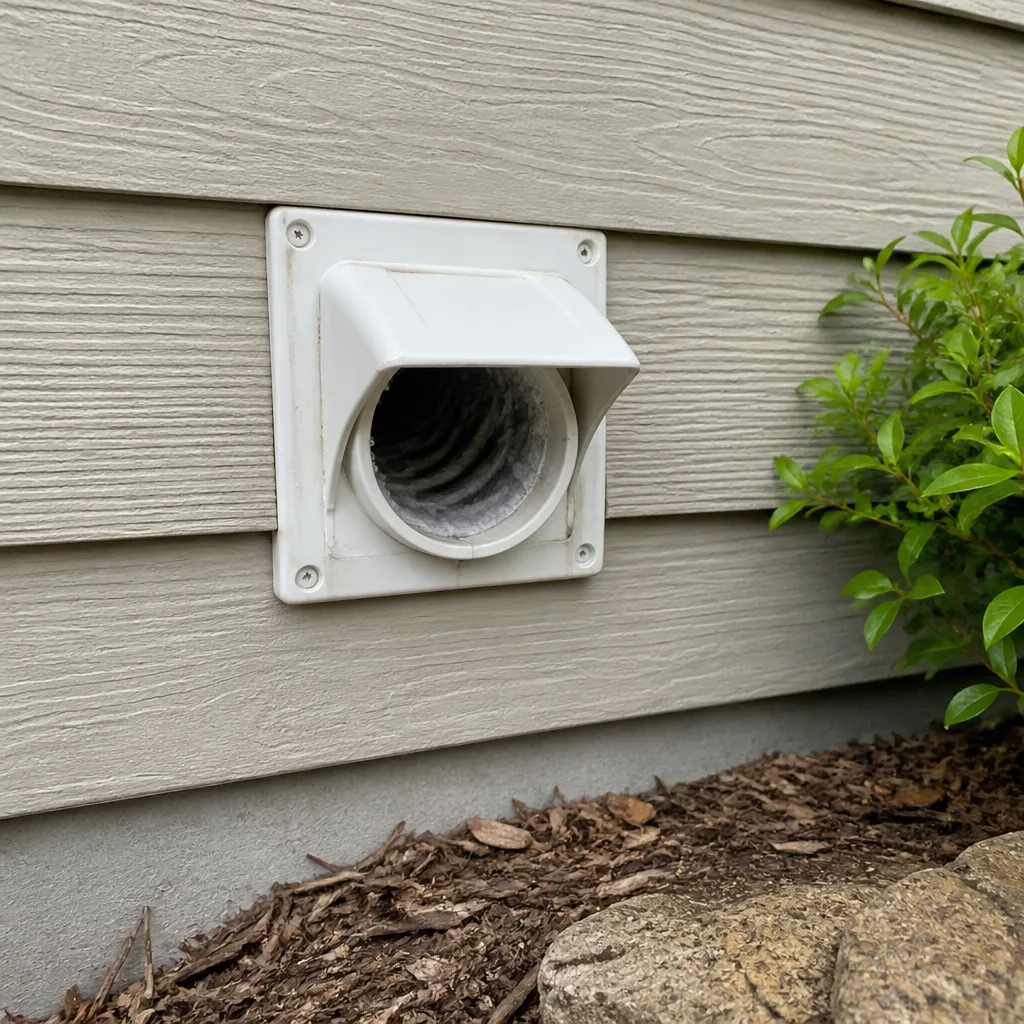 Dryer vent cleaning
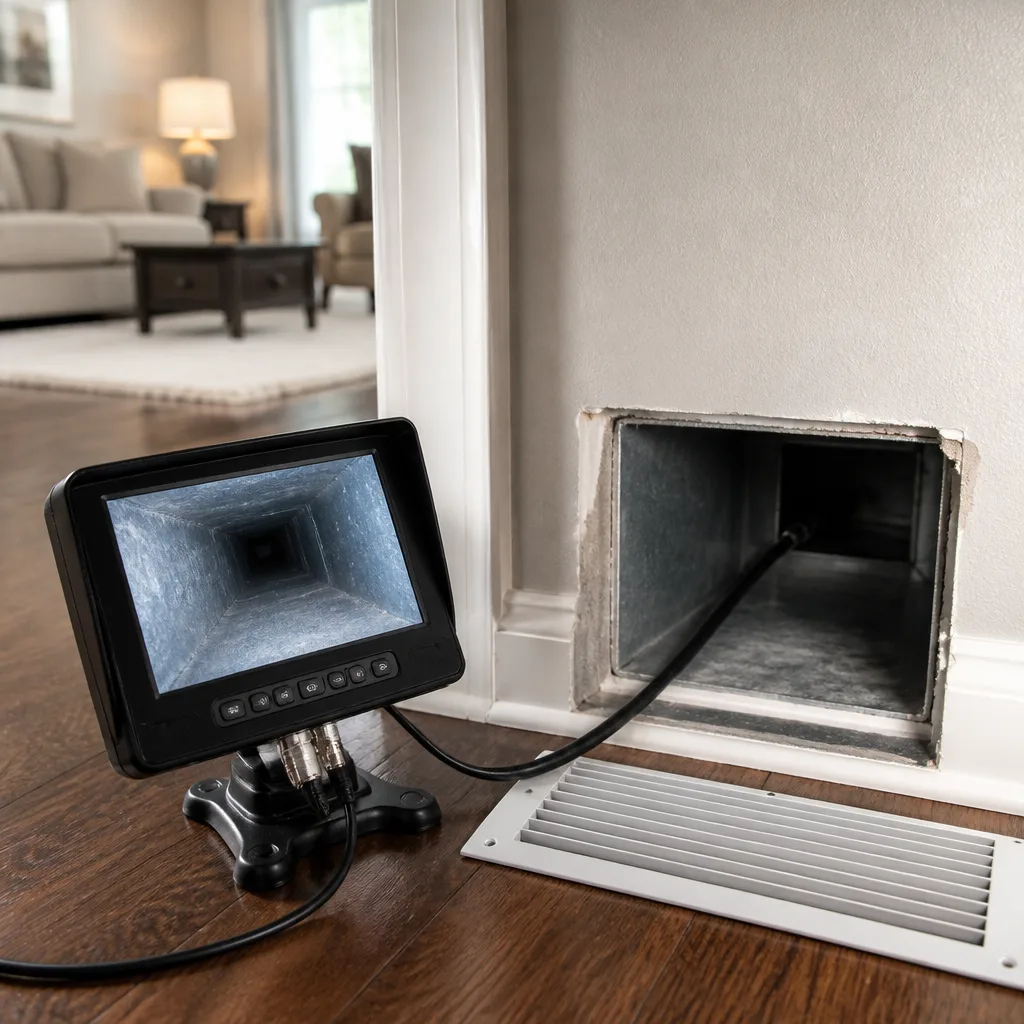 Camera inspection
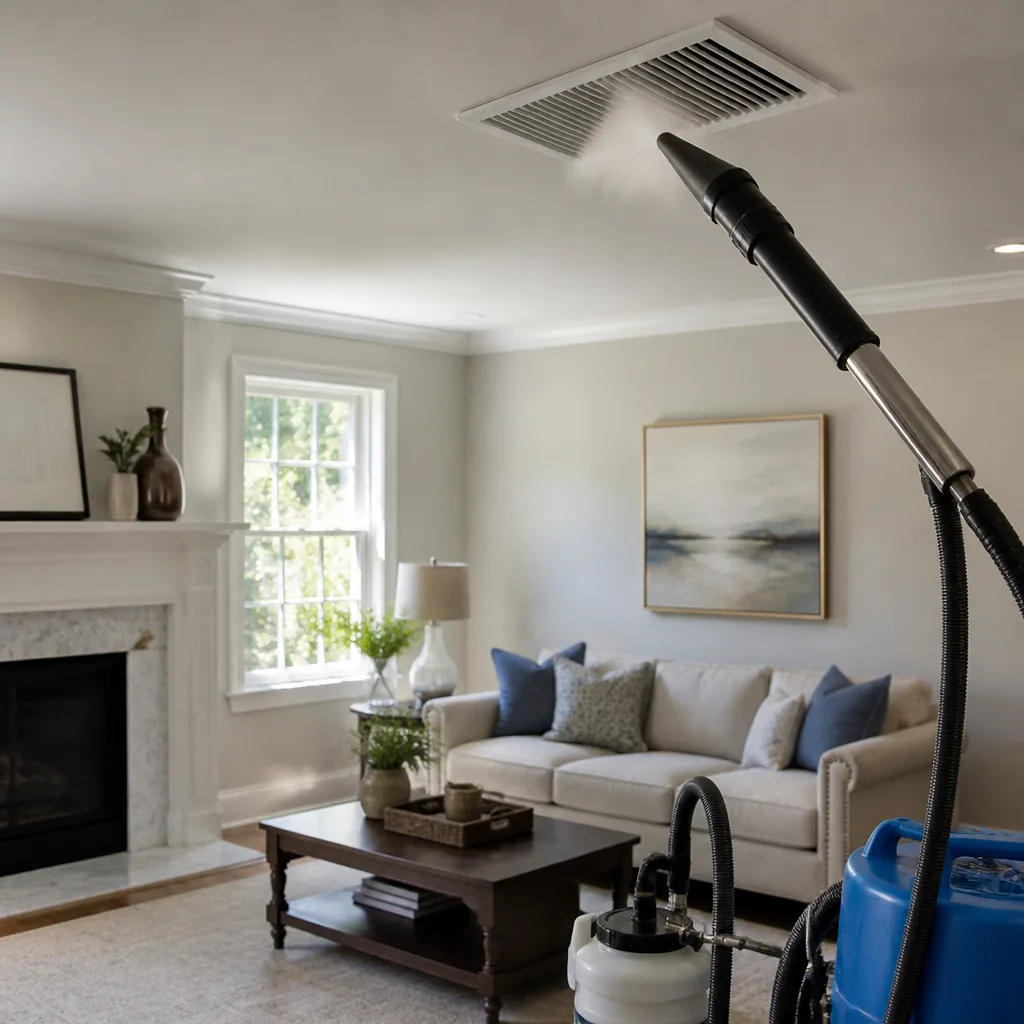 Sanitizing & deodorizing
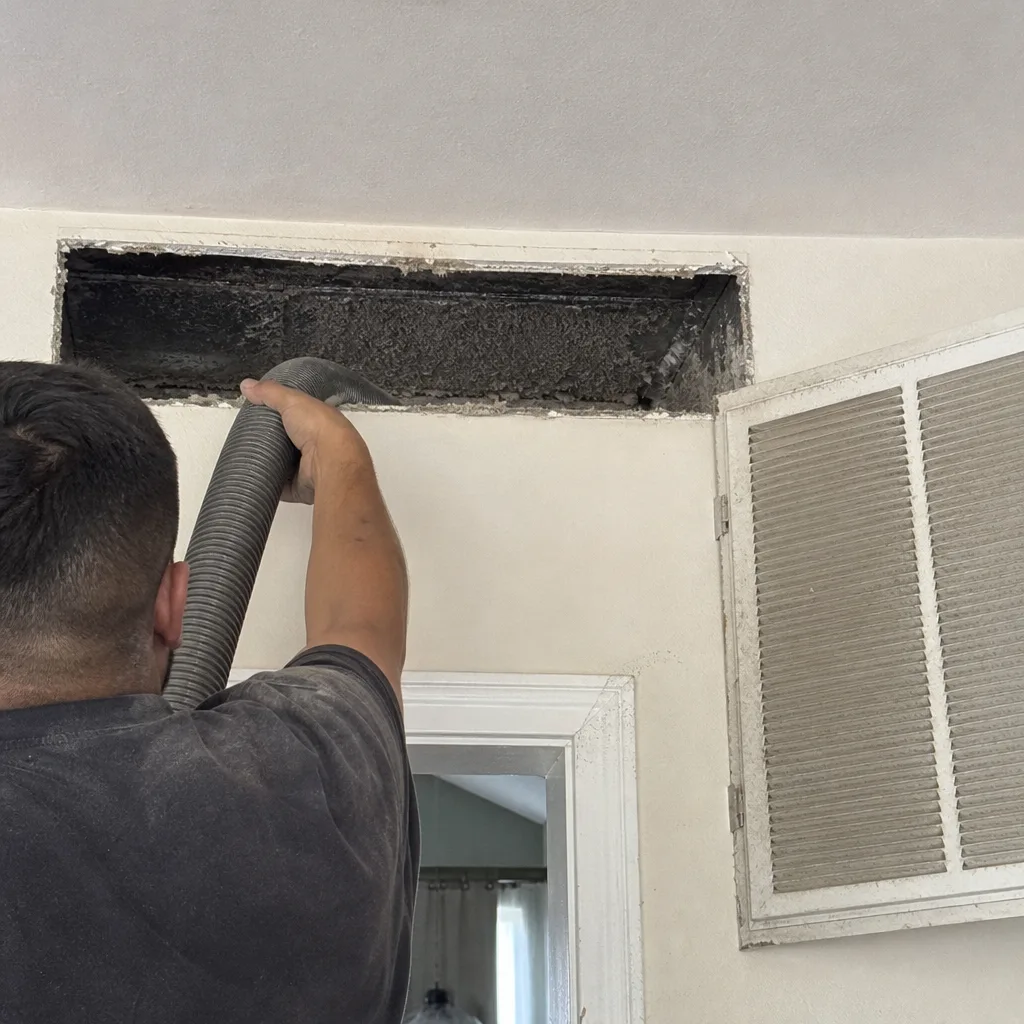
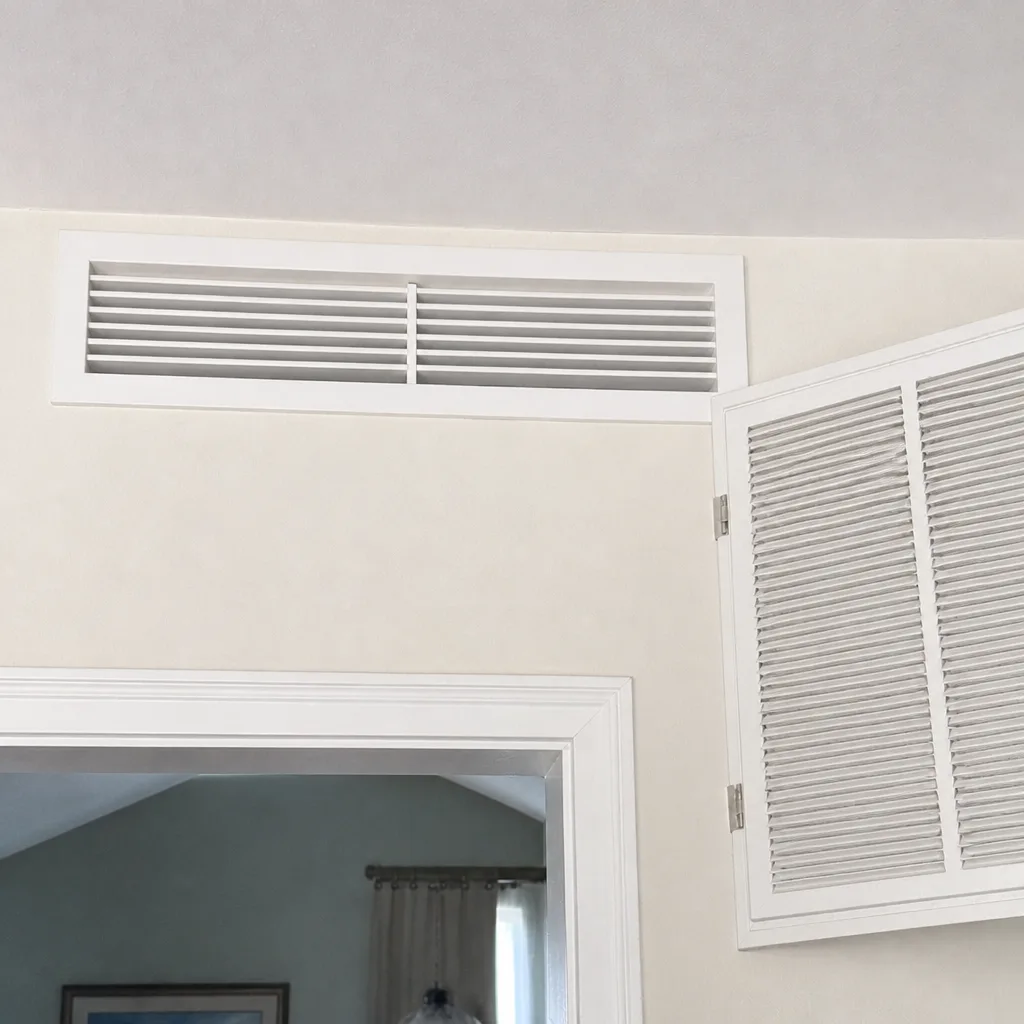
Whole-system duct and dryer vent check with before-and-after photos - you see exactly what came out of your vents
That "$99 whole-house special" is a bait ad - the real number appears once they are in your hallway, or the "clean" is a shop-vac at the register. We photograph the inside of your ducts before and after instead.
DIY vs Professional Air Duct Cleaning: The Carrollton Homeowner’s Decision Guide
Two machines that both call themselves “duct vacuums” sit at opposite ends of a physics problem. A consumer kit you can buy online and a truck-mounted system a professional brings to your driveway do not move the same amount of air, and that difference is where the entire DIY-versus-pro decision actually lives. Most homeowners in Carrollton assume the choice comes down to money or skill. It doesn’t. It comes down to whether the equipment you can rent or buy creates enough negative pressure to loosen debris stuck to the walls of your ductwork and then capture it before it drifts back into the living room. This guide lays out the gap, shows you the DIY work that genuinely helps, and tells you when a brush in a shop vac is the wrong tool for the job.
Styles & brands we work with
- Whole-home duct cleaning
- Dryer vent cleaning
- Camera inspection
- Sanitizing & deodorizing
Quick Answer
For most Carrollton homes, professional Duct Cleaning Carrollton makes more sense than DIY once ductwork runs through an attic air handler or long flex runs, because consumer kits can’t generate the suction needed to dislodge settled debris, and improper brushing can tear flex duct inner liners. DIY is a reasonable interim step only for cleaning register covers, upgrading filters, and documenting what you can see. Serious buildup, visible mold, or reduced airflow calls for commercial-grade equipment and a company that handles repair alongside cleaning.
Table of Contents
- The CFM Gap: Why Suction Is the Real Story
- What Consumer Brush-and-Vacuum Kits Actually Do
- What Negative Pressure Cleaning Achieves
- The DIY Tasks That Genuinely Work
- Why DIY on Flex Duct Can Cause Permanent Damage
- When DIY Is a Reasonable Interim Measure
- How Carrollton Duct Configurations Change the Equation
- How to Evaluate Your Own Duct Setup Before You Decide
- Common Mistakes to Avoid
- When to Call a Professional
- Frequently Asked Questions
- The Bottom Line
The CFM Gap: Why Suction Is the Real Story
The best consumer duct cleaning kit generates roughly 150 CFM of suction. A professional truck-mounted system generates 10,000 to 15,000 CFM. That’s not a gap you close with technique or elbow grease. CFM, or cubic feet per minute, measures how much air a system moves. When it comes to dislodging dust, debris, pet hair, and construction grit from the inside of ductwork, air volume matters more than the narrow stream a small shop vac can produce.
Think about what’s actually happening inside your ducts. Over years, dust particles settle and accumulate on the walls, especially on the horizontal runs where airflow slows. That dust compacts and can bind to the metal or the flex liner. A small vacuum head can pick up loose debris near the register, but it doesn’t create enough air movement across the full cross-section of the duct to lift compacted material off the walls.
A truck-mounted unit connects to the duct system, seals it off, and pulls a huge volume of air through the whole network at once. That volume is what loosens settled debris and carries it out. Technicians then use agitation tools, like the rotary brush on a Rotobrush system and Nikro professional vacuums, to break material free so the airflow can capture it. The equipment matters because the physics matter. Suction isn’t one feature among many; it’s the whole mechanism by which cleaning works.
This is also why commercial operations use the same class of equipment. When duct cleaning needs to happen in a large building, no one brings a shop vac. The industry standard exists because the job requires it.
What Consumer Brush-and-Vacuum Kits Actually Do
Consumer duct cleaning kits usually come with a flexible hose that attaches to a wet/dry vacuum, a brush head, and sometimes a small camera. They cost a fraction of a professional visit and are sold as a way to keep ducts clean between professional cleanings. Here’s what they genuinely accomplish and what they don’t.
What a consumer kit can do:
- Remove loose dust and surface debris near the register opening
- Pick up small objects that have fallen into the first few feet of a duct run
- Give you a look inside the visible portion of a duct with a camera attachment
- Help you keep a lightly used, recently cleaned system from building up dust quickly
What a consumer kit cannot do:
- Generate enough negative pressure to loosen debris bonded to duct walls
- Reach deep into long horizontal runs where accumulation tends to be heaviest
- Clean the interior of an attic-mounted air handler or the plenum connections
- Contain dislodged particulate so it doesn’t blow back into the room
- Agitate debris across the full cross-section of the duct, not just the center
The gap isn’t about how hard you try. It’s about what the machine can physically do. If your ducts haven’t been cleaned in years, a consumer kit will make the first few feet look better while the bulk of the accumulation stays exactly where it was.
What Negative Pressure Cleaning Achieves
Professional air duct cleaning works by turning the entire duct network into a sealed system under negative pressure, then agitating debris from the inside so the airflow carries it out to a collection point. The steps typically go like this:
- Inspection. The technician inspects accessible ductwork, the air handler, and the registers to identify the layout, duct material, and any obvious damage.
- Containment setup. Equipment like Abatement Technologies air filtration and containment units is placed to capture particulate at the source, so dislodged debris doesn’t get redistributed through the home.
- Negative pressure connection. A high-volume vacuum connects to the system and pulls the duct network into negative pressure. This is the 10,000 to 15,000 CFM stage.
- Agitation. A rotary brush system (Rotobrush) and compressed-air tools move through the ductwork, breaking loose compacted material so the airflow can capture it.
- Extraction and verification. Debris is captured at the collection point, and the technician checks the accessible runs visually to confirm the work is done.
The difference in outcome compared with a consumer kit isn’t subtle. When the full volume of air is moving through the system, debris that has been settled in place for years gets lifted and carried out. You’re not sweeping the inside of the duct; you’re changing the airflow dynamics inside it so the whole run participates in the cleaning.
That’s why a company that brings commercial-grade equipment into a residential home can do in a few hours what a homeowner with a weekend and a shop vac cannot do at all.
The DIY Tasks That Genuinely Work
Some duct-adjacent work is absolutely worth doing yourself, and doing it well will extend the time between professional cleanings. These tasks don’t require 10,000 CFM of suction. They require attention and a little patience.
- Clean the register covers. Remove each supply and return register cover and wash it in warm soapy water. Dust accumulates on the grille face and gets blown back into the room every time the system cycles. Dry the covers fully before replacing them.
- Upgrade and change your filter. A high-quality filter matched to your system catches more particulate before it enters the ducts. Check the filter monthly and change it based on what you find; in Carrollton’s dusty spring and summer, that may be more often than the packaging suggests. If you have a whole-home filtration setup from Honeywell or Aprilaire, make sure you’re using the correct filter for that system.
- Document what you can see. Take photos inside visible register boxes and near the air handler with a phone or a small camera. If you later call a professional, those photos help the technician understand the condition of your system before arrival.
- Seal obvious gaps at the register boot. Where a duct boot meets the wall or floor, small gaps let air and dust leak into the cavity. A bead of sealant around the visible edge is a legitimate DIY fix. Don’t attempt to seal or modify the duct itself without professional guidance.
- Keep return air paths clear. Furniture, rugs, and stored boxes blocking return grilles reduce airflow and make the whole system work harder. Moving them is free and effective.
These tasks are worth doing whether or not you ever schedule a professional cleaning. They don’t replace the deep cleaning, but they cut down on the amount of debris that gets into the system in the first place, and they help you notice changes in airflow earlier.
Why DIY on Flex Duct Can Cause Permanent Damage
Much of the residential ductwork in Carrollton homes is flex duct: a flexible plastic inner liner wrapped in insulation and an outer jacket. It’s common in attic installations because it’s easier to route through tight spaces than rigid metal. It’s also the duct type most vulnerable to damage from amateur cleaning attempts.
The inner liner of flex duct is thin. A brush head that’s too large for the duct diameter, or that a homeowner pushes with too much force, can tear or abrade that liner. Once the liner is torn, the damage doesn’t stay contained. The torn edge creates a turbulence point inside the duct that disrupts airflow and causes debris to accumulate in that spot faster than anywhere else. That accumulation becomes a permanent trap, and the only fix is replacing the damaged section of duct.
Even without a tear, a brush head that doesn’t fit correctly can push debris past the point where the vacuum can capture it, redistributing it deeper into the system. What was a moderate accumulation near a register becomes a heavier accumulation in a run you can’t reach.
A professional using a Rotobrush system selects brush heads sized to the duct diameter and uses controlled speed and tension, precisely to avoid this kind of damage. The same care with the right tool protects the liner. A homeowner with a generic kit and a lot of enthusiasm can cause the opposite outcome. Flex duct repair is part of what a full-service duct specialist handles, so if a DIY attempt has already caused a tear, we can assess and repair the damaged section.
When DIY Is a Reasonable Interim Measure
DIY makes sense under a specific set of conditions. If your ducts were professionally cleaned recently – within the past couple of years – and you’re keeping up with filters and registers, a consumer kit used carefully on the visible portions of the duct can help slow the rate of new accumulation. It’s maintenance, not a substitute for cleaning.
DIY also makes sense as a first step in diagnosis. If you’re noticing dust or reduced airflow and you want to understand where it’s coming from before you call anyone, cleaning the registers, checking the filter, and looking inside the first accessible section of duct can tell you a lot. If you find heavy accumulation, a pest problem, or visible moisture, that’s your signal to call.
DIY does not make sense when the accumulation is heavy, when the air handler is mounted in the attic with long flex runs, or when there’s any sign of mold or moisture in the system. In those situations, a consumer kit can actually make the professional job harder by redistributing debris into less accessible parts of the system. When the professional crew arrives, they have to deal with a system that’s been partially disturbed rather than one that’s in its original state. That doesn’t make the job impossible, but it can make it more complex.
If you’re unsure which scenario you’re in, that uncertainty is itself a reason to call. An honest assessment is worth more than a guess.
How Carrollton Duct Configurations Change the Equation
Duct configurations in Carrollton often share a common pattern: an air handler mounted in the attic, with ductwork distributing air through flex runs to the rooms below. This layout has real advantages in a hot climate, but it shapes the cleaning decision in a specific way.
Attic-mounted air handlers mean the plenum, the main connection between the air handler and the duct network, is in an unconditioned space. That’s where a lot of accumulation collects, and it’s also where access is trickiest. A homeowner working from a register inside the house can reach maybe the first few feet of a supply run. The rest of the run, and the plenum it connects to, is only accessible from the attic, and only with the right equipment.
Long flex runs also mean that a lot of duct length sits between the air handler and the final register. Debris that gets redistributed by a consumer kit can end up somewhere in the middle of that run, where neither the consumer vacuum nor a glance from the register will find it.
The flip side is that professional access to an attic-mounted system, while more complex than a basement or closet installation, is well understood. A company that works on attic systems routinely moves through the access points, sets up containment, and manages the cleaning with the right equipment for the run lengths involved. In a market where many homes share this configuration, experience with it is the baseline expectation, not a specialty.
Homes in the area vary, and some have rigid metal ductwork or a mix of types. The right approach depends on what’s actually installed, which is why an on-site assessment before cleaning is part of a professional job rather than an optional add-on.
How to Evaluate Your Own Duct Setup Before You Decide
Before you decide between DIY and professional cleaning, spend twenty minutes doing an honest evaluation of what you have. This isn’t a test you pass or fail; it’s information that helps you make the right call.
- Identify your duct material. Look at an accessible duct section. Rigid metal, flex duct, or a mix? Flex is more common in attic installations and less forgiving of DIY cleaning.
- Locate the air handler. Is it in the attic, a closet, or the garage? An attic air handler generally means the professional job is more valuable because the critical access points aren’t reachable from inside the house.
- Look inside a register. Remove one register cover and look in with a flashlight. Light surface dust is normal. Heavy accumulation, visible debris, or any musty smell is a sign that the system needs more than a consumer kit.
- Check for moisture or mold. Any visible moisture, discoloration, or musty odor inside the duct is a reason to stop and call a professional. Moisture problems in ductwork don’t resolve with cleaning alone.
- Test the airflow. Hold a tissue or a piece of light paper at each register while the system runs. If some registers have noticeably weaker airflow than others, that suggests a blockage or a leak, and that’s a professional assessment.
- Note the filter type and condition. A clogged filter is the most common cause of reduced airflow and the easiest problem to fix. Check it before assuming the ducts are dirty.
If you complete these steps and everything looks moderate, DIY maintenance is a reasonable choice. If any step shows heavy accumulation, moisture, or significant airflow differences, the call is clear. In our experience, the homes that most needed professional cleaning were the ones where the homeowner had the strongest instinct to try a DIY kit first.
Common Mistakes to Avoid
- Using a shop vac with a small nozzle and calling it duct cleaning. A standard wet/dry vacuum generates a fraction of the airflow a truck-mounted system produces, so it picks up surface dust without touching settled debris. You end up with cleaner registers and unchanged ductwork.
- Pushing a brush through flex duct without checking the fit. A brush head that’s too large tears the inner liner, and a torn liner creates a permanent turbulence point that traps debris. Size the tool to the duct, or leave it to someone who will.
- Cleaning only the registers and assuming the job is done. Registers are the visible 5 percent of the duct system. The accumulation that affects air quality and airflow is deeper in, where a consumer vacuum doesn’t reach.
- Ignoring signs of moisture. Moisture in ductwork is a different problem from dust, and cleaning without addressing it can spread the problem rather than solve it. If you see or smell moisture, call a professional before doing anything else.
- Cleaning ducts without checking the filter and air handler first. A dirty filter and a dirty evaporator coil reduce airflow on their own, regardless of duct condition. Check the whole system before assuming the ducts are the culprit.
- Letting a general handyman “blow out” the ducts with compressed air. Without containment equipment, compressed air pushes debris into the living space rather than capturing it. That’s why professional setups include Abatement Technologies filtration and containment.
When to Call a Professional
Call a professional when you see heavy accumulation inside the ducts, when the air handler is attic-mounted with long flex runs, or when you find moisture, mold, or a musty smell anywhere in the system. Call if airflow has dropped noticeably across multiple registers, if the ducts haven’t been cleaned in years, or if a previous DIY attempt has left a duct torn or damaged. An honest assessment will tell you whether you have a cleaning job or a repair job, and a specialist who handles both can sort it out on the same visit.
Duct Cleaning Carrollton offers free estimates in Carrollton. Call (866) 580-7041. We answer 24/7. Fast dispatch from 7am to 7pm, Sunday through Friday. We’re closed Saturday.
Frequently Asked Questions
DIY air duct cleaning is worth doing for register cleaning, filter changes, visual inspection, and minor register-boot sealing, but not for cleaning the duct runs themselves. Consumer kits don’t generate enough negative pressure to lift settled debris, and on flex duct a poorly fitted brush can tear the inner liner. Treat DIY as maintenance between professional cleanings, not as a replacement for them.
A shop vac can pick up loose dust and debris in the first few feet of an accessible duct, but it can’t clean the system. Its airflow is a small fraction of what a truck-mounted vacuum produces, so it doesn’t loosen compacted material or reach deep into long runs. For real cleaning, the system needs to be placed under negative pressure with commercial-grade equipment.
The core difference is airflow. A top consumer kit produces around 150 CFM; a professional truck-mounted system produces 10,000 to 15,000 CFM. That volume is what loosens debris across the full cross-section of the duct and carries it out. Professional setups also include containment and filtration, like Abatement Technologies equipment, so dislodged particulate is captured instead of redistributed.
Remove a register cover and look at the duct material just behind the grille. Flex duct is a flexible silver or grey tube, often with a visible inner liner; rigid duct is metal. If you’re not sure, or if the air handler is in the attic, a professional inspection before cleaning will clarify what you have and what approach it needs.
DIY cleaning can damage flex duct if the brush head is too large or pushed too hard, because the inner liner is thin and tears under force. A torn liner creates a turbulence point that traps debris permanently until the section is replaced. Rigid metal duct is more forgiving, but improper cleaning can still push debris into less accessible parts of the system.
Most homes benefit from professional cleaning every few years, with the exact interval depending on pets, occupants with allergies, recent renovation dust, and how well filters are maintained. In our experience, homes with pets and heavy spring dust loads benefit from more frequent attention. Call (866) 580-7041 for a free estimate and an honest assessment of your system.
The Bottom Line
The DIY versus professional question for duct cleaning comes down to physics, not effort. Consumer kits move a small fraction of the air that professional equipment does, which means they clean the visible surface and leave the settled debris where it is. The DIY work that pays off is register cleaning, filter maintenance, visual documentation, and sealing obvious register-boot gaps. The work that requires a professional is the actual cleaning, especially in Carrollton homes with attic-mounted air handlers and long flex runs, where improper brushing risks permanent damage. If you’re weighing the decision and want a straight answer, call (866) 580-7041 for a free estimate. Duct Cleaning Carrollton also handles dryer vent cleaning, which carries its own fire-safety reasons to get it done right. For homeowners across Carrollton, a clear assessment is the fastest route to cleaner air.
Written by the team at Duct Cleaning Carrollton, serving Carrollton since 2012.
See the difference
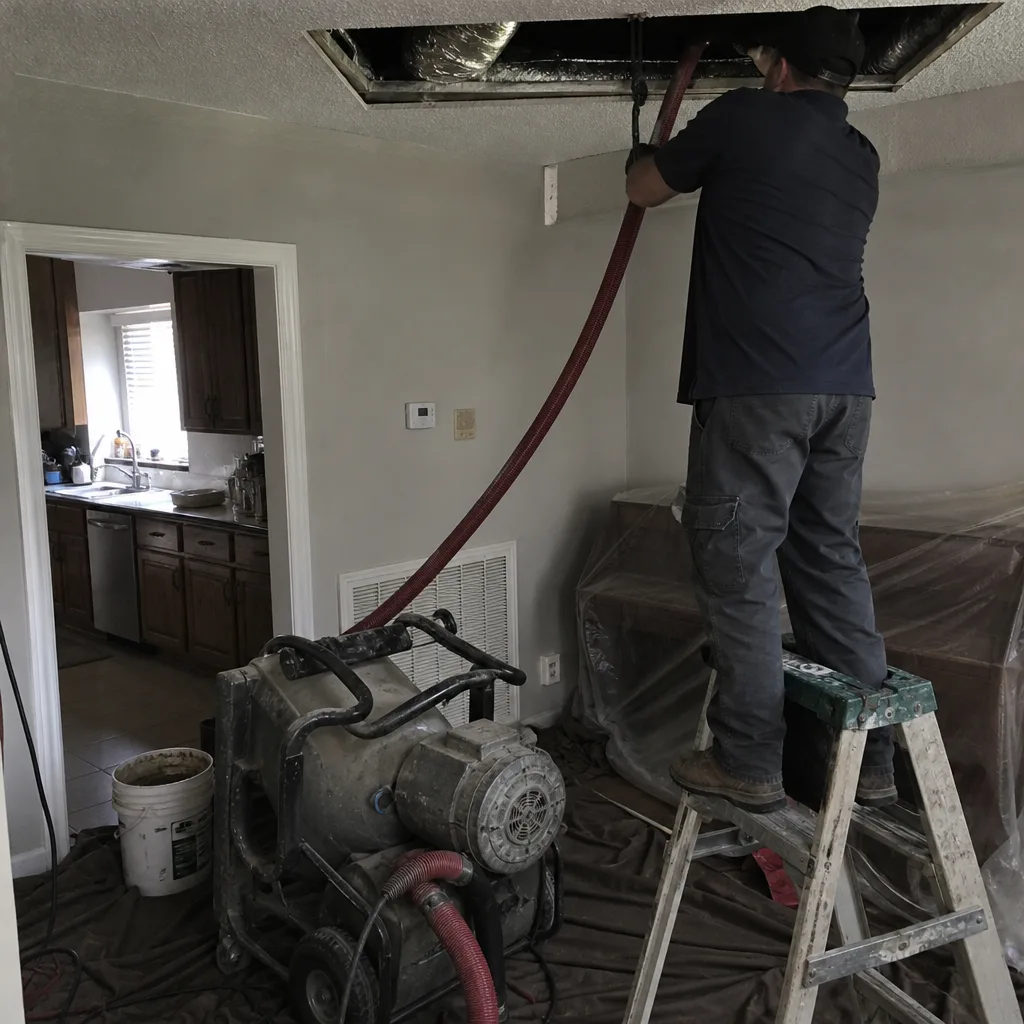 Before
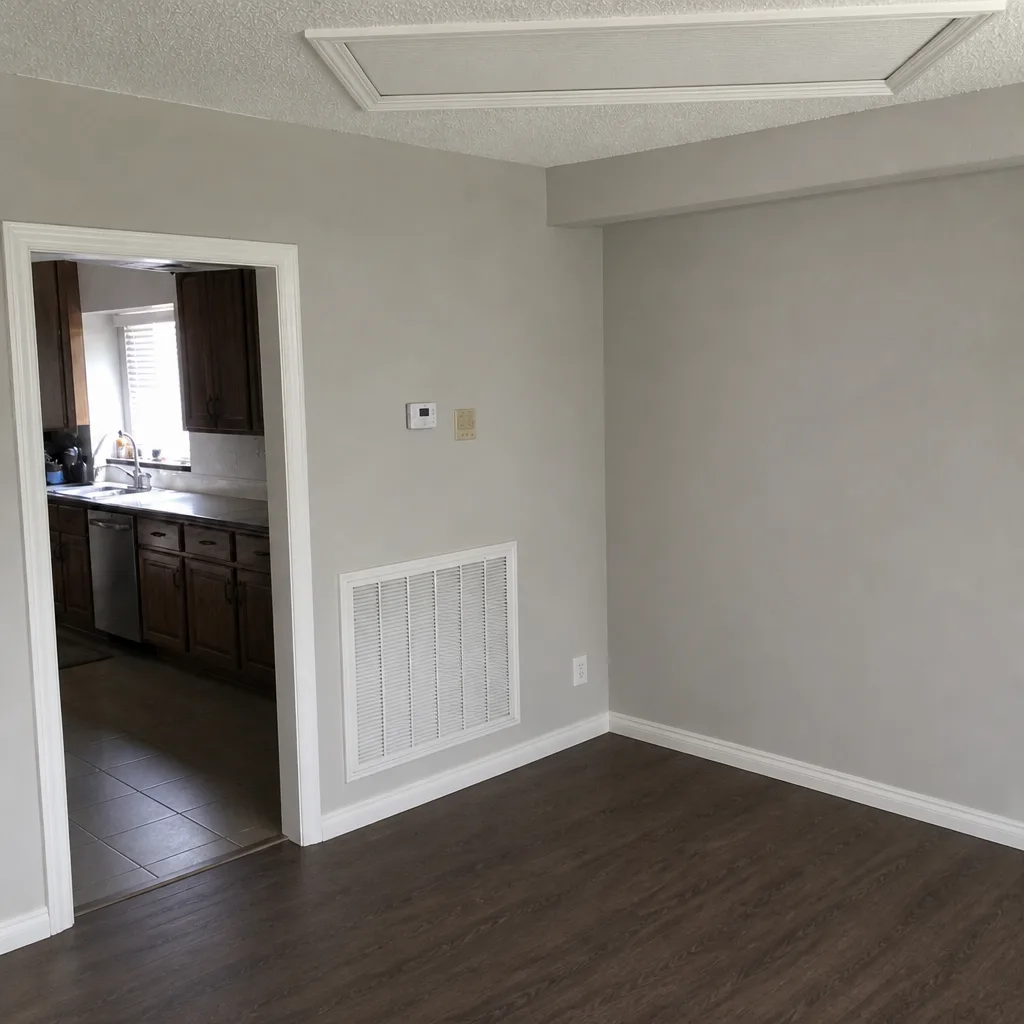 After
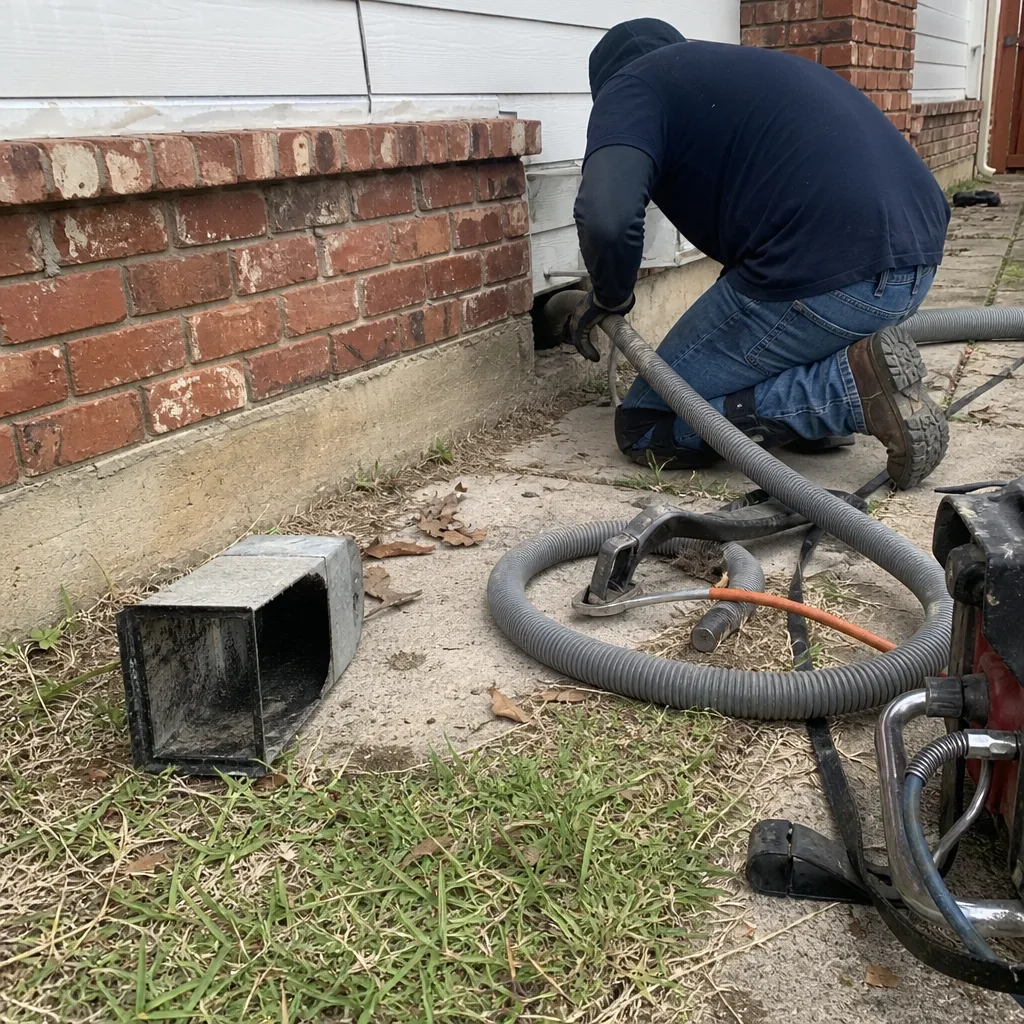 Before
 After
 Before
 After